Michael D.Heath-Caldwell M.Arch.


Michael Heath-Caldwell M.Arch
Brisbane, Queensland
ph: 0412-78-70-74
alt: m_heath_caldwell@hotmail.com
- Home
- Architectural Projects 0
- Architectural projects 1
- Architectural Projects 2
- Architectural Projects 3
- Architectural Projects 4

- The Crystal Palace
- Timeline
- 1693
- 1745
- 1770
- 1783
- 1784
- 1785
- 1786
- 1788
- 1789
- 1791
- 1792
- 1793
- 1794
- 1795
- 1796
- 1797
- 1798
- 1799
- 1800
- 1801
- 1802
- 1803
- 1804
- 1805
- 1806
- 1807
- 1808
- 1809
- 1810
- 1811
- 1812
- 1813
- 1814
- 1815
- 1816
- 1817
- 1818
- 1819
- 1820
- 1821
- 1822
- 1823
- 1824
- 1825
- 1826
- 1827
- 1828
- 1829
- 1830
- 1831
- 1832
- 1833
- 1834
- 1835
- 1836
- 1837
- 1838
- 1839
- 1840
- 1841
- 1842
- 1843
- 1844
- 1845
- 1845-46 Oxford
- 1846
- 1847
- 1848
- 1849
- 1850
- 1851
- 1852
- 1853
- 1854
- 1854/55 Appendix
- 1855
- 1856
- 1857
- 1858
- 1859
- 1860
- 1861
- 1862
- 1863
- 1864
- 1865
- 1866
- 1867
- 1868
- 1869
- 1870
- 1871
- 1872
- 1873
- 1874
- 1875
- 1876
- 1877
- 1878
- 1879
- 1880
- 1881-1
- 1881
- 1882
- 1883
- 1884
- 1885
- 1886
- 1887
- 1888
- 1889
- 1890
- 1891
- 1892
- 1893
- 1894
- 1895
- 1896
- 1897
- 1899
- 1900
- 1901
- 1902
- 1903
- 1904
- 1905
- 1906
- 1907
- 1908
- 1909
- 1910
- 1911
- 1912
- 1913
- 1914
- 1915
- 1916
- 1917
- 1918
- 1919
- 1920
- 1921
- 1922
- 1923
- 1924
- 1925
- 1926
- 1927
- 1928
- 1929
- 1930
- 1931
- 1932
- 1933
- 1934
- 1935
- 1936
- 1937
- 1938
- 1939
- 1940
- 1941
- 1942
- 1943
- 1944
- 1945
- 1946
- 1947
- 1948
- 1949
- 1950
- 1951
- 1952
- 1953
- 1954
- 1955
- 1956
- 1957
- 1958
- 1959
- 1960
- 1961
- 1962
- 1963
- 1964
- 1965
- 1966
- 1967
- 1969
- 1971
- 1974
- 1975
- 1976
- 1979
- 1983
- 1990
- 1991
- 1998
- 2001
- 2002
- 2004
- 2005
- 2006
- 2007
- 2008
- 2009
- 2010
- 2011
- 2012
- 2013
- 2014
- 2015
- 2016
- 2017
- 2018
- 2019
- 2020
- F.C. Heath-Caldwell
- C.H.Heath-Caldwell Memoirs
- Palmer Family
- Palmer Timeline
- 1912 - Palmer
- 1914 - Palmer
- 1916 - Palmer
- 1918 - Palmer
- 1919 - Palmer
- 1924 - Palmer
- 1925 - Palmer
- 1926 - Palmer
- 1929 - Palmer
- 1932 - Palmer
- 1934 - Palmer
- 1936 - Palmer
- 1938 - Palmer
- 1939 - Palmer
- 1944 - Palmer
- 1946 - Palmer
- 1961 - Palmer
- 1967 - Palmer
- 1970 - Diary - Joe Palmer
- 1971 - Diary - Joe Palmer
- 1972 - Diary - Joe Palmer
- 1991 - Diary - Joe Palmer
- 1992 - Diary - Joe Palmer
- 2010 - Diary - Joe Palmer
- Venice Earthquake 1873
- Old Letters 1
- Old Letters 2
- Old Letters 3
- Old Letters 4
- Old letters - Mid 1800
- More Old Letters
- Eaton Hall, 1943
- Marsh Family Timeline
- James Caldwell papers 1
- James Caldwell papers 2
- James caldwell papers 3
- Old letters 1800s
- Old Letters 1800s 2
- HH Sultan Taimur bin Turki 1913
- Frank Featherstone Wright 1921-2014
- Frank F. Wright 1
- Frank Featherstone Wright early
- Frank F. Wright 2
- Frank F. Wright Videos
- Old Featherstone album 1
- Old Featherstone album 2
- Old Featherstone album 3
- Old Featherstone album 4
- Old Featherstone album 5
- Arthur Eversfield Featherstone Album 1
- Arthur Eversfield Featherstone Album 2
- Arthur Eversfield Feartherstone Album 3
- Grasmere
- Frank E Wright Album 1a
- Frank E Wright Album 1b
- Frank E Wright Album 1c
- Frank E Wright Album 1d
- Frank E Wright Album 1e
- Frank E Wright Album 1f
- Frank E Wright Album 1g
- Frank E Wright Album 2a
- Frank E Wright Album 2b
- Frank E Wright Album 2c
- Frank E Wright Album 2d
- Frank E Wright Album 2e
- Frank E Wright album 2f
- Frank E Wright Album 2g
- Frank E Wright Album 2h
- Frank E Wright Album 2i
- Frank Edward Wright drawings
- Cathy Featherstone 1910a
- Cathie Featherstone 1910b
- Norma Featherstone 1913
- Norma Featherstone Part2
- Norma Featherstone Part3
- Norma Featherstone Part4
- Norma Featherstone Part5
- Kitlands House
- Moorhurst Manor
- Redlands House
- Milland House
- Anstie Grange
- Ebernoe House
- West Ham House
- Vigo House
- Linley Wood
- Crimean War
- James Caldwell letters 4
- James Caldwell letters 5
- James Caldwell letters 6
- James Caldwell letters 7
- James Caldwell letters 8
- James Caldwell letters 9
- Eton & Oxford 1830/40s A
- Eton & Oxford 1830/40s B
- Eton & Oxford 1830/40 C
- Eton & Oxford 1830/40 D
- Eton & Oxford 1830/40 E
- Eton & Oxford 1830/40 F
- Back in England. Early 1800s
- Arthur Heath 1872-4
- Sicily 1800
- Naples - 1830
- Trentham Hall
- Paris 1810
- Cromptons on the Lusitania
- HMS Illustrious 1948
- The Minoans
- Henry Crompton 1836-1904
- Orongorongo 1957
- Another Page
- Gertie Wheeler 1909
- The Ahsan Manzil
- More old letters 1800s
1810 - - 1819 - 1820 - 1821 - - 1830
James Heath R.A. - aged 62/63 - Engraver
Mary Heath (ne Phillipson) - aged 62/63
George Heath - aged 40/41 - Attorney
Anne Raymond Heath (ne Dunbar) - aged 32/33
Julia Anna Harrison (ne Heath) - aged 12/13
John Moore Heath - aged 11/12
Douglas Denon Heath - aged 8/9
Dunbar Isidore Heath - aged 4/5
Leopold G. Heath - aged 2/3
Charles Heath 34/35 - Engraver/Publisher - Half-brother of George Heath - Attorney
Elizabeth Heath (ne Petch) - 30'ish
The Heath Family Engravers 1779-1878, Volume 1. James Heath A.R.A. by John Heath
Tales of my Landlord (Second Series) (Sir Walter Scott) - Fourteen plates engraved after Thomas Stothard R.A. published by Rodwell and Martin.
Kenilworth
1. - Frontispiece
2. - Scene in a church with nuns taking the veil.
3. - Vol.I. Lord Leicester and Amy Robusart.
4. - Vol.II. Verney and Foster.
5. - Vol.III. Amy Robsart.
Old Mortality
6. - Vol.IV. Man dragging a knight.
Heart of Midlothian
7. - Vol.III. Tow ladies talking to an old woman.
The Black Dwarf.
8. - Vol.I. Girl on horseback accepting a flower.
Bride of Lammermoor.
9. - A girl being protected.
Heart of Midlothian.
10. - Vol.II. Jeany Deans, at the trial of her sister.
11. - Vol.IV. Annette Lyle.
The Monastery
12. - Vol.I. Glendinning and the White Lady of Avenel.
13. - Vol.II. Glendinning and Shaffer.
14. - Vol.III. Mysie Huper and Pirrin Shaffer
-----------------------------------------------
Separate print - Engraved by James Heath after Richard Westall R.A., published by Hurst Robinson.
1. - The Drowned Fisherman. - plate size 45 x 58cm. - Proof before letters 'Published 1 February 1820.'
Paul and Virginia - Translated from the French,
Bernadin Saint Pierre:
by Helen Maria Williams. London. Printed for John Sharpe, Piccadilly, 1820
Plates drawn by Richard Westall, and engraved by Charles Heath
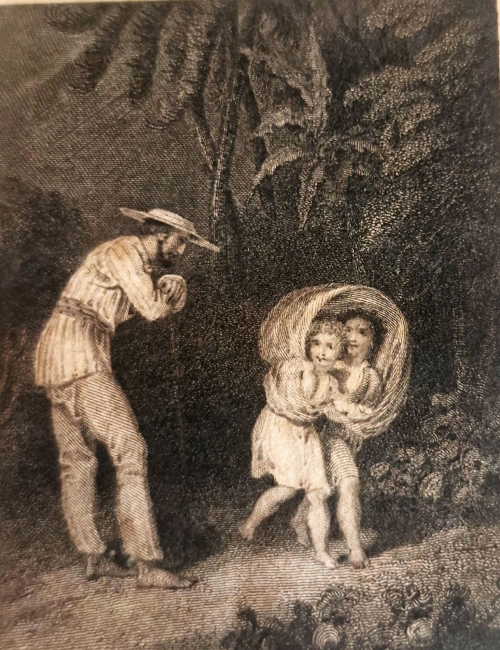
No caption to this image - by Westall, engraved by Charles Heath
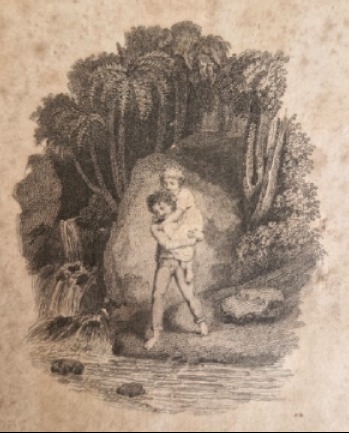
Frontispiece plate 'Do Not be Afraid, he to Virginia, I feel very strong with you.' page 36 - by Westall, engraved by Charles Heath
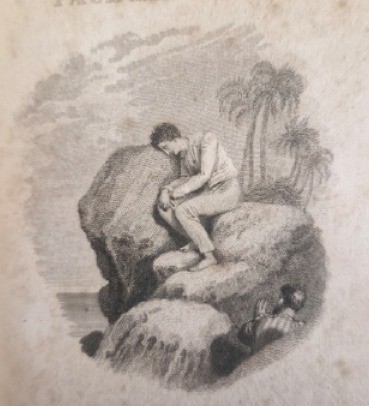
'On that spot I found Paul with his head reclined on the rock, and his eyes fixed on the ground.' - by Westall, engraved by Charles Heath
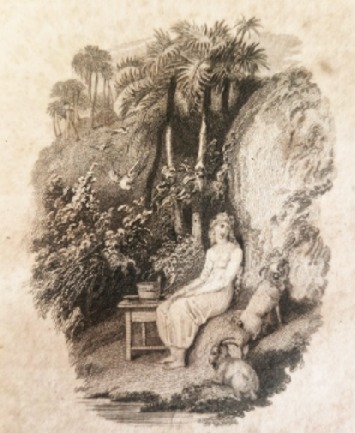
'Virginia loved to repose upon the border of this fountain, decorated with wild and sublime magnificence.' page 56 - by Westall, engraved by Charles Heath
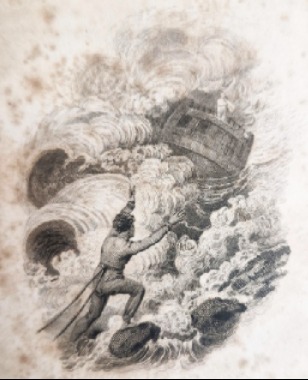
'It was Virginia, she had discovered her lover by his intrepidy.' Page 146
Sunday 1 January 1820
The Scots Magazine
Works Preparing for Publication
Views of Paris; consisting of sixty engravings, by Mr.Charles Heath, and other artists, from views taken in the French capital and its vicinity, by Capt.Batty, of the Grenadier Guards, are announced, and will be conducted on the same plan as the Italian and Swiss Scenery, and consist of twelve numbers, each number containing five plates.
Wednesday 5 January 1820
New Times (London)
Insolvent Debtors' Court. Jan.4
Abraham Joel Asser was brought up, on his petition, to be discharged.
Mr.Arabin appeared for several of the creditors to oppose his discharge. It appeared by the statement of the Leaunred Counsel, that Assar is a Polish Jew, and had formerly carried on business as a mercer, at Konigsburg, in Prussia; that he has formerly been unfortunate in business, but having conducted himself to the satisfaction of his creditors on that occasion, they had full confidencein him. In May 1818 he signified his intention of going to Berlin, and from thence to Silesia, to purchase woollen cloths; that his creditors, believing him to be an honest man, entrusted him with considerable property, to convey for them to Correspondents at Berlin; - - -
The whole of the creditors were out of the kingdom, in consequence of which the Learned Counsel prayed that the consideration of the insolvent's petition should be postponed, to give them an opportunity of attending.
Mr.Barry, Mr.Pollock, and Mr.Heath, for the insolvent, urged the necessity of going on with the case.
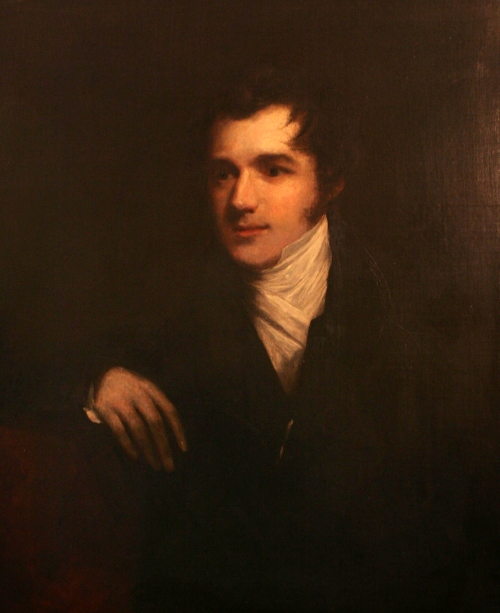
George Heath
The Court considered it a case of great importance; such a one never before had come under consideration. It would, therefore, further the ends of justice that it should be postponed; which was accordingly done to the 8th of February, when it will be the first.
Wednesday 5 January 1820
Morning Herald (London)
Insolvent Debtors' Court.
Gilbert Swan Davis, who described himself as a fishmonger and corn dealer, was opposed by Mr.Heath. He lived at Gloucester; he kept no books of his dealings in corn; that business was carried on by his wife and daughter, who now conducted his fishmongering concern. He did not know what capital he had when he commenced corn dealer; he had been himself a banker some year ago, and used to make notes payable at the banking house of Davis and Co. at Bristol; but he said he had always provided for the notes made payable there.
He entered into the corn trade, he purchased a quantity of corn of Turner, Jakes and Co. of Bristol; he was not insolvent then, but he gave them notes payable at Bristol; he paid no debts however, but he had a suit in Chancery which he expected would be decided in his favour, and with the money he looked for from the issue he made the notes he gave Turner and Co. payable at Bristol was, it suited their convenience, as they lived at Bristol, and he had some money at the time in the hands of the bankers at Bristol. But the money afterwards went to pay the expenses of an execution that was put into his house.
Being asked how many notes he had made payable at the Bristol Bank, he said he did not know.
Mr.Heath submitte, that an explanation should be given respecting the insolvent's transactions with the Bristol Bank. On which the Commissioner ordered the insolvent to be remanded till the 24th, in order that such explanation might be given, and the case more fully investigated, particularly his transactions with the Bristol Bankers.
x x x
Abraham Joel Assar was brought up, on his petition, to be discharged.
Mr.Arabin appeared for several of the creditors to oppose his discharge. It appeared by the statement of the Learned Counsel, that Assar is a Polish Jew, and had formerly carried on business as a mercer, at Koningsburgh, in Prussia. - -- (same as week before)
Mr. Barry, Mr.Pollock and Mr.Heath, for the insolvent, urged the necessity of going on with the case. The Court considered it a case of great importance; such a one never before has come under consideration. It would therefore, further the ends of justice that it should be postponed; which was accordingly done to the 8th of February when it will be first.
Thursday 6 January 1820
Statesman (London)
Insolvent Debtors' Court.
The concluding part of the case of John Rae Mure, in our Paper of yesterday, was accidentally omitted - After Mr.Pollock had stated his case, and contended that the insolvent had practised a system of deception towards the Lady from whom he had the two bills for XX50. each, and to whom he paid money only for one.
Mr.Heath, on behalf of the insolvent, said, the loss should fall on those who acted so incautiously as to pay one bill without having the other: he said Mr.Mure had not recollected that the bill was in the hands of the banker, and the by law the bill could not be accepted.
The Commissioner wished to know on what clause of the Act it was that the present opposition was made.
Mr.Pollock replied, on the clause relative to the misapplication of money entrusted to the insolvent's care, and breach of trust.
The Commissioner said, he was afraid the clause would not apply to this case. He certainly distrusted the insolvent's declaration as to his belief of his having destroyed the bill, when he told the parties he had done so. But those parties must submit to the consequences of their own want of caution and folly.
The insolvent, therefore, was discharged.
Saturday 13 January 1820
Commercial Chronicle (London)
George Heath?
Surrey Sessions, Jan.13
Parish of Camberwell - Appeal Against the Decision of the Surrey Magistrates.
Mr.Heath and Mr.Hutchinson appeared to oppose Mr.Cowley to support the order. The facts are these:- The Curate of the parish of Camberwell had been many years engaged to attend, in his Ministerial capacity, at the Workhouse, for which he had been paid a stipend of 50 guineas per annum out of the Poor-rate: this was allowed by the Churchwardens and Overseers in Vestry. and a check for the same was drawn upon the Treasurer, who paid it.
The accounts were submitted to the Magistrates, at Union Hall, for their approval, who would not allow this item, and signed an order to that effect. The question to be decided was, whether the Magistrates had jurisdiction in this case.
Mr.Heath, in opposing the order, handed the Court the Local Act of Parliament, by which power was given to the inhabitants to elect, if they thought fit, one or more Treasurers, who were to receive all monies collected on account of the Parish and such Treasurers to account for the same, annually or oftener, upon being required to do by the Churchwardens, Overseers, or Vestry, in the same manner that Overseers are compelled to pass their accounts.
The Churchwardens, Overseers and Vestry had also the power of dismissing the Treasurer was merely the servant of the parish; he had not the power to refuse the payment of checks that were properly drawn upon him; if he could shew that the monies he had paid were on account of the parish, and could produce the documents, the Magistrates were bound to pass the accounts: if the money had been improperly spent, the Overseers were the responsible parties, and they were the persons whose accounts should have been disallowed, and not the Treasurer's.
Mr.Cowley here demanded that the accounts should be produced.
Mr.Heath declared he would not agree to it.
Mr.Cowley persisted in his demand without effect. He then desired to be informed by whom Mr.Heath had been retained; but this was also refused.
The Court, addressing Mr.Cowley - Do you think the Treasurer has any discretion in paying or rejecting checks drawn upon him: is he not bound to pay them?
Mr.Cowley - Yes, I think he is.
Mr.Cowley proceeded to deprecate the mode that had been pursued in the present case, and the clandestine way of withholding the accounts; and generally contending, that the order must be confirmed.
The Court was of opinion that the Magistrates had not the power to disallow the accounts of the Treasurer, provided he produced the documents, and had no doubt the Court below had mistaken them for the Overseers.'
The order was therefore quashed; the Chairman having remarked that the Poor-rates could not be made chargeable with such an item of expenditure.
Mr.Heath said he was instructed to assure the Court, that it would not again be repeated, after the opinion that had been expressed.
Mr.Cowley - But what it to be done with the XX50 guineas?Is the Curate to keep it?
Mr.Heath - Certainly; if any one is to lose it, it must be the Overseers, and I'll protect them, if I can.
The conversation continued for a short time; after which -
Mr.Heath applied for his costs.
The Court said they could not grant it.
Mr.Cowley - What! shut out justice and ask for costs too!
The Court - Mr.Heath had a right to ask for his costs; the Court has exercised its discretion in refusing them.
Saturday 15 January 1820
Morning Post
Moores National Airs - The Second Number of the Above Work is this day published, price 19s. with Symphonics and Accompaniments by Henry R. Bishop; the Words by Thomas Moore Esq.- This Work is published in royal quarto, embellished with Illustrations, designed by Thomas Stothard R.A., and engraved by Charles Heath. - London: Published by J.Power, 34, Strand
Tuesday 18 January 1820
Globe
Ninth Edition of Lalla Rookh.
This day is published, in 8vo, price 14s. Lalla Rookh; an Oriental Romance, By Thomas Moore Esq., Printed for Longman, Hurst, Rees, Orme, and Brown, London.
Also pubished in 8vo. price 12s. Illustrations of the Poem, engraved by Charles Heath, from Paintings by R.Westall R.A.
A few of each may be had in Quarto.
Tuesday 18 January 1820
Morning Advertiser.
George Heath ?
Surrey Sessions.
Mrs.Sarah Tenant was indicted for stealing on the 27th December, 100 pieces of earthenware, the property of Joseph William Storey, who resides opposite to the Bricklayers' Arms, in the Kent Road.
Mr.Heath was for the prosecution. He stated that the case was one of swindling, which amounted to felony. The point upon which the Jury were to decide was, whether the prisoner had obtained the goods specified in the indictment, with the intention not to pay for them. If that was the fact, there could rest no question as to the guilt of the prisoner upon the whole of the charge laid in the indictment.
Mr.Storey deposed that prisoner came to his shop on the 23d of Dec. and said that she wanted to look at some china, to match some she had got. Witness said he had plenty of the pattern, but not gilt. She said she would take a bason with her, as she wanted it particularly. - - - long article about crockery - - -
The Jury immediately found her Guilty. - Upon hearing the verdict she screamed and cried bitterly.
The Chairman, in passing sentence, said, that in order to check the practice which was so frequently repeated, and to correct the prisoner for the future, the sentence of the Court was, that she be transported for seven years.
Wednesday 19 January 1820
Morning Post
Subscription to Afford Temporary Relief to the Destitute, and Nightly Shelter to the Houseless during the Present Inclement Season. The Right Hon. Lord Mayor.
At Mess. Marsh, Sibbald &Co.
Joseph Hume
William King
James Heath
Francis Freeling
Marsh and Co.
Mr M.K. Knight
Miss Knight.
etc. - - -
Wednesday 19 January 1820
The Heath Family Engravers 1779-1878, Volume 3. by John Heath
Letter - from Charles Heath to O.Rees, Longmans.
Dear Sir,
I hereby engage to Engrave the whole set of Drawings, in number Thirty one for the Poems of Crabb and deliver the same in the course of March 1821, at the price of 40 Guineas for each Plate - on condition I am allowed to draw on you at this date a Bill at 12 months for £600 on A/C of the same - and if when the Plates are very much advanced and you see clearly I shall execute my engagement in time I should want 3 or 4 hundred more, you will accept a Bill but at a shorter date to that amount - on those terms.
I will forward you a beautiful Set of Plates. I trust to Mr.Westall's and your Satisfaction.
I am Dear Sir,
Yours truly obliged
Charles Heath,
Seymour Place, Euston Square
P.S. I will send tomorrow at 2 o'clock for the Drawings the endorsed Bill and the Bill for Settlement of last account.
I hope you will like the set of Robinson Crusoe I have with this.
1820 circa
The Heath Family Engravers 1779-1878, Volume 3. by John Heath
Letter - from Charles Heath to John Britton
Dear Sir,
I send you the Illustration with many thanks. I was not aware you would want the Prints as you had them in the work but I will look them out in the course of the day and send them.
Yours very truly
Charles Heath
Friday 21 January 1820
The Heath Family Engravers 1779-1878, Volume 3. by John Heath
Letter - Charles Heath to O.Rees, Longmans.
Dear Sir,
I thought our arrangement respecting the Plates for Crabb had been final - but if you dislike that plan I am very willing either to be paid for every 12 Plates delivered finished by a Bill of 6 Months - or for the whole when delivered by a Bill at 2 or 3 Months, be so good as to let me know whether this will meet your Ideas, or favour me with some offer of your own.
Yours Dear Sir, Very truly Obliged.
Charles Heath
Monday 24 January 1820
Salisbury and Winchester Journal
The following Important Works just published by Hurst, Robinson and Co (late Boydell's), 90 Cheapside, London; and A.Constable and Co, Edinburgh. Sold by Brodie and Dowding, Salisbury; and C.Upham, Exeter. - - -
6. The Pilgrim's Progress, by John Bunyan, embellished with six beautiful Engravings by Charles Heath, from designs by R.Westall R.A., 1 vol. foolscap 8vo, price 10s. 6d. boards.
Monday 24 January 1820
Morning Advertiser
Surrey Sessions.
Desperate Assault upon the Water Bailiff's Assistant.
The Court was greatly crowded to hear the trial of Goodrick, who had been "upon the waters" about 60 years, and was formerly well known as the celebrated diver, who used to fling himself into the Thames at the stem of the City Barge and rise at the stern. He is also remarkable for having saved lives, and for having swum, when in a state of drunkenness, from Westminster to Battersea Bridge. A man named Hollis was included in the indictment.
In this case, Mr.Heath and Mr.Turton were engaged against the defendants, for having assaulted John Rough, one of the Water Bailiff's Assistants, in the execution of his duty, on the River Thames.
Rough stated that the night of Monday, the 5th of September, he went to Putney to look out for unlawful nets. He soon saw Goodrick, Hollis and another person busily employed in laying a drag net, which was calculated to take all sorts of fish. - - - - long article - - -
Mr.Harrison then called Mr.Howell, the Water-Bailiff, to state whether Goodrick had been an obnoxious character on the Thames.
Mr.Howell said, that defendant had been convicted of an assault upon Mr.Sheppard, many years ago, and sentenced to three months imprisonment in Surrey, and that he had also been convicted of an assault upon Mr.Nelson, in the execution of his duty, and been sentenced to six month's imprisonment in Clerkenwell Prison.
The Chairman sentenced the defendants to six months' imprisonment each in Newington Gaol.
Tuesday 25 January 1820
Morning Herald (London)
Insolvent Debtor's Court - Monday
During the greater part of this day, the Court was occupied in hearing the case of Lieutenant Colonel Gibson of the East India Company's service, who has been living for about seven years in the rules of the King's Bench prison; and who now came up for the first time in order to obtain his discharge.
He was opposed by Mr.Andrews, chiefly on the ground of his having continued wasting his property in prison instead of withholding an annuity which he had undertaken to give, in consideration of receiving a loan of £700/. to a Mr.Hartley, in whose behalf the learned Counsel said he then appeared: and who debt he contended should be excepted. - -
Mr.Pollock, who was also Counsel for the opposing creditor stated, that the insolvent during three or four years had expended near a hundred pounds each year for the schooling of his children: and that during the seven years he had remained in prison he had been expending £365/. a year.
Mr.Heath on behalf of the insolvent, said he felt it his duty to resist the claim of Mr.Hartley who had been receiving £24/. per cent for his money. It was a claim which the Court of Chancery would instantly reject; and of which there was no instance in the annals of that Court. It was one which even a Jew could not justify. He should show that the Colonel had not lived too expensively, when his situation in life was considered. He had sent his boys to a boarding school, but the sum he paid for their board and education was so little, that it would have cost him more to maintain them at his own home. And surely it was not to be contended that he was to let his children go without education. He had been living on his half pay; and there was no provision in the Act that could compel him to give that up to his creditors.
Mr.Andrews mentioned, that the insolvent was bound to give up the annuity to Mr.Hartley pursuant to his contract.
Mr.Heath could not advise him to do any such thing; but Mr.Hartley ought to be satisfied with taking his original debt with the common interest of 5 per cent. This would be no more than an act of justice to the other creditors, from whom the property of the insolvent ought not to be swept away by Mr.Hartley.
The Commissioner gave it as his opinion that some arrangement of that kind might be made. - - - continues - - - -
Friday 28 January 1820
Morning Herald (London)
Insolvent Debtors' Court - Thursday
As soon as the Court met this day the case of Jesse Carter, which had partly been heard on Wednesday, was again called on. as the account which we are now about to give of this business cannot be considered in the light of an exparte statement, we shall proceed to lay before our readers the principal circumstances that took place on both days.
When the insolvent appeared before the Court on Wednesday, for the purpose of obtaining his discharge, he was opposed by Mr.Norris, on the ground of his not having given a fair account of the property which he possessed. The result of this examination, however, was not of much importance. The insolvent was asked several questions respecting the sale of a house in Exmouth Street, and the manner in which he had disposed of the proceeds of the sale, and his answers amounted to a declaration that the sum he had received bore no proportion to what he had expended in building the house - - - long article.
Mr.Heath then addressed the Court for some time in defence of the insolvent, against whom he contended that no dishonesty, no concealment of property, nor false representation could be proved; and if there was any confusion in his schedule, it must have arisen from his ignorance, and from the conduct of the parties by whom he had been beset:- persons who, taking advantage of his embarrassments, had obtained most usurious and exorbitant interest for the sums they had advanced him; and these were the parties who endeavoured to prevent him from obtaining his discharge.
The Commissioner said, there were many parts of the insolvent's schedule which required explanation; and therefore he ordered that he should come up on a future day, and bring with him a balance sheet, with an account of all the sums of money he had expended during the last three years.
Monday 31 January 1820
New Times (London)
This day is Published, superbly printed in atlas 4vo, 4/ 4s. boards
An Essay on Man - By Alexander Pope.
Illustrated with designs by Uwins, which are engraved in the first style of the art, and in the line manner, by Charles Heath, Rhodes, Scott, and Warren; and a full length Portrait of the Author, engraved by Robinson, from the original by Jervas, in the possession of George Watson Taylor Esq., M.P. The illustrations of this edition, which is necessarily limited to 200, are all proofs on India Paper.
London: Printed for Robert Jennings, No.2 Poultry.
Tuesday 8 February 1820
Morning Post
Genuine Works of Hogarth.
On the first of April 1820, will be published by Baldwin, Craddock and Joy, No.1., of The Works of Hogarth, from the whole of the original Plates lately in the possession of Messieurs Boydell, and others engraved by eminent Artists; the whole under the Superintendence of James Heath R.A., accompanied by Explanations of the various Subjects, by John Nichols Esq., F.A.S. L.E. and P.
The Plates of the inimitable Hogarth have not only been sought for with avidity in our own country, but have been admired in every civilized nation in the world; and, since his death, various copies of them have, from time to time, been published. - - - continues - - -
The Plates purchased of Messrs Boydell are for the most part in an excellent state, and will require only a partial attention, to restore them to their original perfection; this will be undertaken by Mr.Heath, who fully appreciating their excellence, will on no account alter a single line as left by the pencil of Hogarth. Such of the smaller plates as are estimable rather on account of their subject than the workmanship, will be re-engraved as fac-similes of the original.
The whole work will consist of about 130 plates, containing nearly 150 subjects, with occasional sheets of letter press, it will be divided into 23 or 24 Monthly Numbers.
Thursday 10 February 1820
British Press
Insolvent Debtors' Court - Wednesday, February 9.
Coode v. Abraham Joel Assur
Yesterday a very curious case occupied this Court from morning until evening, and was then adjourned until this day. Yesterday evening a strong wish was expressed by the Counsel concerned for the parties that no notice in the Papers would be taken of the proceedings until they were brought to a conclusion.
It was the application of Abraham Joel Assur for his discharge. He was represented as a Prussian Jew and the son of a banker in Koningsberg. He was opposed by Mr.Coode, a gentleman who served in the 5th dragoons, and who is now confidentially connected with the Alien Office.
Mr.Coode underwent a very long examination in the course of which he stated that about twelve years ago, he had met in Germany the lady to whom he is now married. He became acquainted with her in Hamburgh in the year 1806 or 1807. She travelled with him shortly after accompanied by the Baroness Reiman, to Berlin, where he was made a prisoner on the entrance of the French army in 1807 or 1808: his memory was not very perfect on account of a wound he received in his head. Immediately after he was taken into custody he was sent off under an escort of gens d'armes to Verdun in France. The lady to whom he was married, with her friend the Baroness, accompanied him in the same carriage to France. - - - long article. - - - -
The Counsel already heard to speak to evidence were, for the Insolvent, Mr.Barry, and for the opposing Creditor, Mr.Arabin. Mr.Adolphus was with the latter; Mr.Pollack and Mr.Heath with the former.
The Court put the following questions to the Insolvent, after the above observations were made: Q. Have you sent to your wife to send your books from Konigsberg to this country, since you went to prison - - --
Friday 11 February 1820
Morning Herald (London)
Insolvent Debtors' Court - Thursday
Charles Henry Burt, a clergyman of the Church of England, and a gentleman of respectable appearance, was opposed by Mr.Heath on the part of several creditors, chiefly on the ground of an imperfect and incorrect schedule. After the insolvent was examined for some time respecting the state of his affairs, he stated in answer to a question put to him, that his schedule had been drawn out by a person of the name of Hughes.
The Commissioner expressed his astonishment that any intelligent man, who had the means of knowing what passed in that Court, would employ such a person as his agent. That very Mr.Hughes had long since been dismissed from the Court, as wholly unfit to manage the business of any insolvent; and all prisoners confined for debt should have been put upon their guard against employing him.
Mr.Arabin, on behalf of the insolvent, expressed an earnest wish that he might be allowed to amend his schedule in time sufficient to obtain his discharge before the expiration of the present Act.
The Commissioner said, he felt disposed to grant every possible degree of indulgence to this unfortunate gentleman; but according to law he was unable to do so, and must dismiss the petition.
- - - - continues - - - -
Saturday 12 February 1820
Globe
Insolvent Debtors' Court - Friday, February 11.
David Solomon was brought up to be examined, but previous to the case coming on, the Insolvent was questioned by the Court as to what he meant by the statement in his schedule, of his having received donations from his friends. The Insolvent answered, he did not know the meaning of the word donations, as he was no scholar and could not read of write, and knew no other language than English.
The Court then asked him if his schedule had been read over to him and properly explained? Upon which the Insolvent answered in the affirmative, and that it had been read over to him by Mr.Aaron, who stated himself to be a clerk of Mr.Seabrook.
The Insolvent not being able to solve the question, Mr.Heath, who was the Insolvent's Counsel, examined him whether he knew that receiving money from his friends was donations from them?
Upon which the Insolvent replied, that he now recollected what it was, and answered, it was the county allowance (the Court was in a roar of laughter at such an answer).
The Court remanded the Insolvent, desiring him to get a better interpreter than Mr.Aaron to read over and explain his (the Insolvent's) schedule to him, and that he might come up again on Tuesday next.
Tuesday 15 February 1820
New Times (London)
This day is Published, beautifully printed in 3 vols. post octavo, price 1/.10s.boards, the 2nd Edition of
Ivanhoe; A Romance, by the Author of "Waverley," &c.
Printed for Archibald Constable and Co. Edinburgh; and Hurst, Robinson, and Co. Cheapside, London.
By whom will be published in a few days, Illustrations of Ivanhoe, engraved by Charles Heath from designs by R.Westall R.A.
Thursday 24 February 1820
Morning Chronicle
Married
On the 23rd inst. at St.Pancras Church, by the Rev.J.Armstrong, W.T.Heath Esq., to Matilda, third daughter of James Heath Esq., of Russell Place, Fitzroy Square.
At the same time, the Rev. Francis Dollman, of Milton, Kent, to Amelia, youngest daughter of James Heath Esq., of Russell Place, Fitzroy Square.
Saturday 26 February 1820
Public Ledger and Daily Advertiser
Marriages
Feb.23. W.T.Heath Esq., to Matilda, and the Rev.F. Dollman, of Milton, Kent, to Amelia, both daughters of James Heath Esq,. of Russell Place, Fitzroy Square.
1820
C.Heath listed as attending Benjamin West's funeral on March 1820; so did all R.A.'s and associates.
Sunday 2 March 1820
James Heath, 42 Howland Street, to Dawson Turner.
I should have sent the autographs before but being promised a specimen of the late Queen's writing I therefore thought it worth waiting for.
I was at the funeral of his late Majesty at Windsor and was introduced to Mr.Gorst, a German brought over by his late Majesty from Germany, and who has ever since been his upholsterer and was much noticed by the Royal Family. About the year 1792 the Queen consulted him about the Furniture at Frogmore Lodge and made out a catalogue of the whole of the Furniture written entirely with her own hand.
Mr.Gorst finding that I was collecting everything curious in that way gave me a small part of the catalogue which I herewith send. You may depend on the authenticity as I have seen her hand writing before and Mr.Gorst showed me two Bibles which the Queen had given to his children in both of which was expressed that they were the gift of her Majesty.
It will give me the greatest pleasure in the world to go to Paris with you. What month do you think the best? All times are alike to me at present. France is in such a ferment that it would not be safe to be there, but I have no doubt that in 2 or 3 months it will all blow over.
With many thanks for your last kind present I remain,
Yours most truly,
James Heath
Tuesday 21 March 1820
Chester Courant
Arts and Science
Siderography
Among the improvements of the day, not one appears to attract more notice than the Siderographic Art, which has been introduced into this country, by Messrs, Perkins and Fairman.
The principal object to which this invention has been applied, is to secure Paper Currencies from forgery; and, we believe, the most sanguine expectations of the inventors have been realised, as in no one instance has a successful attempt been made, to counterfeit their most simple notes. A short account of the invention will illustrate the value which is attached to it, and the advantages that will result from its introduction into this country.
The chief merit of this invention consists in its power to multiply engravings of the most exquisite, as well as those of inferior kinds, and substituting steel in place of copper plates, in certain cases.
This process of stereotyping the Fine Arts, is simple, and easily understood, and is effected in the following manner. Steel blocks or plates are prepared in a peculiar way, of sufficient softness to receive the tool of the engraver, who is able to produce upon them even better and sharper works than upon copper. This block or plate is then hardened by a new process, without injury to the most delicate lines. - - - -
This invention appears capable of putting an entire stop to the forgery of all paper securities, of whatever description.
We understand with pleasure, that the proprietors of this Patent have formed a connexion with Mr.Charles Heath, an eminent Engraver of this metropolis, and intend to have an extensive and permanent establishment in London, for the purpose of executing work for public and private Banking Institutions, and also all engravings of which a great number of impressions are required.
Messrs Perkins and Fairman, it is generally expected, would have had the contract with the Bank of England for furnishing their new notes. The plan has received the approbation of the most eminent artists of this country, who have signed a testimonial of its excellence and its capability of answering the end proposed. The Report, however, from the Commissioners appointed by his Majesty, precludes that hope for the present.
Thursday 30 March 1820
English Chronicle and Whitehall Evening Post
Public Funeral
of the late
Benjamin West Esq., in St.Paul's Cathedral
Soon after Mr.West's decease a Deputation from the Council of the Royal Academy waited on his assigns and executors to appraise them of the intention of that body, to honour the remains of their late President by attending them to the grave, according to the ceremonial adopted on the public interment of the late Sir Joshua Reynolds, in St.Paul's Cathedral.
His Majesty having, as Patron of the Royal Academy given his gracious sanction that similar honours should be paid to the late venerable President; and his sons and executors accordingly made every necessary preparation to carry the arrangement into effect. As the Schools of the Royal Academy were closed, and all its functions suspended by the death of the late President, it was of material importance on this account, and with a view to the usual preparatory arrangements for the annual Exhibition, that the funeral should not be delayed; and as early a day as practicable was therefore fixed for the public interment in St.Paul's Cathedral - - - continues - -- long article
The processioned was closed by above sixty carriages, arranged in rank by the junior City Marshal and Marshalmen; the servants wearing hatbands and gloves.
Chief mourners - - - - Henry Fauntleroy Esq. and James Henry Menderson Esq., (The Family Trustee and Executor of the Deceased) - - - -
Private mourners two by two - - - Charles Heath - - -
Thursday 30 March 1820
Saint James's Chronicle
Hogarth.
This day is published, by Baldwin, Cradock, and Joy, price to Subscribers 17. 1s. 0d. - No.1. of
The Original and Genuine Works of William Hogarth.
From the Plates lately in the Possession of Messrs. Boydell; and others engraved by eminent Artists: the whole under the Superintendence of James Heath Esq., R.A. accompanied by Explanations of the various subjects. By John Nichols Esq., F.A.S. &c. This Number contains - 1. Portrait of Hogarth; 2. The Harlot's Progress, Plate II; 3. The Rake's Progress, Plate II; 4. Idleness and Industry, Plates II. and IV; 5. Portrait of J.Wilkes.
During the Course of Publication, the Work will be supplied to Subscribers only, whose Names and Addresses must be forwarded to the Publishers through the medium of their respective Book or Printsellers. - - -
Monday 3 April 1820
James Heath to Dawson Turner
I am much obliged to you for your kind invitation to Yarmouth for me and my Friends, the time I hope will some time arrive when I may be able to avail myself of it.
Your suggestion for the end of May for our trip to Paris meets my ideas exactly. Have you any objection to a young friend of mine joining us? Unless a friend of yours was to have been of the Party, I think that three are better than two.
I have sold my Plate of the Drowned Fisherman to Hurst & Robinson, successor to Boydell reserving to myself Proofs and Prints to the amount of 350 for my subscribers and Friends. I have about ten of each left, and if you have any Amateurs in your neighbourhood, I will thank you to mention it to them, and I should be happy to supply them.
This is the last large plate I shall ever publish. My next undertaking will be an Engraving from the finest picture that Raphael ever painted, of a Holy Family in the Marquess of Stafford's Gallery. It is for Mr.Antonia of Manheim [sic] the first printseller in the World. I hope soon to be able to present you with an Etching of it.
My friends are very angry with me for undertaking any more works but I feel that while my health and talents continue I can never [be] happy without my profession to amuse me.
I remain Dr.Sir,
Yours most truly,
James Heath
Saturday 6 May 1820
James Heath, Howland Street to Dawson Turner
You will see by the enclosed that I am going to trespass again on your good name. I beg leave however to say that if it is attended with any inconvenience to you, you will candidly say so, or if it would be agreeable to you to let me have a part now and the remainder in a month or two, it would be the same thing to me.
And now with respect to our trip to Paris. Have you fixed the day? All days are alike to me and my Friend, therefore suit your own convenience entirely. I should like to know your idea of the time we are likely to be away as I should make my arrangements accordingly.
I am willing a long or a short time just as is agreeable to yourself. I am informed by everyone that it is the best time of the year to go, so then I anticipate with much pleasure.
I am, Dear Sir, yours truly,
James Heath
Thursday 11 May 1820
James Heath to Dawson Turner.
Many thanks for the pecuniary accommodation. Respecting our Paris expedition, I am truly sorry that anything has happened to prevent its taking place at the time proposed, but as that I suppose cannot be remedied, the next best thing to be done is to fix the earliest time your engagements will permit, for my friend as well as myself have so set our minds on the excursion that we would not give up for all the world.
Have the goodness to write me what time you think you shall be able to accomplish your business and be able to set off. I quite agree with you that by going later we shall have the advantage of all the fine prints, but we must so manage as not to be in Paris in very hot weather.
I have mislaid my Catalogue of the British Institution, but will endeavour to find it and send it together with that of the Royal Academy.
I am sorry to say that I think the present Exhibition a very bad one.
I am, Dear Sir,
Yours truly,
James Heath.
Saturday 27 May 1820
James Heath to Dawson Turner
I am truly sorry to find that your engagements will prevent you from going to Paris this spring. As all hope of having the pleasure of your company is now over, I shall make my arrangements for setting off from London on Monday or Tuesday week. We intend staying in Paris a full week, and if you can steal a few days to join us, I need not assure you, it would give us the greatest pleasure.
I am Dear Sir, Yours truly,
James Heath
31 May 1820 -
Death of George Heath, brother of James Heath R.A., son of George Heath of Butcher Row, Newgate Street, London.
George Heath was buried in St.Botolph's Bishopsgate.
Thursday 6 April 1820
Morning Herald (London)
This Day was published, In 4 volumes, foolscap 8vo. - 2/.2s, boards, a New Edition of
Don Quixote de la Mancha
Embellished with 24 engravings by Charles Heath from original Drawings by Richard Westall R.A.
A few Proof Impressions of the Engravings, separate from the work, royal 4to, 2/.2s. Ditto, before the letters, on India paper, 2/.12s.6.
London: printed for Hurst, Robinson and Co. 90 Cheapside.
Of whom may be had, just published,
Illustrations of Ivanhoe; a Romance, by the Author of "Waverley," &c., Engraved by Charles Heath from Drawings by R.Westall R.A. Prints, medium 8vo. 16s. Proofs, imperial 4to. 1/.5s. Ditto on India paper 1/.10s. Also a few proofs on India paper, before the letters, colombier 4to. 1/.15s.
Wednesday 7 June 1820
James Heath, 42 Howland Street, London, to Dawson Turner
My dear Sir,
I shall set off for Paris tomorrow. My headquarters will be at Meurice's. My companions are Dr.Thomas, Rector of Billesdon in Leicestershire and his son Mr.Henry Greene who changed his name for the Estate of Rolleston in the same county. I should have set off with ten times more pleasure if you had been of the Party. I have however a faint hope that you will join us.
Our intention i9s to stay for 4 or 5 weeks at least. While I am there I shall do all I can to forward your pursuits and if there is anything I can do for you in any other way, I beg you will command me.
I am Yours truly,
James Heath
Tuesday 27 June 1820
James Heath, Meurice's Hotel, Paris to Dawson Turner.
We have been here about sixteen days and during the whole of that time we have not had an idle hour. We want nothing but your company to make us perfectly happy. I feared that having been here before, the place would have lost its greatest charm, novelty, but I do not find that to be the case. The People, the Amusements, the [illegible] present an eternal employment for our time, and I can not at present foresee when the period will arrive when we can fairly conclude that we have exhausted the amusements of Paris.
In this record of charm I have not forgotten you. I have made diligent inquiry wherever I have been for autographs, and have been in some degree successful. Mr.Denon has given me part of an Oration pronounced by Frederick the Great, King of Prussia, in honour of Voltaire in his own hand writing. He however requested me not to say from whom I had it, for reasons which I cannot now communicate. He has promised me a letter of Volnay's. I have got a letter of Lady Morgans and Mr.Moore the Poet (with whom I am to dine tomorrow) has promised me one of Lord Byron's. I hoped to have been able to get a letter of Bonoparte's and asked Denon about it, but without success.
Mr Friends talk of leaving this place next week, but I feel inclined to stay a month longer. Cannot you contrive to come over, if it were only for a few days, and we could return together? If you can, I wish you to write by return of Post, if not, I shall not expect a letter from you. I have some thoughts of returning by way of Brussels but if you come, I will return when and by what way you please.
The weather is at present uncommonly hot, and the Fruits in the greatest abundance.
Having got to the end of my Paper and the Post just going out I have only time to say that I am, Yours truly,
James Heath
Wednesday 12 July 1820
Charles Heath, London to Dawson Turner
Dear Sir,
I have great pleasure in forwarding with this a few Proofs of my works namely the completion of Italian Scenery, some Swiss ditto, 24 ditto Don Quixot [sic] 12 Ivanhoe, 8 Tales of the Genii, 5 Paul and Virginia, three Numbers of Paris and two Specimens of our new plan for preventing Forgery which I trust you will honour me by putting into your Portfolio.
Since I wrote last we have been visited by almost all the Artists, Engravers and men of Science who one and all declare it their firm belief that Forgery with all its attendant evils would be put an end to by the adoption of our plan. The Bank talk of bringing out their new Note - it is not for me to say a word on that subject - but this I will say. I would pledge my existence, I could make them a Note that would defy the Forger. I enclose two just done for the Derby Bank - on the paper they will be printed on. They are not sized at present. I must therefore request you will return them to me by Post as no Note on the Bank must be out of our Log. Should you ever alter your form book I shall be most happy to make you one - our Terms are as follows:
For dies to be designed and executed for the sole use of any one Bank - as much work as they please. The dies to be their property, 500 Guineas and four Guineas for every 5000 impressions - the printing to be paid for as usual - or, the Note to be made up from the dies already done, or may be done, 15 guineas a plate for each demonstration - and the same price for every 5,000. Printing as before - the back not charged for beyond the printing which is about 4 shillings a hundred.
The advantage to the Bank - perfect protection from Forgery - all good impressions, no repairing Plates or trouble of any description. The above Notes to be all printed from Steel Plates - consequently would be the same without the least variations for ever - the slightest deviation constituting a Forgery - and each Plate would be work supposing all done by hand at least 100 Gns. - We have already engraved for several family and Scotch Banks and are in treaty with the Bank of Ireland.
I hope you will excuse my saying so much on this subject but in London I assure you it is making a great noise. It will apply to the Arts and Manufacturers in particular. With best respects to yourself and family, believe me, Dear Sir, Yours truly,
Charles Heath.
P.S. I have heard you are engaged in the publication called Johnsons Antiquities. If Mr.Johnson is not engaged with a copper plate printer, I beg here to recommend McQueen of Newman Street, who prints all my works added to which my Brother-in-Law has just gone into partnership with him. [Samuel Hamilton].
Friday 11 August 1820
Public Ledger and Daily Advertiser
Valuable Freehold Estate, in the vicinity of Fleet Street.
By Winstanley and Sons.
At the Auction Mart, near the Bank of England.
On Friday, the 25th instant, at Twelve.
A Substantial Brick Building, situate in Water-Lane, at the back of Messrs. Parker's Premises, No.69 Fleet Street, and late in their occupation, but now on lease to Messrs. Perkins, Heath and Co. highly respectable tenants, at an annual rent of £210; comprising, on the upper story, a noble lofty room, about 60 feet by 23, and two smaller ones; on the ground floor, a large room, 40 feet by 23; the entrance passage from Water Lane; a counting or shop, and a private room; two stair-cases, and spacious light dry cellaring under the whole range of Building. To be viewed by permission of the tenants, and printed Particulars had of Mr.Hindman, Solicitor, Basinghall Street; at the Mart; and of Winstanley and Sons, Paternoster Row.
Friday 18 August 1820
James Heath, Bath - to Dawson Turner.
My dear Sir,
I shall be in London on Sunday and it is my intention to set off for Yarmouth in the Mail on Tuesday evening. I have had a great deal of pleasure at Bath and Clifton as the views from both places are very picturesque and pleasing to the eye of an Artist.
As I shall have the pleasure of seeing you so soon, I shall only say that I am as ever,
Yours truly,
James Heath
31 August 1820
James Heath, Billesdown, near Leicester to Dawson Turner
My dear Sir,
In compliance with your request, I write to inform you that I arrived at my friend, Dr.Thomas's at this place on Wednesday morning at 10 o'clock. The country about here is very beautiful consisting of hill and dale and abounding in Gentlemen's Seats.
My time has hitherto been spend on Horseback with my friends Dr.T. and his son Mr.Greene, in visiting the Gentlemen of the neighbourhood. On Monday next we propose going to Lord Exeter at Burleigh and if I can find time we intend going as far as Belvoir, the seat of the Duke of Rutland. My plan is to stay here till the 12th of this month and then go to London for about a week or ten days after which I shall go to Brighton for one week and return to London for the Winter.
And now my dear Friend gives me leave to thank you for the very kind and friendly reception I met with from you and Mrs.Turner at Yarmouth. I must say that I never met with a Family so amiable and so accomplished, and I shall always say that the few days I spent amongst you were the happiest of my life. Remember me kindly to Mrs.T. and your lovely daughters and believe me ever yours.
James Heath
Thursday 7 September 1820
Morning Chronicle
Fine Arts - Splendid Engravings and Illustrated Works by Horst, Robinson, and Co. (late Boydell), 90 Cheapside.
The Poacher Detected, engraved by Lupton, after the celebrated Picture by Mr.Kidd, exhibited in 1818
The Drowned Fisherman, engraved by James Heath A.R.A. after a Picture by R.Westall R.A. 24inches and a half long by 19 and a half Prints 2/.2s. Proofs 4/.4s.
The Dead Soldier (a companion to the above) engraved by James Heath A.R.A.after a picture by Wright of Derby - Print 2/.2s.
A Portrait of the late Benjamin West Esq., Pres. R.A. engraved by Charles Heath from the original of W.J.Newton. 6¼ inches by 12 and a half high. Price 10s. 6d. Proofs 15s.
Illustrations of Ivanhoe; a Romance, by the Author of Waverley &c. Engraved by Charles Heath, from Drawings by Richard Westall Esq. R.A. Prints, Medium Octavo, 16s. Proofs, Imperial Quarto, 1/.5s. Proofs on India paper, imperial quarto 1/.10s.
Don Quixote de la Mancha. Translated from the Spanish of Miguel de Cervantes Saavedra. Embellished with 24 Engravings by Charles Heath, from Original Drawings by Richard Westall R.A. In four volumes foolscap octavo - Price 12s.6d.
The Pilgrim's Progress, by John Bunyan, with Six Plates from Original Drawings by Richard Westall R.A. engraved in the first style by Charles Heath. In one volume foolscap - Price 10s. 6d.
Proof Impressions of the Plates, separate from the Work, price 10s.6d. - - - - -
Illustrations of the Monastery, engraved by Charles Heath, from Original Drawings by R. Westall R.A.
The same Artists are engaged in illustrating the whole of the Novels by the Author of Waverley.
1 October 1820
James Heath, 42 Howland Street, to Dawson Turner
My dear Sir,
You must me very neglectful in not answering your last kind letter sooner but the truth is that I have been expecting to have the pleasure of seeing you again at Yarmouth.
My young friend, Mr.Greene and I have been together almost the whole summer, and in the course of our conversations he had heard so much of Yarmouth as to make him wish to visit it. As the scheme promised me the pleasure of seeing you again I agreed to accompany him and I have no doubt but in a week or two we shall have the pleasure of paying our respects to you.
My memory has ever dwelt with pleasure on the few days I spent with you and your charming and interesting family. If you will have the goodness to enquire for the best Hotel, Lodging or Boarding House for us, that we may know where immediately to go to on our arrival, I shall be very much obliged to you.
I thank you for your brace of Birds. I hear the same account of scarcity from everyone. When I see you, I will settle about the Engraving of the portrait of Mrs.Turner. When the day is fixed for our being at Yarmouth I will write again.
I remain, dear Sir, James Heath
P.S. I beg to be most kindly remembered to Mrs.T. and your daughters.
Friday 6 October 1820
New Times (London)
Insolvent Debtors' Court, Oct. 5
In the matter of Mary Ann Wilson, an Insolvent.
Mrs.Wilson was opposed by a Mrs.Tyler, in person, upon the grounds of obtaining credit under false pretences. It was stated by the insolvent, in answer to the questions put by the Commissioners, that she went to lodge in Mrs.Tyler'shouse in in the month of September last, and that she was to pay 27s.per week for her lodging; that was not asked any questions as her responsibility; she never represented herself as a woman of fortune, or said that her first husband was Surgeon General of Ireland; she never represented herself as possessing 300/. per an. in her own right, nor that her son was a Clergyman and possessed 400/. per ann. and that between them they had 700/. per ann.; she never, when applied to pay rent, represented as a reason for not being able to pay, that her tenants in Ireland were 700/. in arrear.
She was married a second time to a Captain Wlison, but she never represented to any one that he left her in better circumstances than he found her, or that her son would come to England to his guardians, and then she could have any money.
Mrs.Tyler was now sworn, and was examined by Mr.Heath (Counsel for the Insolvent) when she underwent a very long and severe examination as to whether she was the legal occupier of the house, and the rent was actually due to her from the insolvent, or to a Mr.Massey. -
Mrs.Tyler then stated that when the insolvent took the lodgings of her, she represented herself as a woman of fortune, possessing 300/. - - - -
Mr.Heath was proceeding to contend, that the insolvent was entitled to her discharge, as there could be no pretence set up that she had made use of false pretences, with a view of obtaining credit, as supposing what Mrs.Tyler had stated to be true which the insolvent denied, yet credit had been given prior to any of these pretences being set up. The Learned Counsel was proceeding in his reply, when the Court stopped him, and pronounced that the insolvent was discharged.
The was the only case which occupied any time by opposing creditors.
9 October 1820
James Heath, 2 Howland Street, London, to Dawson Turner.
My dear Sir,
Under all the circumstances, I have advised Mr.Greene to postpone his visit to Yarmouth. I thank you very much for your kind invitation to your House, but I much fear that my young Friend would at least for a time rather be at a Boarding or Lodging House.
As I shall not have the pleasure of seeing you so soon as I wished or expected, would it not be for you to send the Picture of Mrs.Turner to Town?
Let me know the exact size you wish to have the Engraving and how soon you will want it. I have spoken to Mr.Picart about it and he has promised to make it the finest Plate he ever engraved. I prefer him to all others on account of his taste, and knowledge of drawing.
I will thank you to let me know when you return to Yarmouth after your trip. Remember me kindly to Mrs.T. and your daughters and believe me as ever,
Yours truly,
James Heath
Tuesday 10 October 1820
New Times (London)
In the matter of John Leigh, jun.
This case was noticed in our paper of the 6th inst. and stood over, on the application of a creditor, on the grounds that a material witness was unable to attend through illness. The case excited great interest, owing to the largeness of the insolvent's debts, the debts in the schedule amounting to upwards of £23,000/.
Mr.Pollock opposed the insolvent, and Messrs. Heath and Ballantyne supported him.
Mr.Pollock proceeded to examine the insolvent, who stated he had been bankrupt three times, and had obtained his certificate in each bankruptcy. There had been no dividends under his second and third bankruptcies. The second time he was bankrupt was in 1810, and the third time in 1816. The debts in his present schedule were all contracted since his last bankruptcy, excepting two Irish ones, amounting together to about 700/. The insolvent had a warehouse in St.Mary Axe, where he carried on business as a coal-merchant, under the firm of "The Metropolitan Coal Company." Since his confinement his family resided in Nelson Square, Blackfriars - - - - -
Cross-examined by Mr.Heath - He stated all the bills accepted by Mr.Richardson ws for a valuable consideration, and at the time he passed them he considered him a responsible man.
Mr.Pollock addressed the Court, and stated that this case must stand upon the evidence the insolvent had chosen to give. The Learned Counsel then argued that the insolvent ought not be discharged upon three grounds. - - - -
Mr.Heath contended, in this case, as it stood in the evidence, he had nothing to answer; and that the question was, whether in this case there was fair reason to suppose that Richardson was solvent when the bills were paid to Chapman. And the Learned Counsel said, why was not Chapman called upon to depose to that fact. The Learned Counsel concluded by stating, the question in this case was, whether upon the whole of the facts of this case this gentleman had probable means of paying this bill for 100/., and whether it had been passed under such circumstances as not to entitle the insolvent to his discharge.
In answer to the Court, the insolvent stated he was constantly in the habit of meeting Mr.Richardson on Change from September until January.
The Court did not consider the circumstances proved in this case were sufficient to justify their withholding his discharge.
Upon the Chief Clerk asking if there were any other creditors who intended to oppose the insolvent's discharge, Mr.Chapman and a Mr.Ibert both stated their intention to oppose it.
Mr.Heath objected to Mr.Chapman's being in a situation able to oppose the insolvent, having become bankrupt, when it was the duty of the assignees to oppose, if it was their intention to do so.
The Court also thinking the assignees of Mr.Chapman were the proper persons to oppose the insolvent's discharge, his opposition was overruled; and it now being past five o'clock, the Court adjourned entering into Mr.Ibert's case until tomorrow morning.
18 October 1820
James Heath, Howland, London, to Dawson Turner
My dear Sir,
I am sorry and ashamed that you should have had any trouble about the little Notes you were so good as to discount for me. I am at a loss to account for such conduct on the part of my Nottingham friends and shall write to them my opinion of their conduct. I have sent to Barclays to take up the Bill. I am at present unable to say whether it is likely I shall have the pleasure of seeing you at Yarmouth or not as Mr.Greene is away from home, and I have not lately heard from him.
Many thanks for a brace of Partridge. When you send the Picture I wish you to send me the exact size you wish the Engraving to be. Should you like any of the Prints to be in colours they may be finished at a small expense to look like miniatures. I am at present engaged on my large Plate from Raphael and shall soon have the pleasure of sending you an Etching.
With best regards to Mrs.T. and daughters.
I am Yours truly,
James Heath
10 November 1820 - (approx.)
Charles Heath 6 Seymour Place, Euston Square to Dawson Turner.
Dear Sir,
I have the pleasure in acknowledging the receipt of your last letter and kind present of a very fine brace of pheasants, for which I beg you to accept my best thanks. I shall very soon be able to give you all the information you require respecting the new invention for Bank Notes. At present we are so engaged in preparing Specimens etc. for the Bank of England, we have not been able to make calculations sufficiently correct to be able to say the exact expenses. I should however think much must depend on the quantity of Notes consumed, and the beauty of the Engravings on the face of the Note.
I will furnish you as early as possible with information on all these points and likewise send you some most beautiful Specimens. It is indeed the most extraordinary invention and has justly astonished every person who has seen the process. When next you visit London I hope to have the pleasure of seeing you and introducing you to my two partners Messrs Perkins and Fairman, and exhibiting the whole to you.
I feel particularly obliged by the interest you express in your letter and shall certainly feel much indebted if when you have seen it you can in anyway recommend the plan. We are now executing two Banks, the Calcutta and British Linen Company and expect many more.
You are so good to hint you would repeat the favour I have before received through my Father. I shall the beginning of January receive some Bills to a considerable amount and unfortunately at long Dates. If you could cash them or any portion of them I shall feel infinitely obliged as I cannot offer them to my own Bankers Messrs Rogers and Co. on account of the Dates. But in making the last request, I must beg that you will not put yourself to the least trouble should it be inconvenient.
I am happy to hear you like the Proofs I had the gratification of sending and it will afford me the greatest pleasure to send you a Proof of everything I execute or publish, nor must you think yourself under the slightest obligation on that score, as the kindness I have already received at your hand can never repay.
I send with this the Plates to the last two numbers of Italy, and a set of Swiss Scenery with the letterpress as the Plates lose their interest without the Description. I likewise send the first numbers of my new work on Paris which will be published on the 1st of January next. In this work will be seen anything in Paris worth engraving, among others a beautiful perspective view of the great Gallery of the Louvre.
The following numbers shall be forwarded as they are published with any other Proofs I may have done in the interim, and as I understand Mrs.Turner and your Daughters are all Artists I can in any way be of service I beg you will command me.
I shall be obliged if you will address all communications to me direct, my Father being frequently out of town will otherwise cause delay, which may be inconvenient: With best respects believe me to be Dear Sir,
Your most truly Obliged
Charles Heath
Sunday 19 November 1820
Johnson's Sunday Monitor.
Law Report - Insolvent Debtors' Court
Sir Matthew Bloxam was again brought up to be heard on his petition to be discharged. A long report from Mr.Dance, provisional assignee, to whom the Court had referred the insolvent's schedule for examination, was read, which stated that the insolvent had been arrested in the Month of May 1818,at the suit of Messrs.Pickford and Co. for the sum of 3,000/. on which occasion a compromise was made between the parties, by which Messrs.Pickford and Co agreed to take the sum of 800/. in full satisfaction of their demand, for which sum Sir M.Bloxam passed his own notes, which were paid as they became due, to the amount of 400/. Messrs Pickford, the report stated, now claimed to be admitted creditors for the balance of their original debt of 3,000/. instead of the balance of the composition of 800/. for which Sir M.Bloxom had returned them creditors in his schedule.
The report also stated that claims had been made by a number of other creditors, who had, in like manner, agreed to take a compensation on their debts from the insolvent, to have his schedule amended by the insertion of the full amount of the debts due to them respectively.
Mr.Heath, on the part of the insolvent, stated that Sir M.Bloxam considered that, in justice to his other creditors, he could not return the debts due to the opposing creditors for larger sums than they had agreed to take, and submitted that the Court would not refuse his discharge for declining to do an act of which his conscience could not approve.
The Court decided that Sir M.Bloxam should enter in his schedule the full sums due to his creditors, stating what part of each he disputed. - - - long complicated article.
Sunday 19 November 1820
British Luminary
Nov.11. - In the matter of Gabriel Tahourden, and Insolvent.
This is a case which has been mentioned before in our paper, as having been referred to Mr.Dance, an officer of the Court, to report on the truth of the schedule, on the application of Mr.Pollock, on behalf of Mr.Champneys, stating, the debt admitted in the insolvent's schedule was £500/. whereas he claimed £5,000/. and also that Mr.Lawyley's debt was stated as £5,000/. and he claimed £40,000/. but which statement Mr.Tahourden at the time denied.
Mr.Dance's report stated, that various meeting had been held, which had been attended by the insolvent and his solicitor, and also by the respective solicitors of Messrs.Champneys, Lawley, Norman, Clement and Tugwell; but that Messrs.Lazarus and Stevens, two opposing creditors, declined attending, and that Messrs.Champneys and Lawdey had not substantiated their alleged claims of £5,000/. and £40,000/.
£27,000/. of the debts were for accommodation bills, and that the other persons liable on those bills, had most of them become insolvent or dead, and that most of the debts in his schedule were bad and unavailable. - - -- - continues.
Mr.Heath, on behalf of the insolvent, prayed, that the insolvent might be allowed to amend his schedule by inserting the claim of Mr.Champneys, as such, altering the debt from 500/. to 5,000/., disputing the difference between the two sums, which was granted, and the further hearing of the case adjourned to the 21st November.
Monday 20 November 1820
Bell's Weekly Messenger
The Rev.Edward Harbin was brought up to be heard on his petition to be discharged. It appeared from the examination of the Insolvent that he was Vicar of Tately, the income of which was £200/. a year, and the had had raised money by granting annuities on it to the amount of £100/. a year, and about a year ago gave the remainder to a Curate for performing the duty, at which time he was £2,000/. in debt, without any means of paying.
He then came to town, and representing himself as possessing a church living of £400/. took a furnished house at the rent of £260/. where he lived with his family and some boarders for three quarters of a year, in which time he contracted many debts; he then left it, owing one quarter's rent, and took another furnished house, at the rate of £100/. guineas for six months. He was arrested in one month afterwards. It was also proved by a tailor from whom he took credit, that he represented himself at the time as having just been presented to a good living by the Lord Chancellor, his particular friend.
Mr.Heath, on the part of the creditors, opposed his discharge, as it was clear he had contracted debts without the means of paying.
Mr.Pollock, for the Insolvent, contended that he might reasonably hope that the profits of the boarding-house would enable him to pay the debts he had contracted for its support.
The Court said, it never could be allowed, that a Clergyman, whose living was sequestered, and who had contracted large debts without any means of paying, should be allowed to incur new debts on the pretence of being enabled to pay them by a speculation, when he knew that he was every hour liable to be sent to prison; and declared that it would not do its duty to the public if it did not direct that the Insolvent should not be entitled to the benefit of the Act till he had been 14 months in prison from the date of filing his petition.
21 November 1820
Charles Heath, 6 Seymour Place, London to Dawson Turner
My dear Sir,
I ought to commence this with a thousand apologies for not answering your last very kind and friendly Letter, but the truth is I just put it off from day to day in expectation of sending you Proofs of a set of Plates for the Monastery which from various causes have been this long delayed.
I have at length the pleasure of forwarding them (all but one is on steel) with some others - namely the two last Paris, the Letter Press, all but 74 sheets, which I am promised, of Swiss Scenery, and the proofs of the same four plates to Don Juan and two others.
I am happy to inform you our new plan proceeds as well as possible. - We have new Country Banks any week, and we are credibly informed the Bank of England scheme has failed.
And now my Dear Sir, I must pray you will accept my most sincere thanks for the favour you conferred on me in June last and likewise for the interest you are so kind as to take in my concerns. I assure you I have always been of opinion it was quite necessary for a man in my station to insure his Life and I have been insured for some years for £3,000 in the Amicable and £2,000 in the Equitable. The last I have just dropped to transfer it to the Amicable thinking it the most advantageous as well as cheapest, I shall be glad of your advice on the Subject, I must here beg to thank you for two handsome presents of game, which was received safe.
Mrs.Heath writes with me in best respects to yourself and James and we hope it will not be long before we have the pleasure of a visit in London.
I take the liberty of enclosing two Bills which if you can without inconvenience cash for me by return of Post will of a favour you serve me much, as the steel concern at present take [sic] a great deal of money without making any returns, I shall shortly send you some beautiful Specimen of Notes.
Yours, Dear Sir most sincerely,
Charles Heath
Tuesday 21 November 1820
Morning Advertiser
Insolvent Debtors' Court, Nov.20.
The following case occupied almost the whole of the day.
Joseph Carrick, a citizen of the United States, was brought up to be heard on his petition to be discharged.
His discharge was opposed by Mr.Heath, on the part of George Laws, another citizen of the United States, to whom the insolvent was indebted, and who followed him to this country and had him arrested soon after he arrived in May last. The insolvent underwent an examination of upwards of three hours by Mr.Heath, the object of which was to shew that he had property of various kinds in America which he had not put into his schedule.
It appeared from this examination that the insolvent had been an extensive speculator in both land and vessels, and that he had in some way, either as a species of privateering, which it appeared had been carried on in a manner that was characterized by the Court, as the most illegal piracy that ever had existed; for it was admitted by the insolvent that the vessels engaged in it, after have made captures under the flag of a Power in whose territories one of the partners was resident, would (when it appeared to be the more profitable speculation) change their names and commanders, and, as the property of the subjects of another government, captured the vessels of the State by which they had been lately protected.
And one great object of the insolvent's examination was to shew that he had been a principal in those proceedings, and that he was now possessed of, or had a claim on, part of the capital by which they had been carried on. The insolvent admitted that that he had been tried and found guilty, in America, of those transactions; but insisted that he was only employed as an agent, and the 10,000 dollars he had advanced to Commodore Taylor, for the purchase of vessels, was given as a loan merely.
The insolvent also stated, that about 2½ years ago he purchased an estate of about 3,200 acres of land, which, being then solvent, and in prosperous circumstances, he settled on his wife, which settlement, it was stated, stands good by the laws of America, although made without trustees.
It also appeared by the examination that the Insolvent had other lands in the Illinois territory, which he had disposed of about the time of his stopping payment, but he stated that he had applied the whole proceeds to the payment of his debts, and there being no evidence of any concealment of property, the Court ordered that he should return the property which he had settled on his wife in his schedule, to be recovered for the benefit of his creditors, if possible, and that he should be discharged.
Tuesday 21 November 1820
Public Ledger and Daily Advertiser.
Insolvent Debtors' Court.
G.Adams was opposed by Mr.Heath, on the ground of a defective schedule, and for contracting debts beyond his means of payment. In answer to certain questions, he stated that his income was 115/. a year, that it cost him 200/. a year for his living, and the he had spent 125/. in insuring in the Lottery, and never got more than 15/. returned by a lucky number. He was remanded for the present, to amend his schedule.
Wednesday 22 November 1820
The Heath Family Engravers 1779-1878, Volume 3. by John Heath
Letter from O.Rees to Sir Robert K. Porter
My dear Sir,
The sheet with the orders [?] of the Ossi tribe was not printed off though the proof was sent to you without it. Charles Heath has been exceedingly ill or you would have had the altered proof.
We have sent both to him and to Fry respecting the Portrait. As nearly as we can at present estimate the actual cost to us of every 100 sets of impressions of the plates including the paper and printing will be about £50: say 10/- per set. The last report I had from the printer stated that he was out of copy. You must keep him plentifully supplied as he cannot get on rapidly.
Yours very truly.
O.Rees.
[Sir Robert Ker Porter's Travels in Persia, Russia and Babylonia 1817-1820]
Saturday 2 December 1820
Morning Herald (London)
Insolvent Debtors' Court
John Roberts, who had been before the Court on a former day, and opposed on the ground of concealing property by delivering over some of his brother and some to his son, was brought up, and underwent a very severe examination by Mr.Heath, as Counsel for the opposing creditor. The brother, Joseph Roberts, to whom it was alleged he made the fraudulent conveyance, as first examined. He said he was a journeyman weaver, and that on the 14th of February in the year 1818, when his brother was in a state of distress, and unable to carry on his business, he lent him £140/. but he could not produce any security or voucher to show that he had advanced that sum - he said he merely made an entry of it in his own book.
When asked how he, who was a journeyman weaver, became possessed of so large a sum, he answered that he got it by his business. He had got furniture from his brother, which he had paid for with his own money, having lent his brother the money to buy the furniture, and never having got that money back.
The Chief Commissioner - "The furniture is evidently the property of the insolvent, and must be brought into his schedule.
Mr. Heath now proceeded to examine the insolvent, wo stated that he had been a bankrupt sometime in or about the year 1817, and that he got his certificate in January 1818 - In the February of that year, he received £140/. from his brother. There was a memorandum made of this in his book; but he did not know if the entry had been made at the time; it was, however, made soon after. In lieu of the money so lent to him, he gave goods to his brother to the amount of £170/. in the month of March last.
Mr.Heath produced a list of articles of stock put down by the insolvent in March last, amounting to £506/., and asked him what became of that stock?
He said that several debts were put down in the list. He called his creditors together on the 8th of March, and it was on that day he transferred £170/. worth of stock to his brother. - On the 10th he transferred £80/. worth of stock to his son; but he said he had been obliged to do so, in order to raise money to pay his workmen.
Mr.Pollock, the insolvent's Counsel, now questioned him respecting the disposal of his goods. - - - Some of the goods were returned to his brother and he sold them.
Mr. Heath said the insolvent's books had been altered; and contended that there was a concealment of property to a gross amount.
Mr.Pollock replied, that there was but one erasure in the books, which might be accounted for if the books were carefully examined; and he recommended that an investigation should take place, respecting that fact.
The Chief Commissioner said, he never witnessed a case, wherein a debtor appeared to have attempted more deliberately to deceive the Court, than this man had done. On a former day, he had made statements different from the story he now told respecting furniture which he first said was the property of his brother, and afterwards his own property. - - - The whole appeared to be a complete juggle between the prisoner and his brother, carried on for the purpose of keeping back property, which should be given up to the just creditors. - - - The judgment of the Court was, that the prisoner's schedule, and the order for hearing his petition be discharged. The prisoner, therefore, was remanded.
Sunday 10 December 1820 (approx.)
Charles Heath,6 Seymour Place, London to Dawson Turner
Dear Sir,
I have received your kind letter and beg you will accept my best thanks for the readiness with which you have obliged me. In consequence of a slight family disagreement I trust you will not require my Father's endorsement as at present I would rather not ask him, but you may rely on the Bills being as good as possible and will bear the strictest investigation.
I take thousands of Pounds of the same firm annually - and never had one returned. If by return of Post you would be so good as to send me another order or [illegible] it would add to my other obligations. When you have well considered the pamphlet if you think a letter to Mr.Joseph would be of use it would oblige me - as he must have great weight with the Commissioners.
Your flatter me much by your request respecting Mrs.Turners Portrait. But if I can reach Yarmouth next Summer I will most certainly try - tho' it would be presumption for me to expect to succeed when so many have failed. I shall likewise have much pleasure in doing anything that will assist Mrs. and the Miss Turners in their studies.
With best respects believe me Dear Sir,
Your most truly obliged,
Chas. Heath.
Friday 15 December 1820
James Heath to Dawson Turner
My dear Sir,
I should not have neglected thanking you for your kind present so long, but have been daily expecting the Picture you mentioned as on its journey to London.
I am sorry to find the scheme is for the present abandoned Respecting the Arts, all I can say is, that there never was so much Engraving going on, as at present, and I hear no complaints from the Printers. I had heard that many of the Lots were bought in at West's Sale, but I rather think it was from the extravagant idea that Ralph West had of his Father's property. I believe that to the amount £2,000 and upwards was sold although so much was bought in.
Next Spring all Mr.West's Works are to be exhibited at his House in Newman St. where at present [they] are erecting a large Gallery for that purpose. I much question whether it will answer as it is not the fashionable end of the Town. I have not yet proved my Holy Family, when I do you shall receive the first Proof.
I am happy to hear that your Daughter is coming to Town and I hope you will come with her, and when you do come I hope you will manage so that I may have a little [more of] your company. With best regards to Mrs.T. and Family, I remain,
Yours ever,
James Heath
Tuesday 26 December 1820
Morning Advertiser
To the Editor of the Morning Advertiser
Sir,
An article in the Papers on Thursday, on a supposed Forgery of the Bank of England Note, now in preparation, evidently described one of the Specimens in a pamphlet presented by my partners Messrs. Perksin and Fairman to the Bank some time past. -
Wishing to provoke rather than deter attempts at imitation of our work, we are naturally anxious to see how far such has been successful, and thinking that my brother (Mr.Heath, the Barrister) might have more influence with Kinsey, the police officer, than myself, I begged him to send for Kinsey, and try through him to get a sight of the supposed Forgery.
Kinsey came, and was shown the specimens in our pamphlet, to ascertain which he thought was counterfeited, he fixed on one and promised, if possible, to get a view of it.
This is what passed, and is the only foundation of another article in the Papers on Saturday. We have no doubt but that the Note seen is one of our own Specimens, thousands of which have been given away - for what object would any Forger have in engraving vignettes, &c., which had been printed ten thousand times, and never could be contemplated as part of the Bank of England Note?
My chief object in intruding on you is to rectify the assertion in the Papers of Saturday, that the intended Bank of England Note, in red and black, was produced to Kinsey, and to declare that neither myself or partners have even seen one of the Notes now preparing at the Bank.
I am, Sir, your obedient servant,
Charles Heath
69 Fleet Street, Dec.24 1820
Wednesday 27 December 1820
The Heath Family Engravers 1779-1878, Volume 3. by John Heath
Letter - Owen Rees to Miss A.M.Porter.
My dear Madam,
I believe the only protective injunction I put on you was that you should not kill yourself by over exertion in writing the novel.
So far you have complied with my request, but I am fearful you have injured your health by over attention to its completion and I am truly sorry to find you have been so unwell.
It was £400 we paid you for the Fast of St.Margaret: however we inclose the sum you have stated (£420 [deleted]) £320 making with the £100 already paid £420.
The enclosed receipt you will please to sign and inclose when you are sending proofs to the printer: or otherwise, we have sent you the Bills, as it will be necessary for you to endorse them before they can be negotiated.
Will you be so good to tell Sir Robert that I have proofs of all Clark and Hall's engravings and only want for a few of Heath to send him the whole except the Prince of Persia, there is a proof of the King with the rest.
I am, My dear Madame, your self and partners, Yours very truly,
Owen Rees.
[Sir R.K.Porter's Travels in Georgia, Persia, Armenia &c. 1821-22]
1820 - Circa
The Heath Family Engravers 1779-1878, Volume 3. by John Heath
Letter, to James Heath Esq., from Ger.Ady.
Dear Sir,
Mr.Stothard cannot go with us today but will feel stronger tomorrow. We shall set out at five o'clock from home - How do you manage? If you can go with us or follow us or any other way give us the pleasure of your company we shall be very glad.
Yours truly,
Ger.Ady.
Strand, Saturday
1819-22 - Circa -
The Heath Family Engravers 1779-1878, Volume 3. by John Heath
Letter - Addressee not stated, but presumably the actor, John Kemble.
My dear Sir,
I have sent the Set of Proofs of Views in Italy. They are a choice Set selected by myself. The selling price is sixteen shillings a number but to me they are only charged at twelve so the Set is £7.40.
If you ever part with them you ought to charge at least a guinea a Number, as they are out of print and not to be had. I paid about 20 shillings for the Carriage and Postage of the Picture which you sent for Exhibition which is too trifling to mention but only as you requested it.
I have sent the letter to Dr.Monro. I shall be much disappointed if he does not serve you to the utmost of his power as he is a very old Friend and under many little obligations to me. I am much obliged by your offer to serve me in Edinburgh, but I am not aware that I can profit by your kindness. If I can serve you here, it will give me great pleasure.
I am Your . . .
James Heath
42 Howland Street.