Michael D.Heath-Caldwell M.Arch.


Michael Heath-Caldwell M.Arch
Brisbane, Queensland
ph: 0412-78-70-74
alt: m_heath_caldwell@hotmail.com
- Home
- Architectural Projects 0
- Architectural projects 1
- Architectural Projects 2
- Architectural Projects 3
- Architectural Projects 4

- The Crystal Palace
- Timeline
- 1693
- 1745
- 1770
- 1783
- 1784
- 1785
- 1786
- 1788
- 1789
- 1791
- 1792
- 1793
- 1794
- 1795
- 1796
- 1797
- 1798
- 1799
- 1800
- 1801
- 1802
- 1803
- 1804
- 1805
- 1806
- 1807
- 1808
- 1809
- 1810
- 1811
- 1812
- 1813
- 1814
- 1815
- 1816
- 1817
- 1818
- 1819
- 1820
- 1821
- 1822
- 1823
- 1824
- 1825
- 1826
- 1827
- 1828
- 1829
- 1830
- 1831
- 1832
- 1833
- 1834
- 1835
- 1836
- 1837
- 1838
- 1839
- 1840
- 1841
- 1842
- 1843
- 1844
- 1845
- 1845-46 Oxford
- 1846
- 1847
- 1848
- 1849
- 1850
- 1851
- 1852
- 1853
- 1854
- 1854/55 Appendix
- 1855
- 1856
- 1857
- 1858
- 1859
- 1860
- 1861
- 1862
- 1863
- 1864
- 1865
- 1866
- 1867
- 1868
- 1869
- 1870
- 1871
- 1872
- 1873
- 1874
- 1875
- 1876
- 1877
- 1878
- 1879
- 1880
- 1881-1
- 1881
- 1882
- 1883
- 1884
- 1885
- 1886
- 1887
- 1888
- 1889
- 1890
- 1891
- 1892
- 1893
- 1894
- 1895
- 1896
- 1897
- 1899
- 1900
- 1901
- 1902
- 1903
- 1904
- 1905
- 1906
- 1907
- 1908
- 1909
- 1910
- 1911
- 1912
- 1913
- 1914
- 1915
- 1916
- 1917
- 1918
- 1919
- 1920
- 1921
- 1922
- 1923
- 1924
- 1925
- 1926
- 1927
- 1928
- 1929
- 1930
- 1931
- 1932
- 1933
- 1934
- 1935
- 1936
- 1937
- 1938
- 1939
- 1940
- 1941
- 1942
- 1943
- 1944
- 1945
- 1946
- 1947
- 1948
- 1949
- 1950
- 1951
- 1952
- 1953
- 1954
- 1955
- 1956
- 1957
- 1958
- 1959
- 1960
- 1961
- 1962
- 1963
- 1964
- 1965
- 1966
- 1967
- 1969
- 1971
- 1974
- 1975
- 1976
- 1979
- 1983
- 1990
- 1991
- 1998
- 2001
- 2002
- 2004
- 2005
- 2006
- 2007
- 2008
- 2009
- 2010
- 2011
- 2012
- 2013
- 2014
- 2015
- 2016
- 2017
- 2018
- 2019
- 2020
- F.C. Heath-Caldwell
- C.H.Heath-Caldwell Memoirs
- Palmer Family
- Palmer Timeline
- 1912 - Palmer
- 1914 - Palmer
- 1916 - Palmer
- 1918 - Palmer
- 1919 - Palmer
- 1924 - Palmer
- 1925 - Palmer
- 1926 - Palmer
- 1929 - Palmer
- 1932 - Palmer
- 1934 - Palmer
- 1936 - Palmer
- 1938 - Palmer
- 1939 - Palmer
- 1944 - Palmer
- 1946 - Palmer
- 1961 - Palmer
- 1967 - Palmer
- 1970 - Diary - Joe Palmer
- 1971 - Diary - Joe Palmer
- 1972 - Diary - Joe Palmer
- 1991 - Diary - Joe Palmer
- 1992 - Diary - Joe Palmer
- 2010 - Diary - Joe Palmer
- Venice Earthquake 1873
- Old Letters 1
- Old Letters 2
- Old Letters 3
- Old Letters 4
- Old letters - Mid 1800
- More Old Letters
- Eaton Hall, 1943
- Marsh Family Timeline
- James Caldwell papers 1
- James Caldwell papers 2
- James caldwell papers 3
- Old letters 1800s
- Old Letters 1800s 2
- HH Sultan Taimur bin Turki 1913
- Frank Featherstone Wright 1921-2014
- Frank F. Wright 1
- Frank Featherstone Wright early
- Frank F. Wright 2
- Frank F. Wright Videos
- Old Featherstone album 1
- Old Featherstone album 2
- Old Featherstone album 3
- Old Featherstone album 4
- Old Featherstone album 5
- Arthur Eversfield Featherstone Album 1
- Arthur Eversfield Featherstone Album 2
- Arthur Eversfield Feartherstone Album 3
- Grasmere
- Frank E Wright Album 1a
- Frank E Wright Album 1b
- Frank E Wright Album 1c
- Frank E Wright Album 1d
- Frank E Wright Album 1e
- Frank E Wright Album 1f
- Frank E Wright Album 1g
- Frank E Wright Album 2a
- Frank E Wright Album 2b
- Frank E Wright Album 2c
- Frank E Wright Album 2d
- Frank E Wright Album 2e
- Frank E Wright album 2f
- Frank E Wright Album 2g
- Frank E Wright Album 2h
- Frank E Wright Album 2i
- Frank Edward Wright drawings
- Cathy Featherstone 1910a
- Cathie Featherstone 1910b
- Norma Featherstone 1913
- Norma Featherstone Part2
- Norma Featherstone Part3
- Norma Featherstone Part4
- Norma Featherstone Part5
- Kitlands House
- Moorhurst Manor
- Redlands House
- Milland House
- Anstie Grange
- Ebernoe House
- West Ham House
- Vigo House
- Linley Wood
- Crimean War
- James Caldwell letters 4
- James Caldwell letters 5
- James Caldwell letters 6
- James Caldwell letters 7
- James Caldwell letters 8
- James Caldwell letters 9
- Eton & Oxford 1830/40s A
- Eton & Oxford 1830/40s B
- Eton & Oxford 1830/40 C
- Eton & Oxford 1830/40 D
- Eton & Oxford 1830/40 E
- Eton & Oxford 1830/40 F
- Back in England. Early 1800s
- Arthur Heath 1872-4
- Sicily 1800
- Naples - 1830
- Trentham Hall
- Paris 1810
- Cromptons on the Lusitania
- HMS Illustrious 1948
- The Minoans
- Henry Crompton 1836-1904
- Orongorongo 1957
- Another Page
- Gertie Wheeler 1909
- The Ahsan Manzil
- More old letters 1800s
1871 - 1872 1873
Anne Marsh-Caldwell – aged 80 – (1791-1874) (Lady Mary’s mother)
Eliza Louisa Marsh-Caldwell – known as Louisa – aged 53/54 of Linley Wood
Georgina Marsh-Caldwell – Gies – aged 51/52 of Linley Wood
Rosamond Marsh-Caldwell – Posy – aged 48/49 of Linley Wood
Commodore Sir Leopold Heath K.C.B. – aged 54/53.
Lady Mary Heath – (ne Mary Emma Marsh) – aged 45/46
Arthur Raymond Heath - aged 17/18
Marion Emma Heath – May – aged 15/16
Frederick Heath – (Gen. F.C. Heath-Caldwell) aged 13/14
Cuthbert Eden Heath - aged 12/13
Ada Randolph Heath - aged 11/12
Herbert Leopold Heath - aged 10/11
Gerard Moore Heath - aged 8/9
Thursday 4 January 1872
Echo (London)
Admiralty Appointments, Wednesday, January 3. - Captain John E. Commerell V.C., C.B., has been appointed one of her Majesty's Naval Aides-de-Camp, vice Sir Leopold Heath, promoted.
Saturday 6 January 1872
Broad Arrow
Captain John E. Commerell V.C., C.B., has been appointed a naval aide-de-camp to Her Majesty, in place of Sir Leopold Heath, promoted to flag rank.
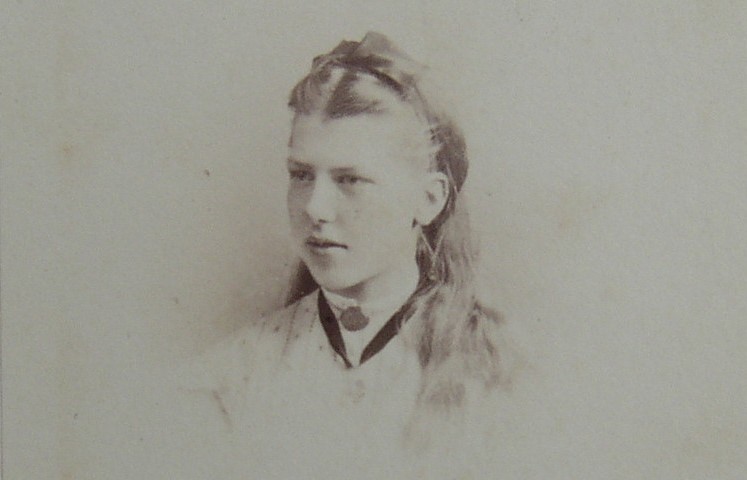
Marianne Heath - 1872
Friday 12 January 1872
Croydon Observer
Dorking Petty Sessions. Jan. 6.
Present - Lee Steere Esq., M.P. (chairman), A. Powell Esq., Captain Sir Leopold Heath K.C.B., W.J. Evenlyn Esq., Dr Gordon, and D. Heath Esq.
License Transfers
The license of the "Cricketers" beerhouse, Dorking, was transferred from Robert Eldridge to George Saxby, of Dorking.
Holly Cutting at Holmwood. - James Davy and Alfred Skilton, who did not appear, labourers, were summoned for unlawfully cutting certain holly trees, the property of the Duke of Norfolk, at Holmwood, and doing damage to the amount of 6d. - - -
Mr Douglas Heath J.P.,requested permission to state that he was deputed to act for the Duke of Norfolk, and to give public notice that if any persons desired to obtain holly by purchase, or otherwise, no difficulty would be thrown in their way, if application was made to him beforehand. The proceeds of that purchased would not go to the Duke, but to a fund for improving and keeping the common in good order.
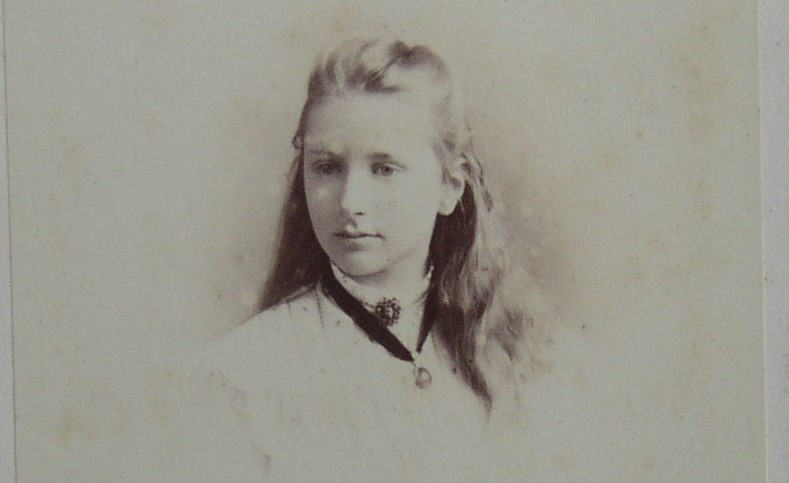
Ada Heath - 1872
Saturday 13 January 1872
West Surrey Times.
Dorking - The County Bench - Saturday.
Before Lee-Steere Esq., M.P., (in the chair),Dr Gordon, W.J. Evelyn Esq., Admiral Sir Leopold Heath, Arthur Powell Esq., Douglas Heath Esq.,and W.Farnell Watson Esq.
Cutting Holly on the Holmwood. - -
Mr Douglas Heath, as chairman of the committee for preserving the common rights, said persons desiring to trade in holly could obtain it by applying to him, at a fair rate, he having the authority of the Duke of Norfolk to do what the committee thought proper in regard to it. The money in such cases would not go to the Duke, but to the fund for protecting the common from depredations. - Mr Heath and Mr Watson did not sit on the bench during the hearing of the above cases.
Thursday 23 January 1872
Indian Statesman.
Sir Leopold Heath K.C.B., late Commodore of the second class and Senior Officer of the East Indian Squadron, has been promoted to the rank of Rear Admiral. Sir Leopold was a captain of 1854. During the time he was in the East Indies he hoisted his pennant on board the Octavia, and afterwards on board the Forte.
Saturday 27 January 1872
West Surrey Times.
A Juvenile Criminal - At a special Petty Sessions on Saturday, before Douglas Heath Esq., and Admiral Sir Leopold Heath, Charles King, aged 14, was brought up on remand charged with stealing a meerschaum pipe, value 7s. 6d. the property of Mr Thomas White, confectioner and fruiterer of High St, Dorking.
Saturday 10 February 1872
Exmouth and Plymouth Gazette
Devon and Cornwall Railway Company. - The half-yearly meeting of this Company was held on Friday, at the Company's Office, 2 Westminster Chambers, when S.C.Hamlyn Esq., presided. The following directors were present, Sir Leopold Heath K.C.B., Sir Thomas Dakin, Edward Tyrrell Esq., W.Batten Esq., - - -The works of the Lidford section were progressing most satisfactorily. - The Chairman moved and Sir L. Heath K.C.B., seconded the adoption of the report, which was carried unanimously.
Saturday 10 February 1872
Army and Navy Gazette
Royal School of Naval Architecture - Admiral Sir Leopold Heath K.C.B., will deliver a course of three lectures on the Theory of the Manoeuvring of ships under sail, in the Lecture Theatre, at South Kensington, on Tuesday the 12th Friday the 13th, and Tuesday the 19th of March, at 5pm. Admission one shilling each lecture. Officers of H.M. Service will be admitted at sixpence each lecture on presenting their cards at the entrance of the museum.
Monday 12 February 1872
Indian Statesman.
Death of Admiral Cockburn
We regret to announce the death of Rear-Admiral James Horsford Cockburn, Commander-in-Chief of the East Indian station, which took place on Saturday evening. Admiral Cockburn, who was sixty-eight years of age, - -He was Commodore at the Cape a few years since, and was much liked there. He succeeded Commodore Sir Leopold Heath on this station, and hoisted his flag on board H.M.S., Glasgow. The disease from which he died, dysentery, prevented his proceeding to Rangoon in the flag-ship a few days since, and he remained behind at Government House, Calcutta,where he died. - - -
Another Italian trip with Leo, Sir Thomas and Lady Dakin &c. February 1872
Dearest May, Ada, Herbert and Little Gerard, we arrived here two hours ago, after a 24 hours journey - through a fine mountainous country - Jura and the Alps covered with snow - beauty of outline but no colour. I feel rather fatigued, by my maternal love urges me to acknowledge your letters, my darling May - they are so very nice and full, but mind your spelling, for it is not quite perfect.
Papa and I and our pleasant companions went to the Opera Comique (all these things are owing to the dignity of our friend Sir Thomas Dakin, who is an ex-Lord Mayor, and was in office very active about the charities for the French sick and wounded) and heard the Pre aux Cleres. Sir Thomas, Lady Dakin and self went in one carriage, the others in another - to see more views, caused by the Commune fight, and drove in the Bois de Boulogne - through the French Rotten Row - crowds of grand carriages and pretty bonnets.
We were much amused, but hastened back to dress for M.Leon Say's dinner party. He is the Prefect of Paris, and invited Sir Thomas and his friends to this Grand dinner- which he gives - French fashion - every Sunday - to the other Prefects. We were received by Madame L.Say with graceful reverences and we four ladies proceeded soon into the dining room, which which was hung with Goblin Tapestry - and the table spread and adorned with the most exquisite flowers - bonbons and fruit. I sat between M.Leon Say and another French gentleman and had a very pleasant dinner, talking as well as I could, myself; Papa had his star on, and sat near Madame who was very lively and agreeable; all that we heard in the way of politics was sad, and make one feel sad, in that so charming, so gifted a nation should be in such an unhappy state - as they all seem to be in not knowing what a day may bring forth, perhaps some more dreadful bloodshed?
The house was furnished so beautifully, every single thing was recherchee; and plenty of French ladies came in in the evening - and crowds of gentlemen - some of these ladies spoke English to us, and all were most attentive and kind.
Sir Thomas Dakin was the Lion of the party but Papa thought that Monsiur Leon Say was most anxiously making friends, with all these men, who were great Republicans - like a Conspirator.
Monday - we were taken to see the new unfinished Opera House which is most splendid, there are marbles and stone from all parts of Europe, rich carvings and mosaics; we were shewn what was to have been the Emperor's box, and all his private salons - who will sit there, three years hence when it is finished!!
After this, we saw the desolate ruins of the Hotel de Ville built of stone in Louis the XIII time - you never saw or could imagine such complete destruction of a grand building - the wretched Communists had set fire to barrels of petroleum, which had poured over the building like a river of fire, and had used gunpowder also - it was pitiable to see!
22 February 1872 - Turin
Still here, dearest Children - we hope to get off today, but fear that the business of ces messieurs may prevent us - for this town is fine, square and straight, but there is nothing of much interest.
After luncheon Mrs.B took us to see Victor Emmanuel's palace - it is ugly - but the salons and reception rooms are a mass of gilt, mirrors and chandeliers and most beautiful parquet floors. We saw the chapel of the Kings of (Italy Ivory?) on the altar of which they prefer to have a piece of the real sheet in which our Saviour's body was wrapped, after the crucifixion, and an indulgence was promised to those who said a certain prayer - which was printed and stuck up near - indulgence from purgatory upon sincere repentance: all which seems very strange superstition to us.
25 February 1872 - Florence
How are you my darlings? I begin to pine for news - I fancied Gerard called me in the night, and I saw his little face to plainly.
I wrote last from Turin, that morning, Friday, Lady Dakin and I sallied out alone (my little Italian comes in I find - but French everywhere) asked our way to the Armoury - where there is a very good collection of arms and armoury, of all sorts, some very beautiful work in steel and gold daggers for the ladies! and all sorts of swords and maces.
We arrive here at 2 in the morning. This is a very town, very superior to Turin in beauty - there are fine Palaces, galleries, Churches, pictures - and gay crowds of people, all looking very happy and prosperous,such a contrast to the poor Parisians!
Yesterday we went to see the pictures in the Uffizie Palace - with famous Raphael pictures and Greek statues - very lovely, made more than 2,000 years ago I think and so real and life like, that they looks as if they were living people (but for colour) turned into stone.
I have bought a fine photo for Arty of the "Wrestlers," which is one of these famous statues.
Sunday - after church. We drove to Tiasole where the Franciscan monks live. We ladies were not allowed in, in spite of my remonstrances with the old Porter!
It is very hard work doing the galleries. Today we went to the Pitti - where we saw numbers of lovely works of art, amongst others, the Original of that Madonna delle Sedia - that we have a little copy of, and hosts of other beauties, one gets rather overdone with these pictures - there are almost too many, one gets eye-tired.
Papa and I saw the Cathedral (Duomo) and Campanile by Giotto and we tried to understand a most energetic sermon, that a priest was preaching, but we could not take in more than a few words.
In the afternoon, we ladies took a most delightful drive on the other side of the Arno - the sun came out, and lighted up the buildings, the Duomo and Campanile, and houses, quite gilding them! The mountains looked so blue, purple and pink - Florence looked quite like Firenze la bella - indeed!
5 March 1872 - Hotel de la Ville, Rome.
Dearest Ansteites - How delightful we shall be to get home! You know - but we have had a most delicious little holiday, and have seen such hosts of beautiful and interesting things, that it will be soon difficult to class and separate them in one's mind. But I hope that I shall never forget some of the grand statures, of ancient days - and the statues of antiquity, surpass, to my mind, every picture, and anything else that is beautiful in modern art as their great huge buildings do, the huge architecture of modern days.
We had time to drive to the baths of Caracalla built by him, a Roman Emperor about 200 years After Christ - these "fellows" did all they could to make themselves popular and to keep their seat. These baths were one of the entertainments provided for them, it is quite a gigantic place - ruined as it stands - all built of little thin Roman bricks - which are hard and cemented together so that they stand for ages! - besides baths, there were theatres, halls for reciting poetry and making speeches, disputing, athletic sports - it was the grand gathering place for all the gay people of Rome.
I think we were more struck by this vast building than by the Coliseum. We drove through the Jew's Quarter or Ghetto in former intolerant times, the Jews were shut off by gates from the rest of the city. Everyone could tell they were Jews by their countenances, their old clothes shops, their narrow, dirty little crowded streets. The wore such angry scowling faces too, as if they did not like our driving amongst them. I believe they have suffered a great deal here and it is said that the great buildings were erected by captive Jews. Poor Jews - they have had enough building to do in their history, beginning with Egypt!!
Marion Heath - aged 15 - at Anstie Grange, Surrey - - -
March 1872
After having left off writing this Journal for 3 or 4 months I begin it again. The truth is that I have been too lazy to fetch it down from the lumber room until yesterday. Mamma and Papa are in Rome, while they are away Mademoiselle de (Bourne?) is staying with us. On Monday we went up to London to see the Thanksgiving Procession.It was a most beautiful sight and never to be forgotten.
---------------------------------------------------------------------
Friday 1 March 1872
Mademoiselle went to her class in Dorking. We worked and then went to Kitlands and from there - with Willy - took Mrs.Wedgwood's to luncheon and games afterwards, it was great fun. We got home by half past five. After tea we played at commerce.
Saturday 2 March 1872
In the morning did our lessons with Mademoiselle. Mr.Hooke came. Before our lesson Ada, Mademoiselle and I went to Coldharbour Lane, came back and had our lesson.
Sunday 3 March 1872
Wen to church in the morning, after dinner we painted, then to church again.
Monday 4 March 1872
A lovey day. In the morning we went with the ponies for a delicious long walk over Leith Hill and round by Cockshots, came back by luncheon time, rather tired. At half past three we went to Mrs.Hawkins and walked up into her wood and Redlands and then came back and had tea at Mrs.Hawkin's. As we came home we heard all of the birds singing in the woods, it was so delicious.
Tuesday 5 March 1872
Mademoiselle with a very bad cold. We worked.
Wednesday 6 March 1872
Had rather an un-orderly french lesson in the morning. Mr.Hooke came. We went to Anstie Bury to get moss for decorations, in the evening made moss wreathes.
Thursday 7 March 1872
Did no lessons as we went to get more moss from Anstie Bury. In the afternoon we played at Hare and Hounds in Leith Hill with the Wedgwoods and then went on to Leith Hill Place for tea.
Friday 8 March 1872
Drizzling in the morning. We went out all the same with the truck, a ladder and cords to get ivy and holly and evergreens to make wreathes. In the afternoon went to luncheon with the Wickhams. In the evening stopped up till nearly ten making wreathes for Papa and Mamma's return.
Saturday 9 March 1872
Made wreathes all the morning and put them in the Hall and dining room. Mr.Hooke came.
Sunday
Saturday 9 March 1872
Broad Arrow.
Revival of the Admiralty Board.
- - - This brings us to the consideration of an important post which we would gladly see occupied, under the designation of Gunnery Lord, by such an officer, for example, as Admiral Sir Leopold Heath. It is of the last importance to the efficiency of our ships as warlike machines, that the Admiralty should have the control of its own ordnance. There is no greater anomaly in the whole round of the administration than the interference of the Army with the proper business of the Navy in the matter of its guns
- -
Marion Heath - aged 15 - at Anstie Grange, Surrey - - -
Sunday 10 March 1872
Went to church in the morning. In the afternoon we went for a little walk to get some white violets.
Monday 11 March 1872
Mamma and Papa came home from Rome by the early nine o'clock train. A lovely day. In the afternoon we went down to the farm.
Tuesday 12 March 1872
Papa went to London for his lectures. We walked to the Wedgwoods. A rather cold day.
Wednesday 13 March 1872
Mr.Hooke came. We walked down to the station to meet Papa. Mrs.Hawkins came.
Thursday 14 March 1872
Papa went to London for a levée. Ada and the boys harrowed (barrowed?) and rode on the cart horses. Mamma and I went to call on Mrs.Weguelin and Mrs.Wickham. Papa came home. A very cold day.
Friday 15 March 1872
Papa went to London for his lectures. Mamma and I went for the day.
Saturday
Friday 15 March 1872
London Evening Standard.
The Queen's Levee.
Her Majesty the Queen held a Levee at Buckingham Palace yesterday afternoon. - - -
Admirals - Sir Edward Belcher, D. Bethune, Buckle C.B., Tennyson D'Eyncourt, Charles Eden, Sir William Hall K.C.B., Sir William King Hall, Sir Leopold Heath K.C.B., Lord Clarence Paget. - - -
Wednesday 3 April 1872
Dublin Daily Express
Sir Leopold Heath and party (three) have arrived at the Gresham Hotel from London.
Thursday 4 April 1872
Northern Whig.
Fashionable Movements.
The following arrived at Kingstown and Dublin respectively: - - - Sir Leopold Heath and party, - - -
Tuesday 9 April 1872
Epsom Journal
Petty Sessions, Saturday, April 6 - Present: W. Steers Esq. M.P., (in the chair), Arthur Powell Esq., Douglas Heath Esq., and W.J. Evelyn Esq.,
Overseers and Constables. This was a special session for the appointment of overseers and constables, and the following were appointed. - Overseers - Abinger,William C.Woods and Edward Coldman, Capel, John Akehurst and Henry Brown. Dorking, John Brown, William Shearburn, Alfred James Ede and William Boxall. Effingham, Edward Kershaw and James West. - -
Assualting a Step-Mother. Alfred Tyrrell, labourer, of Effingham Common, was summoned for having assaulted Rachel Tyrrell, on the 16th March, at Effingham. Mrs Tyrrell, wife of Henry Tyrrell, said defendant was her step-son. He came home on the 9th of January from soldiering, and had since been living at his father's house, where he had abused and threatened to turn her out of doors and to do for her. He also threatened her husband (his father).
Morning Post
Wednesday 10 April 1872
Whatman - Fuller - On the 9th inst. at Trinity Church, Westcott, by the Right Rev. the Lord Bishop of Winchester, assisted by the Rev. W.H. Kaslake and the Rev. Robert Sainsbury, George Dunbar, eldest son of William Godfrey Whatman Esq., of Kitlands, Dorking, to Frances, daughter of G. Arthur Fuller Esq., of the Rookery, Dorking.
Monday 15 April 1872
Greenock Telegraph and Clyde Shipping.
Naval - It is said that Sir Leopold Heath shall succeed Rear-Admiral Houston Stewart as Admiral Superintendent of Portsmouth dockyard.
Wednesday 17 April 1872
Sun & Central Press
Rear-Admiral Sir William King Hall K.C.B., and Sir Leopold Heath K.C.B., have both been named as likely to succeed Rear-Admiral Stewart at Portsmouth.
Wednesday 17 April 1872
Hampshire Telegraph.
Portsmouth,
Occasional Notes
A few naval items call for notice. Although Rear-Admiral Houston Stewart has, as we announced last week, accepted the responsible post of Controller of the Navy, the name of his successor as Superintendent of Portsmouth Dockyard remains a matter of speculation. We notice that the United Service Gazette states positively that Rear-Admiral Sir William King Hall, the present Admiral-Superintendent at Devonport, is to succeed Admiral Stewart at this port. But his appointment is only probably; and Rear-Admiral Sir Leopold Heath has also been mentioned in connection with the vacancy. Both are highly experienced officers and either would be the right man in the right pace. - - - -
Thursday 18 April 1872
Sutton Journal.
Marriage of Miss Fuller.
Tuesday last was quite a red letter day for Westcott, owing to the marriage of Miss Francis Fuller, eldest daughter of George Arthur Fuller Esq., of the Rookery, with Mr George Whatman, eldest son of George Whatman Esq, of Kitlands, near this town, which auspicious event was celebrated at Holy Trinity Church, Westcott., the Bishop of Winchester performing the nuptial ceremony, assisted by the Rev. William Karslake and the Rev. Robert Sainsbury. The service commenced at half-past eleven o'clock in the presence of a large and fashionable congregation, - - -
Among the company were the following:- Admiral Sir Leopold Heath and Lady Heath, - - - Mr Douglas Heath, - - The labourers employed on the estate of Mr Whatman, at Kitlands were entertained at supper in the evening in honour of the auspicious event, and the school children were also liberally regaled. A grand display of fireworks concluded the festivities.
Saturday 20 April 1872
Naval and Military Gazette
Rear-Admiral W. Houston Stewart C.B.,the superintendent of this dockyard, ceases his duties as such on Saturday, and takes up his appointment at the Admiralty the same day as Controller of the Navy. It is believed, although not yet officially announced, that Rear-Admiral Sir Leopold Heath will be Rear-Admiral Stewart's successor here.
Marion Heath at Anstie Grange, Surrey - journal - aged 15
Saturday 20 April 1872
Rather a cold day. Mamma and Papa went to luncheon at Lady Macdonald's. We went to Kitlands. Mr.Hooke came. We made a hutch for some young rabbits we have got.
Sunday 21 April 1872 - A rainy stormy day. Did not go to Church. In the afternoon Uncle William, cousin Agns and Willy came.
Monday 22 April 1872
Mamma, Freddy and Ada went to London for the day. We walked to Cold Harbour to get seed. I went afterwards to Mrs.Hawkin's to draw "old fashioned furniture" Madamoiselle came.
Tuesday 23 April 1872
Did our lessons in the morning. Went to Moorhurst and Kitlands with Papa and Mamma in the afternoon.
Wednesday 24 April 1872
Papa went to London. Mr.Hooke came. Mrs.Wickham and Mr and Miss Leslie called. We played in the sandpit.
65 24. April 1872 Gordon to L. Act (letters round the wrong way?)
File 0794 - 77
Letter - Admiralty, Whitehall
Dear Sir,
You are doubtless aware that for many years past it has been the custom that where possible one of the Naval Lords of the Admiralty should be a member of Parliament.
This arrangement not only assists the discourse of Naval subjects in the House of Commons very advantageously but it is eminently useful to the Navy, as a Naval man is able to present the naval view to the public in a way which scarcely any (similar?) post here can manage.
I am unacquainted with your politics, but well acquainted with your reputation for ability and zeal and it would give me great pleasure to hear from you that you would accept the part of Junior Naval Lord of the Admiralty with the understanding that you would enter parliament if any favourable opportunity should present; (only?) the Government attach great importance to keeping up a connection between Parliament and the Naval Service and I think that every naval officer must feel that it is an advantage of the service to have a direct representative to the Parliament speaking as the official authority.
I have been unable to ascertain on what side of politics you have arranged yourself and thought it best to put you the plan in question at once without reserve.
I am, yours very sincerely,
G.J. Gordon
Leamington Advertiser and Beck's List of Visitors.
Thursday 25 April 1872
Clarendon Hotel -
Mrs and Miss Marsh-Caldwell, Linley Wood, Cheshire
A 64 24. April 1872 L. to Rt.Hon. G. of (Bgtta?) re - - -Reprising offer pent
Board of Admiralty & (attending?) for Parliament
File 0790
26 April 1872
Letter from Sir Leopold Heath
To The Rt.Hon. G.J.Gordon M.P.
United Services Club
Pall Mall, S.W.
My dear Sir,
I am very sorry to be obliged to refuse the flattering offer you have made me of a Seat at the Board of Admiralty coupled with the condition (cross out - and undertaking) that I should endeavour to enter Parliament if a suitable opportunity should occur.
I feel that I ought not to confine myself to a bare refusal of your offer and I venture to state some of the reasons which have weighed with me in coming to the decision.
The principal one is that not only would I not fairly afford the expense of going into Parliament but that I could still less afford that (crossed out - expense) of breaking up my present home (cross out - establishment) and settling down for what could be a very uncertain period in London.
A junior Lord without a seat in the house may or may not go (well?) with the Administration but it would be a matter of course that he should be so if he were in Parliament.
There are private and unprofessional reasons but I have a large family growing up and I am bound to give weight to them in considering your offer.
Another reason of a more public nature is that although I do not expect ever to become a Vice-Admiral unless modifications are made in the existing scheme of retirement still I should wish to have served the necessary years as a Rear-Admiral in case any such (unvolifcation?) should be made and although as I read the scheme and the Printed Instructions my Service as 1st Class Commodore would satisfy that rule yet I understand (reading?) is not acquiesced in by others.
Thanking you very much for your offer. Believe me to be yours very faithfully,
L.G.Heath.
Marion Heath at Anstie Grange - aged 15 journal - continues
Thursday 25 April 1872
Mademoiselle came. Mamma and I walked to Kitlands. The others went on with the cave in the sandpit. Papa came back from London.
Army and Navy Gazette
Saturday 27 April 1872
The name of Rear-Admiral Sir Leopold Heath K.C.B., has been mentioned in connection with the reconstituted Board of Admiralty, but we are inclined to think that unless Lord John Hay be so enamored with his Hotspur as to be disinclined to give up his command, his Lordship will have the refusal of the vacant seat.
Wednesday 1 May 1872
Hampshire Telegraph.
The name of Rear-Admiral Sir Leopold Heath K.C.B., has been mentioned in connection with the reconstructed Board of Admiralty, but we are inclined to think that unless Lord John Hay be so enamoured with his Hotspur as to be disinclined to give up his command, his Lordship will have the refusal of the vacant seat. -Army and Navy Gazette.
Marion Heath - aged 15 and Ada Heath at Anstie Grange - aged - - continues.
Wednesday 1 May 1872
Mr.Sydenham came. Mr.Hooke came.
Thursday 2 May 1872
I think Mamma and Papa went to Kitlands to dinner. The boys played at cricket and went out shooting.
Friday 3 May 1872
Willy came and we went for a long ramble over by "Trouts Farm." Tots Loring came in the evening.
Saturday 4 May 1872
Rambled all over the woods in the morning, in the afternoon went with Mamma to Kitlands.
Sunday 5 May 1872
Went to church in the morning. In the afternoon we all went for a walk with Papa. Tots went away in the evening. Freddy and I walked down to the station with him.
Monday 6 May 1872
We got up early and went for a ramble. The boys went back to school in the afternoon. A rainy day.
Tuesday 7 May 1872
We did our lessons.
Tuesday 7 May 1872
Epsom Journal
Petty Sessions, Saturday, - Before W.J.Evelyn Esq.(in the chair), Douglas Denon Heath Esq., W.Farnell Watson Esq., Arthur Powell Esq., and Gordon Clark Esq.
Transfers
The license of the White Horse Hotel was transferred from Mrs.Goddard to Mr.Frederick Cook. The license of the Star and Garter Hotel, near the Brighton Company's Railway Station, from Mr.W.Bell junr. to his father, Mr.Bell, sen. late of Marylebone
Egg Poaching
A young man named Benjamin Isemonger, a labourer, was summoned for being in unlawful possession of 18 pheasants' eggs, on the 26th of April. - The case was proved by P.C.Puttock, and Kester Cambridge, gamekeeper to Lord Abinger. - -- continues - - -
Marion Heath - aged 15 and Ada Heath at Anstie Grange - aged - - continues.
Wednesday 8 May 1872
Mr.Sydenham came. Mr.Hook came. Papa went to London. A showery day.
Thursday 9 May 1872
We tryed to get to church, it was Ascension Day, but could not because of the rain.
Friday 10 May 1872
Madame Bergeron, cousin of Willy and cousin Arthur came for the day. After lunch, we took a long walk over Leith Hill. Aunt Missing and Evey Eden came to stay till Monday. Arty Loring came in the evening.
Saturday 11 May 1872
Rather a showery day. We rambled with Tots in the morning. In the afternoon Papa, Mamma, Aunt Missings, Evey and Arty went out. We stayed in to do Mr.Hook. The Whatmans came.We danced in the evening.
Sunday 12 May 1872
Went to church in the morning, and a walk in the afternoon.
Monday 13 May 1872
Everybody went away. Papa and Mamma went to stay at the Cazalet's till Wednesday. Madamoiselle came to stay with us. It a pouring day.
Tuesday 14 May 1872
Ada and I went to luncheon at Mrs.Hawkin's, we went for a walk afterwards with Annie and Margarite Parker.
Wednesday 15 May 1872
Did our lessons in the morning. Mr.Hooke came. Mamma and Papa came home.
Thursday 16 May 1872
A fine day. We walked with Madamoiselle through Redlands to show her the way to Dorking. In the afternoon Papa and Mamma went to Kitlands. Ada and Herbert rode to Dorking.
Friday 17 May 1872
A pouring day. Mr., Mrs. and Miss Young came for the night. Uncle William and Margery came to dinner.
Saturday 18 May 1872
Rainy again. Went out for a while. The Youngs went away.
Saturday 18 May 1872
Field
All England Croquet Club Spring Prize Meeting.
May 10 and 11 - In our last week's report, Mr Lillie was described by a slip of the pen as the winner of the All-winners' prize last year; it should have been winner of the All-commers' Prize. We understand that Mr Jas. Heath, retired from the handicap, instead of being beaten in the third round, as stated last week. - - -
After the conclusion of the principal events, a partner handicap was made up. Mrs Holmes and Mr Lillie (giving eight bisques) beat Col. Davidson and Mr Douglas Heath; Mr Jas. Heath and Mrs Davidson (giving three bisques) beat Miss Walsh and Mr Haviland. In the deciding round Mrs Holmes and Mrs Lillie (giving one bisque) beat Mr Jas. Heath and Mrs Davidson. - - -
Handicaps appear to be the most popular croquet events. They always attract a large entry. The next match will be Saturday week - - -
Journal of Marion Heath and Ada Heath continues...
Sunday 19 May 1872
Went to church in the morning.
Monday 20 May 1872
Madamoiselle came. A fine cold day.Went for a walk over the Holmwood with Papa and Mamma.
Tuesday 21 May 1872
Papa went to London. Mamma, Ada and I went to Sandroyd for the day. It fine day.
Wednesday 22 May 1872
Mr.Sydenham and Mr.Hooke came. The weather a little warmer. Papa went to London. Mamma, Ada and I went to Moorhurst, and then the station to meet Papa.
Thursday 23 May 1872
A nice day. Mamma, Papa and Gerard went to see the Lady Legg's in the pony chaise. We walked part of the way to Dorking and drove the rest in the Kitlands wagonette.
Friday 24 May 1872
Papa went to London. We did our lessons with Mamma. I went to luncheon at Kitlands, stayed there till Saturday morning.
Saturday 25 May 1872
Came back from Kitlands. Mamma, Papa and Gerard in the pony chaise. Ada riding, went to see carthorses at Newdigate.
Sunday 26 May 1872
Went to church. Aunt Emma and Uncle William came in the afternoon.
Monday 27 May 1872
A beautiful day. In the afternoon we went to Meg's well with the Whatmans. Walter Heath came back with us to stay for two nights.
Tuesday 28 May 1872
We had our lessons in the morning. Walter and I rode to Dorking in the afternoon. Miss Brown came. Mamma went to Kitlands.
Wednesday 29 May 1872
Papa went to London. Mamma went out to look at some houses with Miss Brown. We played croquet. Walter went away. Mr.Hooke and Mr.Sydenham came.
Thursday 30 May 1872
Papa went to London again. Miss Brown went away. Madamoiselle came. Herbert and Ada rode to Dorking. I went for a delicious ramble by myself in Spring Copse.
Friday 31 May 1872
A showery day. Mamma and I went and drew Sayer's cottage. Caught in a thunder shower coming back. Ada drew the cat in the granery.
Saturday 1 June 1872
Mamma, Margery and I went to Brighton to see the boys. We had a very nice day and came back by the nine o'clock train. A fine day.
Sunday 2 June 1872
A rainy day, we did not go to church. Miss Julia Moore, Emma, Uncle Douglas, Uncle William, came in the afternoon.
Monday 3 June 1872
A showery day. Papa went to London. Madamoiselle came.
Tuesday 4 June 1872
Mamma and Ada went to Kitlands. Herbert and I went for a very nice ride with Emma Whatman.
Wednesday 5 June 1872
Mamma and Papa went to London for the Queen's concert. We went out in the woods with Mr.Hooke and we had our tea near Foxglove corner. A fine day.
Thursday 6 June 1872
Ada and I went to luncheon with Mrs.Broadwood. Mamma and Papa came back from London. It rainy day.
Thursday 6 June 1872
Morning Post.
State Concert. - From the Court Newsman.
By command of the Queen a State Concert was given last evening at Buckingham Palace, to which a party of upwards of 800 was invited. - -
- - Admirals - J.W. Carleton, Sir A. Clifford, Earl of Lauderdale, Sir W. Hope Johnstone, Hon. C.G.B. Elliot, Sir Houston Stewart, Hon. J.R. Drummond, H Eden, J.E. Erskine, Hon., Sir F.Grey, Sir Leopold Heath, - - -
Wednesday 10 July 1872
Echo (London)
All-England Croquet Club.
The annual meeting for the croquet championship commenced yesterday at Wimbledon. Owing the the showery weather, the matches were interrupted, hence the progress made was not so rapid as usual. - - The winner of the last round of the all comers will be called on to play the present champion, Mr Peel, for the championship, and silver cup, value 50 guineas. Seventeen entered, and the score up to last night was as follows: - First round - Mr Willoughy beat Mr D.I.Heath; Mr James Heath beat Mr J.A.Walter; - - Mr Black beat Mr Douglas Heath;
Journal of Marion Heath continues . . . .
I have not written this since the 6th and today is the 26th. I certainly shall not take all that trouble to write from that day so I shall begin from today.
The Croftons were here for a week. Papa has gone to Constantinople. Arty came home from Marlborough yesterday and Miss Dumbleton is staying here.
Wednesday 26 June 1872
Arty went off early this morning to a cricket match at Mr.Waterfields. Mr.Hooke and Mr.Sydenham came. A very showery day with a most beautiful rainbow in the evening. We went to draw at the farm. Miss Dumbleton and Mamma went to Anstiebury.
- - -
I left off writing this journal again for nearly three weeks. I will begin once more and try and keep it more regularly.
Wednesday 10 July 1872
Mr.Sydenham's and Hooke's last lesson. Packed in the morning, in the afternoon we went into the wood with Mamma and read, it was rather a cold day.
Thursday 11 July 1872
We played in the hay with the Cazalets. A thunder storm in the evening.
Thursday 11 July 1872
London Evening Standard
All England Croquet Club - Championship Meeting
The score of the second round of the Championship stood as follows when play was declared over for the day:- Mr.James Heath beat Mr.Willoughby, Mr.Pearson beat Mr.Law, Mr.Lillie beat Mr.Helme, Mr.Black beat Mr.Forrest, Mr.Joad (a bye). Of the third round, Mr.James Heath and Mr.Pearson are game and game, and Mr.Lillie has won a game of Mr.Joad, Mr.Black having a bye.
During the afternoon the Handicap Sweepstakes were begun. Play will be resumed today at 11.15.
The annual general meeting will be held this day at one.
(James D. Heath son of Rev. Dunbar Isadore Heath)
Journal of Marion Heath continues . . . .
Friday 12 July 1872
Ada and Herbert went for a ride in the morning., I read in the wood. In the afternoon we went to the Cazalets. Arty came back in the evening from Linley Wood.
Saturday 13 July 1872
Rained, and packed. Arty shot a rabbit and we took it up to Mrs.Butler in the evening as a parting gift.
Sunday 14 July 1872
Went to church in the morning, and to the Cazalets in the afternoon.
Monday 15 July 1872 - St.Clare, Southsea.
We came here. Mamma and Arty went to have tea with Mrs.Eden who is here.
Tuesday 16 July 1872
Shopped with Mamma and bathed. In the evening walked on the sea wall. Mr.Philips
called.
Wednesday 17 July 1872
Shopped in the morning. In the afternoon we went to the pier with Evey, Mrs and Miss Harris. Captain, Mrs and Louisa Bickford called.
Thursday 18 July 1872
In the morning Ada and I went for a row with Arty. Mamma and I went out shopping afterwards. In the afternoon Mamma went to see Mrs.Eden, we went to the beach and drew and read. In the evening Arty and I went to Mrs.Eden's to change a book and for a delicious walk on the sea wall.
Friday 19 July 1872
Very hot. We went to Ryde in the afternoon Mamma, Evy, Arty, Ada and I. Ada and I had our photographs taken. In the evening Mamma and Ada went on the beach wiht Evey.
Saturday 20 July 1872
We went to bathe early in the morning. Mamma and Arty went calling. Evey, Louisa Bickford and Miss Harris came to play croquet and have tea. Went on the beach in the evening.
Sunday 21 July 1872
Hot all day and all night. We went to church in the morning and evening. Mamma and Arty went on the beach till late in the evening.
Monday 22 July 1872
Did lessons with Mamma. In the afternoon we went with Mamma to Mr.Way's, the tutor who Herbert is going to do lessons with. (Arty went to him in the morning) We then went to call on Mrs.Philips and Mrs Chadds. Afterwards we went to the beach.
Tuesday 23 July 1872
Did lessons. Mamma and Arty called on Mrs.(Kurm?) We went on the beach and in a boat in the evening.
Wednesday 24 July 1872
Did our lessons. I went on the beach, not quite so hot.
Thursday 25 July 1872
A thunder storm in the very early morning, cleared up afterwards. Hot as ever. Mamma, Arty and Evey went to a dance on board the "Duke of Wellington." We went in a wherry. On the sea wall in the afternoon, evening with Arty. Very hot. Herbert went to Mr.(Meeplins?), he goes there now instead of to Mr.Way.
Friday 26 July 1872
Ada and Gerard shopping with Mamma in the morning. Mamma, Arty and Evey to a party at MRs.Harris's in the afternoon.
Saturday 27 July 1872
Mamma, Evey and Arty went calling on Mrs.Henderson. Mrs.Boyce and Mrs.Lethbridge and Lady McClintock. We went on the beach.
Saturday 27 July 1872
Surrey Advertiser
Surrey County School Speech and Prize Day.
Speech and Prize Day at the Surrey County School, Cranleigh, held on Thursday last, attracted an unusually large number of visitors, comprising not only many ladies and gentlemen interested in middle-class education, but the parents of a large proportion of the boys. The ceremonies of the day began by service in the chapel at half-past 11o'clock, when the sermon was preached by the Rev. G.R.Portal M.A., - - -
The Rev.W. Musgrave said there were some toasts on which it was necessary to dilate at length, to ensure for them a cordial reception, but there were others, like that of "The Queen," or "The Ladies," in which the fewest words were best, because no one by any possibility could do justice to them in words (applause), - - He was told that today they had an especial reason for remembering the council for Mr Douglas Heath, a most zealous member, had made a munificent gift to the school in announcing his intention of supplying everything necessary for the practice of physical sciene (cheers). Their hearty thanks were due to him for his kindness, and he was sure they would be cordially given (cheers). After expressing a hope that middle class girls' school would soon be established he coupled with the toast the mane of Mr Heath. Just afterwards, however, Mr Musgrave announced that Lord Midleton, an active member of the Council would respond.
Lord Midleton said he very much regretted that the first most excellent choice for a member of the council to respond was not adhered to, for he was quite sure there was no one of their number to whom a greater debt of gratitude was due than to Mr Heath (hear hear). From the first moment the school started he had been one of its most constant and beneficent supporters, and he had added today to the claim upon his gratitude, by contributing a considerable sum to the promotion of physical science in the college; and not only so, he had consented to superintend the erection of the whole of the apparatus (applause).
The Head Master, who was heartily cheered on rising to respond, said - - -over them they had a Council always ready to help and advice, and more especially such men as Mr Heath (hear hear) who not only helped them with his money, but who came there to help to teach them in subjects which he was more competent, from the amount of study he had bestowed on them, to handle than any of them in the school (hear hear). - - -
Sunday 28 July 1872
To church in the morning. St.Jude's. In the evening to the congregational church.
Monday 29 July 1872
Ada's birthday. We went to a concert in Southsea Castle.
Tuesday 30 July 1872
Went to bathe in the morning. Went to the Pier in the afternoon.
Wednesday 31 July 1872
Went in a boat in the morning, very hot. In the afternoon to the Philips to play croquet.
Thursday 1 August 1872
Brighton boys came home.
Friday 2 August 1872
Went in a boat. Mamma, Evey and Arty went to a ball in the evening.
Saturday 3 August 1872
Papa came home from Constantinople. Evey, Louisa Bickford and the Philipp's came to play croquet, as it rained we danced instead.
Sunday 4 August 1872
Went to church. In the evening to have tea with Mrs.Eden.
Monday 5 August 1872
It pouring day. Very windy. In the evening we went out on the beach to see the waves.
Tuesday 6 August 1872
Went to bathe, the little boys went to school. In the afternoon Mamma and Papa walked into Portsmouth. We went for a sail with Arty. Mrs. and Miss Johnson, Mrs.Basil Hall and Captain Hall and Mrs.Durey Ervin called.
Wednesday 7 August 1872
We went out for a nice sail because it was Herbert's and Gerard's half holiday.
Thursday 8 August 1872
Papa went to London, we went to swim in the sea. Mamma and Evy went out sketching, the others went for a sail with Arthur (we are going to try and call Arty, Arthur now, because Arty is babyish.
Friday 9 August 1872
Mamma and Evy and Arthur went to a dance on board H.M.S. Asia, Mamma took me too, to see it. I danced a little, altogether I like it very much. Papa came home from London in the evening.
Saturday 10 August 1872
Very windy. Papa and Mamma went out calling. We went on the beach and to see some Athletics sports.
Sunday 11 August 1872
Very windy. Went to church.
Monday 12 August 1872
We all went to (Shunklin?) in a sailing yatch, it was such fun. We were out the whole day. Evy and Major Eden came with us.
Tuesday 13 August 1872
Ada and I went to Miss.Moore's school for the first time, we like it very much.
Wednesday 14 August 1872
Went to school in the morning.
- - -
I have not written the Journal all this time because we go to school at Miss Moore's now.
25 August 1872
We were invited to go for a sail in Admiral Painter's Yacht, we did not go out very far as it was so rough, but all the same it was great fun.
Monday 1 September 1872
Went to school as usual. Arthur Loring came in the evening to say goodbye.
Tuesday 3 September 1872
We had a holiday for Freddy's last day. In the afternoon we all drove to Portsdown Hill, we got out and walked in the country, the other side of the hill, which was very pretty.
Wednesday 4 September 1872
Freddy went to school (Mr.Brackenbury's) Papa took him. Della Chad, D.G.Wellesley and Blanche Harris came to play croquet.
Thursday 5 September 1872
Nothing particular.
Lady Mary Heath's Letter Book
1872 - Southsea
Dearest Mama,
I have been waiting to answer your kind and dear letter, till I could tell you how we have transplanted our Fred, and whether he throve or withered, in the new soil; but it is early days for this, seeing that Leo only took him there yesterday.
Leo thought that Fred had enough of Brighton College, and if he was to compete again, that he had better go to a special school, and hearing good of Mr.Brackenbury's at Wimbledon - - -
I like the look of the place - - determined to cut short his holidays, and send him off at once. Fred liked the idea of the change - and I trust and hope that it will be for his good and general of mind and body - the boys work about 8 hours a day, which will be again to Fred.
Poor Bert felt the separation, but Herbert is to take his place at Brighton College. Now he will have to look out for Herbert, as well as himself, not that Herbert will require much case for his is sense itself.
I have some more to tell you yet. We had a letter from Mr.Mullens (the successor to Mr.Bright, who was Arty's house-master at Marlborough College) telling us that he had "thought that there would be some difficulty in obtaining leave" for Arty to stay longer at Marlboro' but from "the high character he bore, and the prizes he had taken, which showed such a healthy activity of mind" that aided by the efforts of Arty's form-master he had found it easy to obtain the required permission, and that speaking personally he esteemed it a "personal boon" that Arty should stay, for he "a comparative stranger would find it hard to keep up the high morel tone, that pervaded at Preshute, without the example of Arty and the other leading members of the House."
You may guess how pleasant and delighted I was, and how pleased Leo felt. To me it is the best sort of praise. I feel pretty sure that he has ability enough, to get on sufficiently well, if not to distinguish himself, but the comfort of knowing that ones boy of 17 holds that sort of position in his House is very very great, surely it is a good presage of how he will conduct himself when he gets into a still freer circle and when he gets into Life itself. God bless, and manifest Himself more and more to my beloved Arty that in these unbelieving times, he may cling to Him by force of love.
Saturday 7 September 1872
Tablet
The Hamath Inscription. - Mr Dunbar Heath writes to the Atheneum that some of the inscriptions from Hamath, in Phoenicia, have been deciphered, or partly so. Among them is one in which occurs the name "Men Kheper," which is the proenomen of Thotmes III, the Pharoah in whose reign Joseph was ruler of Egypt. He gave Joseph his name of "Zapnath Pionk," "The Hidden Treasure of Life." This name, Mr Heath adds, is the same as Zephon, or Typhon, which, being afterwards hated by the Egyptians, became among the Greeks, as synonymous with "Evil."
Saturday 7 September 1872
Field
The Autumn Meeting of the A.E.C.C.
This meeting was brought to a conclusion on Saturday last with the exception of Partner Prizes, the final rubber in which was only commenced on that day owing to the number of games to be played in each round. - -
The Gentlemen's Handicap, which was on Friday night was left for one game to decide between Mr Pearson and Mr Douglas Heath, fell to Mr Pearson, who made two fine breaks of 11 and 12, leaving his two balls near the peg with the chance of Mr Douglas Heath taking his first bisque, which from lying badly up he failed to effect with advantage, and thereby at once lost his chance.
Pegging Out.
Sir - Though I have grave suspicions as to the identity of two of your correspondents, I cannot help being highly gratified to find such an authority as "Cavandish" giving an unqualified approval to the opinions broached in my first letter., - - - I think "Cavendish" had relieved "Roquet" from the charge of grumbling about long shots, by explaining the proper bearings of a fluke. "Cavendish" has sufficiently answered Mr Heath, by showing that all the advantages claimed by Mr Heath for absolute pegging out are gained by the rover-killing-rover system, while the flukey element is removed.
How Mr Heath could get my words to mean that the chance of the surviving ball is lessened in proportion to the backwardness of the adversary's balls, I can't conceive. Mr Heath himself argues as if the surviving ball were always a rover, which is by no means the case. His argument about keeping off the dread event for a time seems to me to have the same point as if a rider leading in a steeplechase over the last hurdle were allowed to be pulled off and detained till those a field or two behind had come up.
Charles Black.
Diary of Marion Heath - aged 16 continues - - -
Sunday 8 September 1872
In the morning went to church, in the afternoon we all went to Anglesea for Papa wanted to see a friend of his who was staying there.
Monday 9 September 1872
We went to bathe. Papa went for the night. Mamma and Berty for the day to Milland.
Tuesday 10 September 1872
Papa came home. Walter Heath came to luncheon, he is with a tutor here.
Wednesday 11 September 1872
Mamma and Papa went to London for the day. Walter Heath came, we played croquet and walked on the commons.
- - -
Monday 16 September 1872
Went to school. Papa went to London. We walked on the common in the morning.
- - -
Private - Admiralty, Whitehall.
To - Rear-Admiral Sir Leopold Heath K.C.B.
28 September 1872
Dear Sir,
I am sorry that you have felt yourself obliged to refuse the offer which I had the pleasure of making you.
I am quite sure that that refusal does not emanate from any want of zeal in the interests of the service, but from considerations of duty which you feel obligatory in yourself.
Believe me, I remain, yours (sincerely?) - George - -
Tuesday 1 October 1872
Express & Echo.
The Devon and Cornwall Railway Company.
The half-yearly meeting of shareholders was held yesterday, at 2 Westminster Chambers, Mr S. C. Hamlyn in the chair. The Chairman, in moving the adoption of the report, said the Bill promoted by the company in the last Session of Parliament for the extension to Plymouth and Devonport, with independent station accommodation, was passed by the Committee of the House of Commons, but it was rejected by the Committee of the House of Lords on the opposition of the South Devon Railway Company, but that rejection was in terms which admitted the necessity of further railway accommodation for Plymouth and Devonport. - - -
He also pointed out that the works of the Lidford section were proceeding satisfactorily, having regard to the difficulties experienced by the contractor in finding labour. Sir George Leopold Heath K.C.B., seconded the resolution, which was carried, and a cordial vote of thanks to the Chairman for presiding concluded the business of a very satisfactory meeting.
Wednesday 16 October 1872
Huddersfield Daily Examiner
The Exploration of Palestine. - The new "Quarterly Statement" of the Palestine Exploration Fund contains the reports of Lieutenant Claude Conder, who had recently been place in charge of the Survey, and of Mr Tyrwhitt Drake. The amount now plotted is five hundred and sixty square miles, and tracings have arrived of this portion of the work; so that, for the first time, we may shortly expect to be in possession of an exactly accurate map of Palestine. - -- The Hamath inscriptions, which seem to defy the efforts of savants, are the subject of a brief note from the Rev. Dunbar Heath. There important papers on Palestine work are distributed gratuitously to subscribers.
Saturday 2 November 1872
Surrey Advertiser
Cranleigh - Oratorio Performance at the Surrey County School.
The proverbiality that everything which is undertaken at the Surrey County School, at Cranleigh., is well carried out, received additional confirmation, if confirmatory evidence were needed of its truth, in the production of Handel's Oratorio of Samson by the members of the school choir, on Tuesday afternoon, and which was presented in a manner reflecting the highest credit upon those concerned in the management. - - -There was a large attendance of friends of the school. Among those who accepted invitations, but many of whom were prevented from various causes from attending, were the following, most of those named being accompanied by their respective parties: - Mr and Mrs Douglas Heath (Nutland, Dorking), 4; -
Wednesday 6 November 1872
Evening Mail.
The African Slave Trade
On Monday a large and highly influential public meeting of - - of London, convened by the Lord Mayor, was held in the Egyptian Hall of the Mansion House, with the view to adi in the mitigation, and eventually the entire suppression, of the slave trade on the East Coast of Africa. The Lord Mayor took the chair at 1 o'clock, and was supported by the Bishop of Winchester, the Bishop of London, the Bishop of Rochester, the Earl of Harrowby, Sir Bartle Frere, Lord Campbell, Lord Lawrence, Bishop Claughton, Mr H.M.Stanley, Archeaconn Sinclair, Mt Otway M.P., Mr Kirkman Hodgson M.P., Mr Charles Reed M.P.,, Major-General Burrows, Count Sir Paul de Streslecki, the Rev. Dr. Oswald Dykes, The Rev Robert Moffat (father-in-law of Dr Livingston), - - - Mr J.Hutchinson, Sir Thomas Fowell Buxton, and others. Mr Stanley occupied a seat immediately on the left of the Lord Mayor, and the Bishop of Winchester on his Lordship's right - - -
The Lord Mayor, in opening the proceedings, said - My Lords, Ladies, and Gentlemen, -I feel almost overpowered when I look around the crowded hall, but it is only another evidence that when we are anxious to do a good work we have a large and powerful assistance rendered to us. (Hear, hear) I view the meeting today as something extremely gratifying. You are many of you aware that very early in my mayoralty I called a meeting which had for its object the drawing of attention of the Government to the slave trade on the East Coast of Africa. - - -No one will doubt for a moment that Sir Bartle Frere is the fittest man that could be found for that work (Hear, hear) He goes out with Eastern experience; with the kindest feeling towards all parties, - - -
The Bishop of Winchester, who was warmly received, said. - "My Lord Mayor, before I read the resolution which has been committed to me, - - - the great mecantile community to doing this great act of right, and ending more gratefully in seeing,as I trust, the beginning of the final measure which will sweep away slavery from the face of the earth (Cheers). - - - -
"That the same imperative duty which rested on Great Britain to suppress the West African Slave Trade binds her to the suppression of that from the East Coast.."
That resolution leads me to say one or two words upon the whole question. I see the true instinct of this city has joined together the old and the new anti-slavery movements. I can see in the crowding of this great hall, in the interest in every countenance, in the enthusiasm around the door, the old fever broken out again - the blessed fever which swept away in the time of our fathers that accursed evil from the West Coast - pledging itself to sweep it away from the East Coast also. (Hear, hear) The resolution says that the duty is the same. - - - The curse of the Slave Trade in the collection of slaves is this - that it devastates and depopulates God's earth. It drives, therefore, further back the resources, the game preserves from which those stealers of men are to gather up their wretched victims. What does Dr Livingstone (cheers) tell us on this subject? What do reports of the House of Commons say? What evidence do men like Captain Vivian, Sir Leopold Heath, and others afford on the subject?
They say that so entirely is the border country of the East Coast of Africa depopulated that where a few years ago they found a numerous population carrying on agriculture in no mean degree, growing cotton and using for agriculture, you might now travel 120 mile and not find a single hut or a human inhabitant. (Hear hear.) The curse of that evil trade has passed like a fire over it, and having before it a Garden of Eden, has left behind it a desolate wilderness. And observe, every year that you suffer this to continue, you drive far back the wretched victims of the trade (hear, hear.) and therefore you increase the distance from which the miserable creatures are brought down to the port where they are to be embarked for their final transportation.
Journal now written by Ada Heath at Anstie Grange - aged 12
(different hand-writing)
We have come back from Linley Wood, two things have happened since May last wrote. Amy Crofton has been married to Mr.Isaac and Arty broke his leg in foot-ball, but is getting on all right now.
November 1872,
Friday 8 November 1872
Papa went to London. Mamma went to Kitlands to see Aunt Julia. Gerard went on the pony with Ada and Miss.Dunn (the new governess) on to the common, I stayed at home and drew.
Saturday 9 November 1872
West Surrey Times
The County Bench - Wednesday
Before Lee Steere Esq., M.P., (in the chair); W.J. Evelyn Esq., A. Powell Esq.,W. Gordon-Clarke Esq., T. Grissell Esq., and Admiral Sir Leopold Heath.
A Caution to Cart Owners.
Mr James Lavery, farmer, of Woking, was summoned for having a cart in use on the highway, without having his name and address painted on it. Defendant said the cart had been in use thirty years and he was never told it was necessary to have his name on it. Fined 5s. and 20s. 6d costs
Obstructives at Newdigate.
Five lads named Thomas Cornell, George Weller, Albert Weller, William Morely and James Band, of Newdigate were summoned for obstructing the free passage of a certain highway called Newdigate St on October 13th. - - -
Friday 15 November 1872
The Spiritualist
The Anthropological Institute - Man and the Ape.
On Tuesday evening, November 5th, the first meeting this session of the Anthropological Institute was held at 4, St. Martin's-place, Trafalgar-square, London.
There was a large attendance. Dr. R. S. Charnock, F.S.A., presided. Mr. C. Staniland Wake read a paper, entitled" Man and the Ape." After referring to the agreement in physical structure of man and the ape, and to the fact that the latter possesses the power of reasoning with all the faculties necessary for its due exercise, the author proceeded to show that it was incorrect to affirm that man had no special mental faculty. He has a spiritual insight or power of reflection which enables him to distinguish qualities and to separate them as objects of thought from the objects to which they belong.
The author then showed that the only physical fact absolutely necessary to be accounted for is the great size of the human brain, and this could not be done on the hypothesis of natural selection. Mr. Wallace's reference, on the other hand, to a creative will, really undermines Mr. Darwin's whole hypothesis.
After referring to the theories of Mr. Murphy and Hackel, the author stated that the only way to explain man's origin, consistently with his physical and mental connection with the ape, is to suppose that nature is an organic whole, and that man is the necessary result of its evolution. While man, therefore, is derived from the ape, as supposed by Mr. Darwin, it is under conditions very different from those which his hypothesis requires.
According to this, the appearance of man on the earth must have been in a certain sense accidental; while, according to the author's view, organic nature could only have been evolved in the direction of man, who is the necessary result of such evolution, and a perfect epitome of nature itself.
The Rev. Dunbar J. Heath, M.A., said that there appeared to him to be hardly any connection between the lucid paper just read and its title; there was very little in it about man or the ape, but much on the subject of development. The author said that man formed general ideas, and he intimated that the lower animals did not do so.
The elevation of apes ought to be tried; he wished that he had a few of them under his charge; he would not trouble them with reading or writing, but would first try to teach them to sing, and then to play croquet. (Laughter.)
The main object of Mr. Wake's paper seemed to be to show that evolution might take place without natural selection, the two things being quite unconnected. What did Mr. Wake mean by the word " spontaneous ? " He (Mr. Heath) disbelieved in anything in nature being spontaneous or "without cause."
Mr. E. Charlesworth, F.G.S., said that when Mr. Dunbar Heath remarked that the paper was "lucid," he felt inclined to say, "hear, hear," with some little misgiving in his own mind, and there was force in the objection that the contents of the paper were not what might have been expected from the title.
The author seemed to be an evolutionist, but not one of the Darwinian type ; he separated evolution from natural selection, but the same view had been previously largely taken by philosophers. So far he could agree with Mr. Heath that the author was lucid. But when Mr. Wake went into metaphysics, and said that nature was an organism, then he began to feel a little misty.
The Rev. Dunbar Heath had stated the common ideas about organic and inorganic, but the author did not mean that. There must have been some transcendental idea in the mind of the author when he said that nature was an organism ; he hoped that some explanation would be given of what he meant.
Marion Heath takes over journal - aged 16 - at Anstie Grange
I must now really begin this journal again, it is such a long time since I have. Arty came home from Marlborough on Friday, he is still on a sofa.
Monday 25 November 1872
A rainy day and blowing hard, stayed in doors nearly all day. Just took one run on the terrace.
Saturday 30 November 1872
Mamma's birthday. Fred and his friend Larey came for an exeat. John Loring came till Sunday evening. We danced and sang in the evening. Arty came down for the first time.
Sunday 1 December 1872
Went to church in the morning. In the afternoon took a long walk walk to Leith Hill. And round by Cockshuts. We all went except Papa, Mamma and Arty. John Loring went away in the evening.
It is now nearly two months since I have written anything in this Journal and I am really quite ashamed of myself. Since I wrote last, Christmas has passed and the boys will soon go back to their respective school. They have been very happy Christmas holydays I think. We have been to several parties, and we had ours on the 9th January which went off very well. Aunt Posy stayed with us for a fortnight and Mr.Hoare, Arthur's friend for a week. We have also had nothing but rain.
Sunday 1 December 1872
Spiritualist
The Anthropological Institute - The Alleged Moabite Jars.
THE ANTHROPOLOGICAL INSTITUTE. THE ALLEGED MOABITE JARS.
AT the last meeting of the Anthropological Institute, held on Tuesday evening, November 19th, Sir John Lubbock, Bart., M.P., F.R.S., presided, and there was a large attendance of members and their friends.
The Rev. Dunbar I. Heath, M.A., read a paper on the Moabite jars recently bought by the Germans from Mr. Shapira, of Jerusalem, the authenticity of which had been denied by the best authorities of the British Museum.
The author said that when the Crusaders invaded Palestine, they destroyed everything Jewish they could lay their hands upon, but as the Aloabites living beyond the river Jordan were very warlike, and ugly people to deal with, the Crusaders fortunately never got to "the other side of Jordan," consequently that district now teems with relics of antiquity of great interest and value.
The country has a teeming population, and the American Government has resolved to find the necessary money to explore it, the result of which, he believed, would be the finding of tons of such remains as the Moabite jars.
Mr. Vaux objected to the jars on evidence contained in the jars themselves, but all the objections seemed to him (Mr. Heath) to be in favour of their authenticity. Mr. Vaux said that the letters were not right, but that was his (Mr. Heath's) fault, because he was a bad writer, and had not taken much pains to copy their exact shape. He considered it to be the finest Plicenician inscription in the world, for the letters had been moulded in clay, and burnt in upon the jars, so were very perfect.
Nine or ten of the letters were the same as those upon the Moabite stone. The letter M was more variable in Phcenician than any of the others, and the letter M was very variable on these jars, which he believed to belong to the date of about 960 B.C.
Mr. Vaux made another objection, that the commonest letters did not appear on the jars, which contained only sixteen letters in all; but it was on record that the Greeks only derived sixteen of their letters from the Pluenician, and the rest from other sources. L was one of the commonest letters in the Phcenician, El being also the name of the Deity. Moab formed the highway between the mighty countries of Egypt and Assyria, so he had the right to assume that it was partly Egyptianised in consequence of its geographical position; there was no L in the Egyptian language, and he assumed that the alleged modern manufacturer of the jars would not be likely to know this.
His theory was that the geographical position of Moab accounted for the peculiarities of the inscription upon the jars, and it was a very good theory.
Mr. Vaux argued that one of the letters upon the jars seemed to belong to a period a thousand years later than the rest; but if the assumed forger knew this later alphabet also, he must have been an extraordinarily clever man; again, if the letter was only a little like the later one, the argument fell to the ground.
The author then produced some drawings, which had never been published, of some curious forms found upon a doorway in Moab, and he pointed out that some similar forms were upon the jars, although the supposed modern manufacturer of the jars could never have seen the drawings.
Again, the jars must have been expensive things to make for the purpose of deception; they could hardly have been made for less than £5O apiece. The Moabite stone was of enormous value, for it proved that the Moabites were Hebrews.
In translating the inscription upon the jars, he had certain advantages in consequence of his being an Egyptologist. Most people knew Moab from the saying, "Moab is my washpot," and " washpot" was the very word which he had written as " jar " in the following translation of the inscription on the first jar :—" Inscription on his jar dedicated by Jai, servant of Isaac in Mesha, such as is raised in devotion to Nataracu. This is a devotion to Dov, wife of Domiodu, the same who, in the might of her knowledge, has been incorporated with Mesho. She is united with Hachuasho in Mesha, raised to unity with Daocush. May he be gracious."
In conclusion, Mr. Heath said that the scepticism with which these jars had born received in Europe, had caused much indignation among the Europeans residing in Jerusalem; it tended to take away their spirit, and to prevent them from sending more.
He thought that the jars were all right, and he hoped that the Anthropological Institute would " back the right horse."
The President said that as he had not made any personal inquiry into the very interesting subject, he could hardly express an opinion either the one way or the other; however, he hoped that our countrymen in Jerusalem would secure other specimens, which might remove present doubts, and throw light upon the nature of the specimens already received.
Mr. W. R. Cooper said that Mr. Heath's paper reminded him of some of the ancient editions of the classics, in which the commentaries were very voluminous, but did not illustrate the text. He said that in the eighteenth century Pope Gangauelli tried to find Etruscan and Phallic antiquities in Rome, but none were to be had until he offered rewards, and then jars, very much like those under notice, poured in from all quarters.
He (Mr. Cooper) had some pseudo-antiquities manufactured in Rome, which were very much like those described in Mr. Heath's paper. Pottery of that kind was very common in Egypt, and he thought that Mr. Heath had over-estimated the cost of its manufacture.
He doubted whether Mr. Heath had rightly fixed the date of the introduction of bi-sexual worship into Palestine ; he thought it was introduced 300 or 400 years before Christ, and died out about 490 A.D.
He thought that the Institute had not sufficient evidence before it on which to found opinions as to the age or the genuineness of the jars, and he hoped that another time not only drawings, but impressions of the inscriptions would be produced. Mr. E. Charlesworth, F.G.S., said that he was not able to express any opinion as to the truthfulness of Mr. Heath's views, but he thought that there was too great a tendency in these days to receive startling discoveries with scepticism.
Not long ago the public were greatly divided in opinion as to whether a certain traveller had achieved the great results he said he had, but afterwards his startling story was universally accepted as accurate. One of the most learned scholars in Europe was the author of the paper which had been read before them that night; he had had nothing to do with the unearthing of the discovery; he had simply examined the evidence, and given in his report.
All that the Institute could do was to wait for further evidence; but he should like to know whether Mr. Vaux had more evidence about the jars than was possessed by Mr. Heath.
Mr. Park Harrison said that ten of the letters which appeared often on the Moabite stone were not on the jars. The Rev. Dunbar Heath made a few remarks in reply. He said that his argument was that the geographical position of Moab accounted for the grammatical peculiarities on the jars. Mr. Cooper said that originally only two or three of the jars were found, and nobody would buy them at first. Afterwards a gentleman bought them, and a hundred were (?)
Saturday 28 December 1872
Portsmouth Times and Naval Gazette
Brading
Mr.Dunbar Heath, formerly vicar of Brading, who was deprived of his living for heresy, is now, it is stated, a stockbroker.
Tuesday 24 December 1872
Leicester Daily Post.
Special Notes on Public Affairs.
Mr Voysey yesterday made the recent election at Oxford the occasion for a sermon on the Broad Church party. Curiously enough, he attributed the opposition to Dean Stanley's election to the Low Church section, although it is notorious that it was Mr Burgon and Dean Goulburn who originated it. Mr Voysey assumed a very patronising attitutde towards the Dean and his followers. - - -Mr Voysey appeared to have forgotten that four men of that party not including himself have had to undergo prosecution. Mr Dunbar Heath, Dr Rowland Williams, Mr Wilson and Bishop Colenso. Mr Heath, like Mr Voysey, was deprived of his living, and is now, I believe, a stockbroker. Several other clergymen have voluntarily resigned their orders, and several of them are either studying for, or have been called, to the Bar. - - Lord Romilly has deferred his decision until next term. - -
A.R. Heath [Aged 18]
Christmas 1872
A.R. Heath (His journal)
Having received this beautiful book as a Christmas present I must go on with my journal which I have sadly neglected of late.
25th December 1872
Christmas day but very unseasonal weather, it rained so that we were not able to go to church which, however, made no difference to me as my leg would have prevented my going under any circumstance. (Arthur broke his leg at Marlborough College in a football game)
We had a very uproarious Christmas dinner and at the end everybody had to sing and make speeches. Just as May was beginning “Oh what a shame, Mr Wickham,” & etc [PW?] appeared and each [had?] a mince pie out of the window this stopt the festivities and we adjourned to the drawing room.
Then all the party but self and Mamma went to Kitlands and returned with Uncle D. I in the meantime reading Frende’s Essays which I like very much. At tea Denson brought us some Elder wine which we had took with ghost stories.
Captain [Carunie?] and Sir Peter Parker, The Murdered Page (Viviennes Cornwall) The Baker.
After this came songs and [T ronde?] Gerard today favoured The Witch with all the songs in our play.
Thursday 26th December 1872
Papa and Fred went out shooting. I greatly envied them but of course was prevented from going by my leg. They got two cocks and 4 bunnies. They missed about 10 of the latter between them.
I worked for Matric in my own room which was very comfortable. In the afternoon went for a long walk (for me) down to the White Gate. A carriage of vulgar tourists, drunk I think, came by going at a great pace.
On coming back found the others having a battle royal in the barn which consisted in shoving each other off a ten foot heap of straw. Then came in and did some work. Perused the papers, sat, did not dress for dinner as I felt lazy.
Tasted the new ports and the new sherry, the last very nasty. Then beat b at chess.
Friday 27th December 1872
Papa went to London so early, breakfast for which I was late. Work all morning until Margaret came. After lunch I went out shooting but we found nothing.
Then Bright and Julia Wickham came, the former very jolly. Then appeared Mr Lawson (Aunt E there before) whose acquaintance I made for the first time. She is rather pretty and very nice though very particular about her grammar. Too particular I think, for a perfect lady.
She manifested a great affection for Wasp, who as usual, slunk into the when he saw visitors. She was so good as to let him sleep on her dress and after[assure?] to let him be taken off.
Note from Hoare arrived to say he would come. Aunt P arrived in the evening with Papa. Their train ½ an hour late.
Saturday 28th December 1872
In the morning succeeded in shooting a covey, as did F. I sat on a sit and made F and B walk through the stuff to my corner. Then went in, worked and the doctor appeared and said I might do exactly what I liked. Girls and Mamma came home late from the dancing. After dinner papers, looking out pictures for tableaux vivants, work and dinner. Then I talked with Aunt P while the others danced. I forget to say that in the morning Lady MacDonald sent us a basket of Christmas presents. Mine was a purse into which Aunt P kindly put 1 Sov.
Sunday 29th December 1872
Aunt P stayed with me instead of going to church, which was very charitable of her. We had service, then to the farm and a talk with Bax [loosed Gem?] we had Wasp and back round the garden.
After lunch Papa, Ada, Fr, B, C, G and I went to Kitlands where we found Angus McPherson. Then, as Uncle D was giving me the cat Gem rushed in, the cat swore, Wasp followed and went behind my chair, cat jumped into Wasp’s mouth and fled followed by all the dogs, made a bolt through the closed window and disappeared. Then Tatters[?] Wasp and Puck all fell upon Jim [Gem?].
After all this we returned thinking we had done enough mischief for one day. In the evening G, Terb and religion with Aunt P.
Monday 30th December 1872
Work in the morning. Boys went to Kitlands to play football. Then I went out with the girls and just missed seeing the hounds who were in spring copse. Then lunch. After that went out again and found the stag had been taken in the [shire?]. Came in, read the papers until Emma Whatman came, talked, dinner, bed.
Tuesday 31st December 1872
In the morning, to my great disgust, I found that the [Cayalets?] could not come. It is a horrid pity as it would have been very pleasant to have her in the house.
In the afternoon Fred went to meet his friend Brotherton at Dorking but as B. had come on to Holmwood Fred missed him and arrived back at about half pat six.
This was the night of Mr Mortimer’s hop. I didn’t want to go at all as I couldn’t dance, yet for May’s sake did. When we arrived the Butler inquired after my leg and we entered the drawing room where every body made kind enquiries about my limb.
Mrs Mortimer took me over to sit down by Mrs H. Lee [S bur?] I sat down and remained there talking with different people, among others Jimmy Broadwood who [plunk?] his [matrix?] as much as I do. Then I danced a quadrille and took Emma in to supper where I [comes?] a pleasant successfully old Lee. He said he remembered my hunting feats on the poney.
Then in to the ballroom again where I had a long and amusing talk with Amy Broadwood who is very pretty. The fly was ¾ of an hour late. We arrived at home at ½ to 2.
File PB130107
Letter to Posy from AMC.
Linley Wood
Lawton
Cheshire
31st December [1872?]
Dearest P,
Farewell 72. Thank you dearest P [Rosamond Marsh-Caldwell] for your regular chatty letters which I enjoyed very much but have not much to tell in return, for our life has been as usual.
On Saturday L [Louisa] and I took the chaise and called first upon Mrs Tryon to leave money for a rate and pay for the last things I have had from the poor lady whose complaint alas, is a cancer. Alas what a case. I think her helping her own affairs by settling little matters, such an excellent plan and mean to do all I possibly can, in furnishing myself with anything I possibly can for her that can save their own expense.
Things to send to Bazaars when I have to send. Things for little girls. When I have to go [bed?] so on.
Mr Tryon as usual came down. He was looking beautifully well really, quite beautiful. I hope this is not a bad sign as in consumption.
Then to Mrs Spencer who is looking just the reverse and now a bad lot. I asked her and party to come to tea and she engaged for some day next week, it being nearly a [present?] L[Louisa] and G[Georgina] are going to call at Apedale to day for it really is fair. And was yesterday and so here ends our interesting adventures.
The garden is going on very nicely. The farm will if this splash of fine weather will continue. Georgy dear reads aloud about an hour to me every night. Which helps us on wonderfully.
Richard and Fanny, that is the General 1st R and Richard L.R. left us on Friday. We really have got along tidily since.
Thank dear Mary [May?] for her letter. Did I write to Mary. I had so many letters to write just then I cannot be sure. All sorts of love to her. And every thing affection and warm friendship can say to my Leo.
And tell Arty [Arthur Heath] how delighted I am that he has become a slayer again. No sign of recovery like that, for that barbarous creature man. And love to all the rest. Gerardy, that his frame gave way a little but I have put it all right. And tell a certain Posy my photo of her only excites in me great admiration of her beauty every day.
Your own loving mother.
Michael Heath-Caldwell M.Arch
Brisbane, Queensland
ph: 0412-78-70-74
alt: m_heath_caldwell@hotmail.com