Michael D.Heath-Caldwell M.Arch.


Michael Heath-Caldwell M.Arch
Brisbane, Queensland
ph: 0412-78-70-74
alt: m_heath_caldwell@hotmail.com
- Home
- Architectural Projects 0
- Architectural projects 1
- Architectural Projects 2
- Architectural Projects 3
- Architectural Projects 4

- The Crystal Palace
- Timeline
- 1693
- 1745
- 1770
- 1783
- 1784
- 1785
- 1786
- 1788
- 1789
- 1791
- 1792
- 1793
- 1794
- 1795
- 1796
- 1797
- 1798
- 1799
- 1800
- 1801
- 1802
- 1803
- 1804
- 1805
- 1806
- 1807
- 1808
- 1809
- 1810
- 1811
- 1812
- 1813
- 1814
- 1815
- 1816
- 1817
- 1818
- 1819
- 1820
- 1821
- 1822
- 1823
- 1824
- 1825
- 1826
- 1827
- 1828
- 1829
- 1830
- 1831
- 1832
- 1833
- 1834
- 1835
- 1836
- 1837
- 1838
- 1839
- 1840
- 1841
- 1842
- 1843
- 1844
- 1845
- 1845-46 Oxford
- 1846
- 1847
- 1848
- 1849
- 1850
- 1851
- 1852
- 1853
- 1854
- 1854/55 Appendix
- 1855
- 1856
- 1857
- 1858
- 1859
- 1860
- 1861
- 1862
- 1863
- 1864
- 1865
- 1866
- 1867
- 1868
- 1869
- 1870
- 1871
- 1872
- 1873
- 1874
- 1875
- 1876
- 1877
- 1878
- 1879
- 1880
- 1881-1
- 1881
- 1882
- 1883
- 1884
- 1885
- 1886
- 1887
- 1888
- 1889
- 1890
- 1891
- 1892
- 1893
- 1894
- 1895
- 1896
- 1897
- 1899
- 1900
- 1901
- 1902
- 1903
- 1904
- 1905
- 1906
- 1907
- 1908
- 1909
- 1910
- 1911
- 1912
- 1913
- 1914
- 1915
- 1916
- 1917
- 1918
- 1919
- 1920
- 1921
- 1922
- 1923
- 1924
- 1925
- 1926
- 1927
- 1928
- 1929
- 1930
- 1931
- 1932
- 1933
- 1934
- 1935
- 1936
- 1937
- 1938
- 1939
- 1940
- 1941
- 1942
- 1943
- 1944
- 1945
- 1946
- 1947
- 1948
- 1949
- 1950
- 1951
- 1952
- 1953
- 1954
- 1955
- 1956
- 1957
- 1958
- 1959
- 1960
- 1961
- 1962
- 1963
- 1964
- 1965
- 1966
- 1967
- 1969
- 1971
- 1974
- 1975
- 1976
- 1979
- 1983
- 1990
- 1991
- 1998
- 2001
- 2002
- 2004
- 2005
- 2006
- 2007
- 2008
- 2009
- 2010
- 2011
- 2012
- 2013
- 2014
- 2015
- 2016
- 2017
- 2018
- 2019
- 2020
- F.C. Heath-Caldwell
- C.H.Heath-Caldwell Memoirs
- Palmer Family
- Palmer Timeline
- 1912 - Palmer
- 1914 - Palmer
- 1916 - Palmer
- 1918 - Palmer
- 1919 - Palmer
- 1924 - Palmer
- 1925 - Palmer
- 1926 - Palmer
- 1929 - Palmer
- 1932 - Palmer
- 1934 - Palmer
- 1936 - Palmer
- 1938 - Palmer
- 1939 - Palmer
- 1944 - Palmer
- 1946 - Palmer
- 1961 - Palmer
- 1967 - Palmer
- 1970 - Diary - Joe Palmer
- 1971 - Diary - Joe Palmer
- 1972 - Diary - Joe Palmer
- 1991 - Diary - Joe Palmer
- 1992 - Diary - Joe Palmer
- 2010 - Diary - Joe Palmer
- Venice Earthquake 1873
- Old Letters 1
- Old Letters 2
- Old Letters 3
- Old Letters 4
- Old letters - Mid 1800
- More Old Letters
- Eaton Hall, 1943
- Marsh Family Timeline
- James Caldwell papers 1
- James Caldwell papers 2
- James caldwell papers 3
- Old letters 1800s
- Old Letters 1800s 2
- HH Sultan Taimur bin Turki 1913
- Frank Featherstone Wright 1921-2014
- Frank F. Wright 1
- Frank Featherstone Wright early
- Frank F. Wright 2
- Frank F. Wright Videos
- Old Featherstone album 1
- Old Featherstone album 2
- Old Featherstone album 3
- Old Featherstone album 4
- Old Featherstone album 5
- Arthur Eversfield Featherstone Album 1
- Arthur Eversfield Featherstone Album 2
- Arthur Eversfield Feartherstone Album 3
- Grasmere
- Frank E Wright Album 1a
- Frank E Wright Album 1b
- Frank E Wright Album 1c
- Frank E Wright Album 1d
- Frank E Wright Album 1e
- Frank E Wright Album 1f
- Frank E Wright Album 1g
- Frank E Wright Album 2a
- Frank E Wright Album 2b
- Frank E Wright Album 2c
- Frank E Wright Album 2d
- Frank E Wright Album 2e
- Frank E Wright album 2f
- Frank E Wright Album 2g
- Frank E Wright Album 2h
- Frank E Wright Album 2i
- Frank Edward Wright drawings
- Cathy Featherstone 1910a
- Cathie Featherstone 1910b
- Norma Featherstone 1913
- Norma Featherstone Part2
- Norma Featherstone Part3
- Norma Featherstone Part4
- Norma Featherstone Part5
- Kitlands House
- Moorhurst Manor
- Redlands House
- Milland House
- Anstie Grange
- Ebernoe House
- West Ham House
- Vigo House
- Linley Wood
- Crimean War
- James Caldwell letters 4
- James Caldwell letters 5
- James Caldwell letters 6
- James Caldwell letters 7
- James Caldwell letters 8
- James Caldwell letters 9
- Eton & Oxford 1830/40s A
- Eton & Oxford 1830/40s B
- Eton & Oxford 1830/40 C
- Eton & Oxford 1830/40 D
- Eton & Oxford 1830/40 E
- Eton & Oxford 1830/40 F
- Back in England. Early 1800s
- Arthur Heath 1872-4
- Sicily 1800
- Naples - 1830
- Trentham Hall
- Paris 1810
- Cromptons on the Lusitania
- HMS Illustrious 1948
- The Minoans
- Henry Crompton 1836-1904
- Orongorongo 1957
- Another Page
- Gertie Wheeler 1909
- The Ahsan Manzil
- More old letters 1800s
1830 - 1831 - 1832
James Heath R.A. - aged 73/74
Mary Heath (ne Phillipson) - aged 73/74
George Heath Serjeant-at-Law - aged 51/52
Anne Raymond Heath (ne Dunbar) - aged 43/44
Julia Anna Harrison (ne Heath) - aged 23/24
John Moore Heath - aged 22/23
Douglas Denon Heath - aged 19/20
Dunbar Isidore Heath - age 15/16
Leopold G. Heath RN - age 13/14
Emma Jane Heath (later Whatman) - aged 9/10
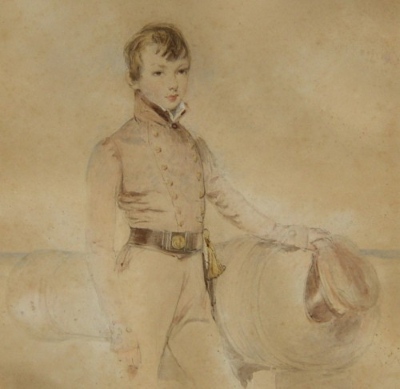
Leopold Heath, starting out as a mid-shipman in the Royal Navy
Society of British Artists Exhibition 1831
"Amongst those we noticed were: No.3 'A Portrait of James Heath Esq A.R.A., by J.Lonsdale. This is a good likeness to that able artist, and painted with much feeling and character."
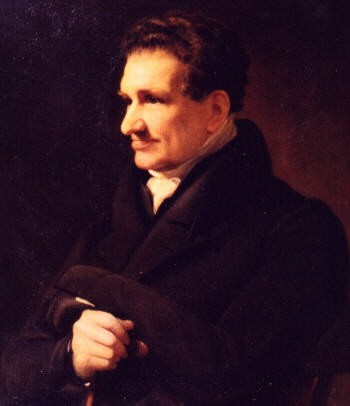
James Heath by Londsdale - grandfather of Leopold (up above)
Wednesday 19 January 1831
London Packet and New Lloyd's Evening Post
Court of King's Bench, Jan.17.
Engravings - Murray v. Heath and Others.
The question between these parties has been frequently before the public. The defendant, a celebrated engraver, having been employed by Mr.Murray to engrave a plate, detained eight impressions, believing he was justified in such detention by the custom of the trade. Mr.Murray brought his action, and after three trials succeeded in obtaining a verdict. The last action was brought against the assignees of Mr.Heath who had become bankrupt. The action was against Mr.Heath for taking the impressions and against the assignees for exposing the same for sale at the disposal of the bankrupt's effects.
The court was moved to set aside the verdict against the assignees and enter a nonsuit, or enter the verdict against Heath only. The motion was made on the ground that an impression taken from a lawful plate and exposed for sale could not be considered piracy of a work, according to the provisions of the 17th Geo.III. A rule to show cause having been taken.
Sir J.Scarlett this day opposed the same and contended that the act of parliament declared in express terms that taking impressions of plates and exposing the same for sale was piracy.
Lord Tenterden, without calling on the Attorney General for his reply in support of the rule, delivered the opinion of the court. If the Act of George III. was to be taken per se, it might be no easy matter to answer the argument of Sir J.Scarlett, but it had reference to the Act of George II., and the 7th George III., which applied to making new engravings and not taking impressions from plates. He could not consider taking impressions from lawful plates, under a proper construction of the act of parliament, piracy; but as it was a fraud at common law, an act of parliament was required to put an end to the practice of detaining these prints. His lordship held, under all the circumstances, that the rule must be made absolute in the form in which it had been moved.
30 January 1831
Farington - re Robert Smirke
Smirke I called on. He was employed on his small pictures from which engravings are to be made. . . The original intention was to publish the whole without letterpress but it is now meant so to publish them or with the next free from notes at the option of the purchaser.
Wednesday 26 January 1831
Evening Mail.
Lang v Smith
This action was brought to recover the amount of certain Neapoliton coupons and bordereaux, which had been put into the hands of the defendant, as securities for advances made by him to a broker named Watts to whom they had been intrusted by the plaintiff as his broker. The question was whether these instruments were transferable by delivery, so as to entitle the defendant to retain them. - - - Mr. Serjeant Taddy and Mr.Serjeant Jones showed cause against the rule; and Mr.Serjeant Wilde, Mr.Serjeant Bompas, and Mr.Serjeant Heath, argued in support of it.
The Court in giving judgment observed that the case depended upon the question whether or not these coupons had acquired the character either of money, of bank-notes, or bills of exchange, with open or bank endorsements, or of Exchequer bills, which were in the nature of the currency of the realm. - - -
Saturday 26 March 1831
Morning Herald (London)
The Forfar Election.
The petitioner in this case was Captain Ogilvie, the sitting member the Lord Advocate. The grounds of the petition were, that the royal burgh of Dundee had sent a delegate to the election, though it was not entitled to do so, as it had been previously disfranchised by a decree of the Court of Session, and that in consequence of that delegate being allowed to vote, the Lord Advocate was returned. Secondly, that corrupt means were resorted to on behalf of the Lord Advocate to induce the burgh of Dundee to send a delegate. - - -
The Committee, having been occupied three days in hearing the arguments on both sides, decided that Dundee was not entitled to send a delegate to the election.
Mr.Sergeant Heath said (on hearing this decision) that he had some arguments to advance in support of the Lord Advocate's seat; but, it being three o'clock, the Committee adjourned until tomorrow.
Wednesday 28 March 1831
Election Committees - (This Day)
Forfar
The Committee (the Right Hon. H.Goulburn, Chairman) met this morning, at one o'clock, to try the merits of the petition presented against the return of the Lord Advocate for the Forfar Districts of Burghs.
Mr.Harrison and Mr.Serjeant Spankie are Counsel for the petitioner, and Mr.Adam and Mr.Serjeant Heath for the sitting member.
The petition was then read, which stated that Dundee, one of the burghs, was not entitled to the elective franchise, and that the vote of its delegate ought not to have been received by the returning officer. The second objection to the return of the sitting Member was on the ground that he had, by himself or his agents, been guilty of gross bribery and corruption, and by such means obtained an undue return. The petitioner therefore, prayed, that the election might be declared null and void, and that he (the petitioner) might be declared duly elected.
Mr.Harrison was addressing the Committee in support of the petition when our reporter left.
Friday 1 April 1831
Cambridge Chronicle and Journal
Cambridge, Friday April 1.
University Intelligence
Previous Examination - Lent Term, 1831
Examiners
John Heath M.A. King's College
Edward Baines M.A. Christs Coll.
Henry Calthrop M.A. Corpus Christi Coll.
Edward Biley M.A., Clare Hall.
Monday 30 May 1831
Evening Mail.
Cranage, Gent. Attorney, Against Price, Special Pleading
This was an action of slander. The slanderous words which were spoken concerning the plaintiff in his profession, would amount in print to two or three lines of the same size as these which the reader is now perusing. The plaintiff had, however, out of this quantity of material produced a declaration containing no fewer than eight and twenty counts! Upon a former day Mr. Addison had, on the part of the defendant, applied to the Court to have it referred to the Master to strike out about twenty of those counts, which the learned counsel alleged not to be different from each other in substance, and many of them to be almost identical in form. In one of the counts, for instance, the words were said to be "you are no certified attorney;" and in another count, "you are not a certificated attorney." In this manner, as was stated by Mr.Addison, had the changes been rung upon a few words, through the extent of the eight and twenty counts. the rule having been conditionally granted on Mr.Addison's application
Mr. Serjeant Heath appeared this morning to show cause why the rule should not be made absolute. The learned serjeant contended, that such applications were unusual, and that whenever on previous occasions rules like the present had been granted conditionally, they had afterwards been discharged.He mentioned in particular one case in which the Court of Common Pleas refused to refer the declaration to the master, although nine slanderous words had been expanded into eleven counts. The Court was much amused on hearing of such a decision in such a case, and -
Mr Baron Vaughan observed that the science of special pleading had in that instance been carried to a high degree of refinement. - - -
Lord Lyndhurst, looking at the declaration, said that the same evidence would support each of the four first counts,and that the second, third, and fourth, were therefore unnecessary.
Mr. Serjeant Heath said that it was the practice of special pleaders to draw their declaration in this way.
Mr.Baron Bayley - Then whenever such cases come before the Court the pleaders must pay the costs of the application and of the reference.
Mr. Serjeant Heath - But, my lords, there is no precedent for such a reference to abridge the pleadings.
Mr. Baron Hayley. - Then it is time that there should be such a precedent. It is possible, after this case has come from the Master, that the defendant may have only three out of the 28 counts to plead to.
The reference was accordingly directed by the Court.
Thursday 2 June 1831
Devizes and Wiltshire Gazette
Legal Ingenuity.
An action for slanderous words, some ten or a dozen in number, were expanded, the other day, by the skill of the special pleader, into no less than twenty eight counts! From two of the number, the character of the rest may be guessed. - "You are not a certificated attorney" - "You are no certificated attorney." The Court of Exchequer was applied to, on motion, to have some twenty of these distinctions without difference struck out. -
Yesterday, Mr. Serjeant Heath showed cause against this, as an innovation, and called for the restoration of the degraded counts. He concluded that there was no precedent for this schedule A work. Mr. Baron Bailey - "Then it is time there should be."
Saturday 4 June 1831
Morning Herald (London)
Cambridge - Friday
The following is the First Class Sophs at Trinity College examination:- Hamilton, Hawtrey, Heath, Webster and West. The classes of Junior Sophs and Freshmen not yet determined.
4 August 1831
The Heath Family Engravers 1779-1878, Volume 3. by John Heath
Memorials of Hope Park
Letter - from Charles Heath to William Miller, engraver.
My dear Sir,
I have received your beautiful Plate from 'Turner' with which I am quite delighted. I enclose your bill for 60 guineas, which I hope will meet your wishes, but I have been obliged to make the Bill four Months instead of three - my publishers, Hurst & Co. having stopped payment, will rather inconvenience me.
If this will not suit your purpose, I will forward you another and you can keep this on account of the 'Landscape Annual' Plates.
Now, my dear Sir, get what assistance you please, but do not fail to let me have both plates by the 3rd of September. If you do I shall be seriously injured. Pray exert yourself. I rely on your promise to deliver both mine before Mr.Jennings, and I shall, of course, send you two or three for next year's Books.
In a few days you will receive a most splendid Turner for the 'England.' In future I will, provided you say not a word to any person give you seventy Guins for 'The England.' Your Plates deserve much more, and should the work, when I have completed a volume, sell better, I hope to advance the price again to you.
I shall send you a 'Turner ' likewise for 'The Keepsake' next year, and every year, so that I hope you will do me as many plates as possible for all my works. I can give you more than you could possibly execute, at your own price, if you would confine yourself as much as possible to my works. Let me know what you think of this.
Yours, my dear Sir, most truly.
Chas. Heath.
Friday 12 August 1831
Globe
Dublin Election Committee - Fourth Day.
The Chairman asked Mr.Harrison whether there was any further necessity for the attendance of Basseggio. His reason for asking the question was, that Basseggio intimated that he was under an obligation to go to Paris. Mr.Sergeant Heath was not aware that there was any further necessity for his attendance.
Chairman (Mr.Gordon): We then had better let him go, as he may have some idea of seeking office in the new French ministry (Laughter) - Report in the Freeman's Journal. (The individual had alluded to is an Italian friseur, long settled in Dublin, and the Court barber: he is a member of the Corporation of that city, and an active politician of the Orange party, although once of a different creed in religion and politics.)
Monday 15 August 1831
Morning Post.
Minutes of Evidence taken before the Select Committee on the City of Dublin Election Petition.
Mr William Long called in, and sworn; examined by Mr. Serjeant Heath, as follows:-
Sunday 4 September 1831
John Bull
On the 1st of November next will be published, handsomely bound in rose-coloured Morocco, price One Guinea
Heath's Picturesque Annual for 1832 - Containing Twenty-six beautifully finished plates executed by the First Engravers under exclusive Direction of Mr.Charles Heath; from Drawings by Clarkson Stanfield, Esq. With Letter-press Descriptions, embodied in the Narrative of a Tour through the most interesting portions of the North of Italy, the Tyrol, and the Countries bordering the Rhine. by Leitch Ritchie Esq.
Five hundred copies will be printed on Royal 8vo., elegantly bound in rose coloured Morocco, the Plates on India Paper, 2/.10s. Early application will be necessary to secure these Copies. A very limited number of Proofs of the Plates will be taken, the price of which will be as follows: - India, before Letters, 4/.4s.: India with Letters 3/.3s.;Plain 2/.2s.
On the same day published, The Keepsake for 1832. Price One Guinea, bound in crimson silk, large paper. 2/.12s.6d.
Printed for Longman, Rees, Orme, Brown and Green.
Monday 26 September 1831
Albion Star
House of Commons - Saturday, Sept 24.
Dublin City Election
The select committee, to which the petition complaining of an under election and return for the city of Dublin had been referred, assembled this morning, purruant to adjournment, at 11 o'clock. (pursuant?)
Mr.Serjeant Heath (in the absence of Mr.Serjeant Merewether, who conducts the case) proceeded to state the case on behalf of the petitioners. He said that, within the last month, he had appeared before a committee of the House of Commons, as counsel on a petition against the return of Sir Robert Harty and Mr.Perrin, and in that committee he had succeeded in proving such a case of bribery as to vacate the seats of those two gentlemen, and to disqualify them from being again returned.
That petition was from some electors of Dublin, of the names of McCleary and Scarlett, and these two gentlemen immediately on the new writ issuing (if he was rightly instructed) were most active in a system of bribery and treating in favour of the present sitting members, and to an extent that showed the necessity of some legislative enactment to correct the corruption which it would appear prevailed in Dublin; for nothing less than an extreme measure could by possibility eradicate the system. - - - continues
Thursday 29 September 1831
Westmeath Journal
Dublin Election Petition
From a correspondent of the Mail - London, Friday.
I send you a list of the members drawn for the Dublin Election Committee, marking those struck out by either party. The radicals were in extacies at the early part of the announcement of the ballot, all the names being of their faction. There was, however a turn of luck, and the Committee as it now stands, is composed with one exception, of staunch Tories and uncompromising anti-reformers.
Since the days of Cotton-Garden there never was such an assemblage of witnesses as has been imported from Ireland to sustain this petition. They are all under the arrangement and drill of Alderman Smyth, who had been brought here special for that purpose.
Struck off on the part of the Members - R.Sheil, J.Wood, C.Walker, Maurice O'Connell, - Barton, D.Callaghan, Hon.H.Martin, Sir W.Horne, W.Evans and W.Bougham.
Struck off on the part of the Petitioners - Sir H.Hardinge, Sir G.Cockburne, George R.Dawson, Lord Tullamore, George Bankes, W.Praed, Sir Thomas Freemantle, Henry Maxwell, T.Lefroy and W.Astell.
The following are the names of the Committee: T.B.Estcourt, Chairman. F.A.Bayntun - Hon.H.Fane - J.W.Kersley - J.D.Alexander - J.Leight - Hon.F.P.Cust - Sir A.Buller - Hilton Jolife - Lord Aspley - and Sir J.E.Dalrymple.
It will be seen that the Committee all voted against the Reform Bill, with the exception of F.A.Bayntun, one of the York Members.
The Counsel employed by the petitioners are Mr.Serjeant Mereweather and Mr.Heath. For the sitting members Messrs.Harrison and Follet and for the returning officer, Mr.Serjeant Spankie. At half past two o'clock the sitting of the committee commenced.
The petition having been read by Mr.Walmersley the clerk of the Committee.
Mr.Harrison observed that it was to be lamented that in all Irish election Committees the first day was nearly lost; an interchange of lists being required, and each side being bound not to enter upon statements other than those contained in the lists of objections.
The act of Parliament for the government and guidance of these committees was then read, after which Mr.Heath moved that all witnesses summoned or to give evidence in the course of the proceedings should withdraw.
The Chairman ordered witnesses to withdraw accordingly, adding, that if any remained in the room after that intimation, and previous to their evidence having been received, they should be rejected as improper.
The counsel then had an interchange of lists, on objections to the return, and the sitting was adjourned till Sunday.
Friday 30 September 1831
Albion and the Star
House of Commons - Thursday
City of Dublin Election Committee.
The proceedings of the sixth day were gone through yesterday, and the result seemed to leave the case pretty much in statu quo.
The committee occupied some short time with the point which was left with them the day before undecided, and at length gave it as their judgment, "that the line of examination pursued by counsel for the petitioners towards the witness (Rogers) might be continued;" in other words, that the acts of Rogers, as an agent, might be received in evidence.
Rogers was then again called in, and between his examination and that of two other witnesses, one of whom (Sharman) was examined before, the whole day was occupied.
The examination of Rogers went on until he stated that he did nothing of his own accord, but that he conveyed messages from Brierly to the different voters.
Upon the question then being asked of him, what message did he convey from Brierly, the individual alleged to be the chief briber on the occasion, to the voters.
Mr.Harrison objected that Brierly was not an agent; and the committee decided "that the question could not be put."
Mr.Serjeant Heath then asked the honourable committee what were the grounds which led them to the decision which they had pronounced.
- - - continues
12 October 1831 - G.Moore to Sergt Heath suggesting Leopold G. Heath goes to Sir John Gore and leaving College
Letter from Adm Sir Graham Moore to George Heath regarding his son Leopold Heath who had just finished his course at the Royal Naval College.
Addressed to: Mr Serjeant Heath, 18 Gower Street, Bedford Square, London
[no postmark as this letter was carried by a servant]
Brook Farm,
Cobham,
Surrey
Oct 12th 1831
My Dear Sir,
I enclose a letter form Julia to which this, as my answer, I sent to you. I conclude that your son has finished, or will have finished, his course of study at the College before Sir John Gore sails; in which case, as he will then be entitled to the advantages resulting to those who have passed through the College I think it a most desirable circumstance that he should go out with Sir John Gore.
The East India station is a very good one, particularly in peace and I believe as healthy as any other.
Captain Loring is a most respectable worthy man and it is very much to your son’s credit that he has made a friend of him.
With regard to the objection Julia mentions of the Flag Ship being more in harbor than other Ships, Sir John Gore can lend your son to any of the Cruisers under his orders which obviates it entirely. I used to send my young men out in this way in the Mediterranean to give them sea experience retaining them still on the Books of the Flag Ship.
Accept the offer by all means. I will write at more leisure to Sir John Gore whom I know. Your servant awaits so excuse this hurried scrawl.
Your’s very sincerely Graham Moore.
Saturday 15 October 1831
Warder and Dublin Weekly Mail
Dublin Election Committee (in conclusion from Supplement)
Tuesday, Oct.11.
The Committee met at eleven o'clock and Mr.Serjeant Heath (Mr.Serjeant Merewether being absent) concluded the summing up of the case on the part of the petitioners.
Mr.Serjeant Spankie then addressed the committee on behalf of the Sheriffs and concluded that not the slightest shadow of a case was made out against them. After citing a number of cases and arguing with great ability for his clients, he said he felt confident the character of the Sheriffs was unsullied; he would call no witnesses, for there was no case against them; the thought it unnecessary to occupy further time, but left the case in the hands of the Committee, confident they would find the charges against the Sheriffs to be frivolous. He hoped that they would have indemnity for the cost they had been put to by being compelled to attend these for the last three weeks.
The further proceedings were adjourned till the next day.
Sunday 23 October 1831
The Examiner.
Fine Arts
Heath's Picturesque Annual. - Under this embracing title, twenty-six prints have just made their appearance. They are engraved by Messrs. Goodall, Wallis, Brandard, and other distinguished hands, from drawings by Mr. C. Stansfield.
It is quite a treat to turn them over. Not one is wanting in merit. Thos of Strasburgh, the Dogano at Venice, Landech in the Tyrol, St.Pietro de Castello, Angera, Murano, the two of Verona (that especially taken from the Ramparts), the Lago Maggiore, and Constance, cannot, we think, be excelled. One scarcely knows which most to admire, the surpassing loveliness of the scenes, or the fascinating style in which they are executed. Many a gloomy winter's evening will be enlivened by a contemplation of those bright and spirit cheering compositions.
They will operate upon tasteful minds as stimulating drinks do upon sensitive bodies, but without any of the mischievous reactions usually produced by such draughts; and we recommend to our fair readers more especially, when they feel depressed in the evening, to indulge in a taste of "Heath's Picturesque Annual." rather than in an additional cup of strong tea, a beverage which but too frequently comes armed with Macbeth, with the power to murder sleep
File 883 - 74
My dear Leopold
Accept of my good wishes for your health, Prosperity, and Every Blessing you will receive from My Nephew Graham, a small token of my good will, which I beg you to accept.
God bless you, and be your Guide My Dear Leopold, through the storms of the ocean, and the storms of life.
Yours with every good wish,
Jane Moore (1758-1843)
2. - 25 October 1831 - Ditto, Re Leopold G. Heath's experience and College.
Letter from Adm Sir Graham Moore to George Heath regarding his son Leopold Heath who had just finished his course at the Royal Naval College.
Addressed to: Mr Serjeant Heath, 18 Gower Street, Bedford Square, London
[postmark B 26OC26 1831]
Brook Farm,
Cobham,
Surrey
Oct 25th 1831
My Dear Sir,
I think it will give Mrs Heath and you pleasure to know part of the contents of Sir John Gore’s answer to my recommendation of your son, “My old shipmate Loring spoke so highly of young Heath’s character and abilities that, without any other knowledge of him I desired Captain Hart to apply for him to be discharged into the Melville, and, when Mr Sergeant Heath told me that he was a protégé and relative of your’s, it gave me additional pleasure that I had it in my power to do so, and you may rely on it, to shew [show] my sincere regard for you, I will do all that may lay in my power for this youth.
We start upon an excellent foundation for when I left Mr Heath last Monday, it was to attend Sir Thomas Foley and Sir Michael Seymour on an enquiry at the College: the Boys of the first Class having struck work. We found that young Heath was an exception pointed out by Dr Inman and Mr Mason the head and 2nd Masters, consequently, instead of being included in the List to lose one month’s time, he received an encomium and he was placed at the head of the class”.
I think, as I before stated in my letter to you in answer to Julia’s, that your son begins his Naval career under most promising circumstances and it ought to be much more satisfactory to you than if he had been placed with Sir John Gore in consequence of family, or any other connexions [connections].
My wife joins in kind regards to you and Mrs Heath and I remain, my Dear Sir, very faithfully your’s.
Graham Moore.
Letter from Anne Raymond Heath to her son Leopold
Chancery Lane
Tuesday Aug 10th.
My dearest Leo,
Your fate is decided not to leave the Impregnable. Sir J Pechell has put his veto against your having the other appointment. So now deary, make yourself happy, with your nice friend Captain Forbes, your nice cabin, your well polished guns, and all your other Agrémens, and be off to the Mediterranean. Not much to be pitied after all, now that you are likely to have your work.
We know nothing more, than the above fact, which Mr Christie announced in a note to Douglas; saying also, that Sir C. Adam had written to the Lady, who had applied for you.
Your note of this day tells us nothing of the Jewel, which I am expiring to hear. Mr and Mrs Henry Hope are living at Richmond for the Honey Moon. The Lady could not bring herself to love a rich young man so well as a poor young man, very much to the regret of her Uncle the Great Col. He says they have £400 a year between them, and he has retired from the Navy. The Uncle would dearly have preferred the wealthy husband, but notwithstanding her folly, he has sent them a wedding present.
As I understand the rest of the party are going to write, I will say Adieu! Be sure to forward John’s letter to Dunbar.
God bless you my Leo!
Your affectionate mother,
Anne Heath.
[Another short note written onto the same letter reads as follows]
Dearest Leo,
Who do you think did up all kinds of Penny Joys and thick packets to you if I was not here? Why Sir you might have known the finger, and I feel greatly hurt that you did not. However, I am afraid I ought to have written to you and indeed I can hardly believe I have not done so since we have been in town.
I am so very glad Edward Nett is doing well. I suppose they will be coming home again soon. And now about that nasty old Radical Sir J Pechell! If you are greatly disappointed I am very sorry dear, but I can hardly (now it is settled, which you know always makes a difference) reflect that you exchange Niggerland for the beautiful interesting Mediterranean, so especially interesting just now in all ways.
And then the “Illustrious Stranger”! If it is worth a million of money to the Captain surely you Lieutenants will come in for £60,000 or £80,000 a piece for your share. Pray do not fail to tell us all about it, “sub rosa” you know
File 0859
Table B - Hour Angle (Date?)
Table
When the latitude and declination are of the same name the correction, in table B is to be subtracted from that in table A, the result is the correction of longitude for mile side of latitude, as is to be called positive or negative according as the part from table A is greater or less than the part from table B.
When the latitude and declination are of different names, the correction for table A is to be added to that in table B and the result is the correction of longitude for each mile of latitude and is always to be called positive.
* When the correction is positive an increase of latitude will make the longitude more to the Eastward, and a decrease of latitude will make it more to the Westward. When the correction is negative an increase of latitude will make the longitude more to the Westward, and a decrease will make it more to the Eastward.
* (This is to be even for PM sights)?
Example Shew the manner of using the table.
Lat left 34°,16' S
Long left 20 - 10 W
The day work to be worked up to the time of sights, and also up to Noon, which may always be done before 7 bells in the forenoon as the last hour's (nine?) may be guessed quite nearly enough.
Day's work up to the time of taking sights
Courses - dist(?) N S E W
N3 lts W 124 103.1 - - 68.9
N2 ½ W 16 16 14,1 - - 7.5
117.2 76.4
diff lat 1°. 57'.12"N diff lng 1°. 31' W
lat left 34.16.0. S long left 20.10 W
Lat DRat Sights 32.18.48S Long D iff lat at sights 21.41 W
N 2/2 W - 17. - 15.0 - - 8.0
diff lat 0°.15'0" N diff long 0°.9'. 30"
lat at sights 32.18.48 S. long at sights 21.41.0
Lat D R at Noon 32.3.48 E Long D of Eastward 21.50.30
The Chronometer sights to be worked with the (E?) Latitude at time of sights viz 32°.18'.48"S and we will suppose that the longitude comes out 21°.20'W (at time of sights) apply to thus the longitude (rim?) as, usual and we get the Longitude by Chron' at noon 21°29.30" W.
All this may be done by 7 bells in the forenoon as the last hour's (view?) may always be guessed near enough for practical purpose. The navigation will then require a slip of paper in the following quantities on it to carry up with him when he later the (near?) Alt.
La - - - ) 32°3'.48" S. Lay at noon by Chron. ) 21° 29' 30" W
Table A .38
Table B .14
Whole cover' per mile of Lat. 52+
Increase of Lat makes Long' more East.
Suppose the latitude of observation to be 32.°18'S or (¼) greater than that of Dir we have
cove per mile of Lat .52
14/
208
52/
7.28
.13
Cov' of long = 7.41 East
Log by the work 21.29.30 W.
Log at Noon = 21.22.0 W.
File 863 - big table of figures - full page - Table A - Latitude down the page, Hour Ange at top
3. - 20 December 1831 - Report from College - 2 years Sea time recommended but (Smith declined for India (Medea?) to Mark!
- -