Michael D.Heath-Caldwell M.Arch.


Michael Heath-Caldwell M.Arch
Brisbane, Queensland
ph: 0412-78-70-74
alt: m_heath_caldwell@hotmail.com
- Home
- Architectural Projects 0
- Architectural projects 1
- Architectural Projects 2
- Architectural Projects 3
- Architectural Projects 4

- The Crystal Palace
- Timeline
- 1693
- 1745
- 1770
- 1783
- 1784
- 1785
- 1786
- 1788
- 1789
- 1791
- 1792
- 1793
- 1794
- 1795
- 1796
- 1797
- 1798
- 1799
- 1800
- 1801
- 1802
- 1803
- 1804
- 1805
- 1806
- 1807
- 1808
- 1809
- 1810
- 1811
- 1812
- 1813
- 1814
- 1815
- 1816
- 1817
- 1818
- 1819
- 1820
- 1821
- 1822
- 1823
- 1824
- 1825
- 1826
- 1827
- 1828
- 1829
- 1830
- 1831
- 1832
- 1833
- 1834
- 1835
- 1836
- 1837
- 1838
- 1839
- 1840
- 1841
- 1842
- 1843
- 1844
- 1845
- 1845-46 Oxford
- 1846
- 1847
- 1848
- 1849
- 1850
- 1851
- 1852
- 1853
- 1854
- 1854/55 Appendix
- 1855
- 1856
- 1857
- 1858
- 1859
- 1860
- 1861
- 1862
- 1863
- 1864
- 1865
- 1866
- 1867
- 1868
- 1869
- 1870
- 1871
- 1872
- 1873
- 1874
- 1875
- 1876
- 1877
- 1878
- 1879
- 1880
- 1881-1
- 1881
- 1882
- 1883
- 1884
- 1885
- 1886
- 1887
- 1888
- 1889
- 1890
- 1891
- 1892
- 1893
- 1894
- 1895
- 1896
- 1897
- 1899
- 1900
- 1901
- 1902
- 1903
- 1904
- 1905
- 1906
- 1907
- 1908
- 1909
- 1910
- 1911
- 1912
- 1913
- 1914
- 1915
- 1916
- 1917
- 1918
- 1919
- 1920
- 1921
- 1922
- 1923
- 1924
- 1925
- 1926
- 1927
- 1928
- 1929
- 1930
- 1931
- 1932
- 1933
- 1934
- 1935
- 1936
- 1937
- 1938
- 1939
- 1940
- 1941
- 1942
- 1943
- 1944
- 1945
- 1946
- 1947
- 1948
- 1949
- 1950
- 1951
- 1952
- 1953
- 1954
- 1955
- 1956
- 1957
- 1958
- 1959
- 1960
- 1961
- 1962
- 1963
- 1964
- 1965
- 1966
- 1967
- 1969
- 1971
- 1974
- 1975
- 1976
- 1979
- 1983
- 1990
- 1991
- 1998
- 2001
- 2002
- 2004
- 2005
- 2006
- 2007
- 2008
- 2009
- 2010
- 2011
- 2012
- 2013
- 2014
- 2015
- 2016
- 2017
- 2018
- 2019
- 2020
- F.C. Heath-Caldwell
- C.H.Heath-Caldwell Memoirs
- Palmer Family
- Palmer Timeline
- 1912 - Palmer
- 1914 - Palmer
- 1916 - Palmer
- 1918 - Palmer
- 1919 - Palmer
- 1924 - Palmer
- 1925 - Palmer
- 1926 - Palmer
- 1929 - Palmer
- 1932 - Palmer
- 1934 - Palmer
- 1936 - Palmer
- 1938 - Palmer
- 1939 - Palmer
- 1944 - Palmer
- 1946 - Palmer
- 1961 - Palmer
- 1967 - Palmer
- 1970 - Diary - Joe Palmer
- 1971 - Diary - Joe Palmer
- 1972 - Diary - Joe Palmer
- 1991 - Diary - Joe Palmer
- 1992 - Diary - Joe Palmer
- 2010 - Diary - Joe Palmer
- Venice Earthquake 1873
- Old Letters 1
- Old Letters 2
- Old Letters 3
- Old Letters 4
- Old letters - Mid 1800
- More Old Letters
- Eaton Hall, 1943
- Marsh Family Timeline
- James Caldwell papers 1
- James Caldwell papers 2
- James caldwell papers 3
- Old letters 1800s
- Old Letters 1800s 2
- HH Sultan Taimur bin Turki 1913
- Frank Featherstone Wright 1921-2014
- Frank F. Wright 1
- Frank Featherstone Wright early
- Frank F. Wright 2
- Frank F. Wright Videos
- Old Featherstone album 1
- Old Featherstone album 2
- Old Featherstone album 3
- Old Featherstone album 4
- Old Featherstone album 5
- Arthur Eversfield Featherstone Album 1
- Arthur Eversfield Featherstone Album 2
- Arthur Eversfield Feartherstone Album 3
- Grasmere
- Frank E Wright Album 1a
- Frank E Wright Album 1b
- Frank E Wright Album 1c
- Frank E Wright Album 1d
- Frank E Wright Album 1e
- Frank E Wright Album 1f
- Frank E Wright Album 1g
- Frank E Wright Album 2a
- Frank E Wright Album 2b
- Frank E Wright Album 2c
- Frank E Wright Album 2d
- Frank E Wright Album 2e
- Frank E Wright album 2f
- Frank E Wright Album 2g
- Frank E Wright Album 2h
- Frank E Wright Album 2i
- Frank Edward Wright drawings
- Cathy Featherstone 1910a
- Cathie Featherstone 1910b
- Norma Featherstone 1913
- Norma Featherstone Part2
- Norma Featherstone Part3
- Norma Featherstone Part4
- Norma Featherstone Part5
- Kitlands House
- Moorhurst Manor
- Redlands House
- Milland House
- Anstie Grange
- Ebernoe House
- West Ham House
- Vigo House
- Linley Wood
- Crimean War
- James Caldwell letters 4
- James Caldwell letters 5
- James Caldwell letters 6
- James Caldwell letters 7
- James Caldwell letters 8
- James Caldwell letters 9
- Eton & Oxford 1830/40s A
- Eton & Oxford 1830/40s B
- Eton & Oxford 1830/40 C
- Eton & Oxford 1830/40 D
- Eton & Oxford 1830/40 E
- Eton & Oxford 1830/40 F
- Back in England. Early 1800s
- Arthur Heath 1872-4
- Sicily 1800
- Naples - 1830
- Trentham Hall
- Paris 1810
- Cromptons on the Lusitania
- HMS Illustrious 1948
- The Minoans
- Henry Crompton 1836-1904
- Orongorongo 1957
- Another Page
- Gertie Wheeler 1909
- The Ahsan Manzil
- More old letters 1800s
1913 - 1914 - 1915
General Frederick Heath-Caldwell CB aged 55/56.
Constance M.H. Heath-Caldwell aged 45/44
Cuthbert Eden Heath OBE aged 54/55
Sarah Heath aged 54/55
Admiral Sir Herbert Heath KCB, MVO, etc aged 52/53
General Sir Gerard M. Heath KCMG, 50/51
Lt Cmdr Cuthert H. Heath-Caldwell DSO aged 24/25
Leopold C. Heath (Griggs) aged 19/20
Genesta Heath – aged 14/15
Madeline Marion de Salis (ne Heath) aged 20/21
Rosamond Heath (Posy) aged 19/20
Lt Commander Cuthbert Helsham Heath-Caldwell DSO RN aged 24/25
2nd Lt. Martin F. Heath-Caldwell RHA aged 20/21
Genesta Heath aged 14/15
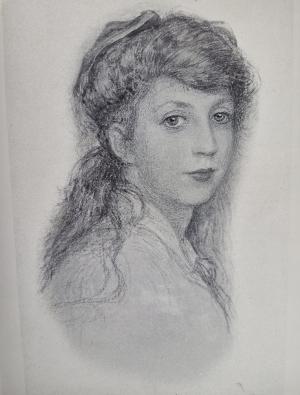
Genesta Heath, daughter of Cuthbert Eden Heath, at age 15
General Frederick C. Heath-Caldwell. Aged 56
Records of the Heath Family Vol 2
Just prior to the outbreak of the war, I was promoted Major-General, and was commanding the Scottish Coast Defences. In the midst of mobilising and providing for the large influx of troops I received sudden orders to go to the War Office, to take up the appointment of Director of Military Training, which I held until the appointment was abolished in January, 1916.
The duties of Director of Military Training were very heavy; they involved the organisation of the training, and the distribution of the training personnel and material for the Kitchener Armies which were being raised, the organisation of schools, such as Artillery, Machine Gun, Musketry, Bombing, and numbers of other schools, the training of re-inforcements, and training of officers.
During the twelve months, no less than 45,000 young officers were collected by my department, and provision made for their training.
2nd Lt Martin Heath-Caldwell Aged 21
He received his commission in RFA, December 19th, 1913, and went out with the 1st Division from Aldershot in August, 1914, as a 2nd Lieutenant in No 117 RFA. He served in that battery until January, 1915, when he obtained his jacket, and served in the Chestnut Troop, RHA (Royal Horse Artillery), until killed in action on May 16th, 1915, near Richebourg L'Abone. He is buried in Bethune Cemetery, and subsequently mentioned in despatches.
Major-General Sir Gerard M. Heath, K.C.M.G., C.B., D.S.O.,
On the outbreak of war, I was on leave in South Africa, where I had held the appointment of Brigadier General, General Staff, under Sir Reginald Hall. Soon after the declaration of war, I became an Inspector of Recruiting in England, in connection with the raising of Kitchener's Armies, and subsequently Inspector of Royal Engineers in England. In May, 1915, I went to France as Chief Engineer of the 2nd corps under Sir Chas. Ferguson; we were then strictly on the "defensive;" trench warfare prevailed, and my duties were almost entirely devoted to supervising the construction of lines of defence and their maintenance. My beat extended at one time from Armentieres to Ypres.
Capt. Leopold C. Heath, Surrey Yeomanry. Aged 20
It was towards the end of July, 1914, that I left Cambridge for the annual fortnightly Camp of the Surrey Q.M.R.'s Yeomanry at Bordon. It had been arranged that he Division with which we were camping should start their training at Bordon and then march to Hamilton Camp, Salisbury Plain. Rumour has it that a dispute had arisen among the powers that be, as to whether it was possible for a Territorial Division to accomplish a march of this length. The General commanding this Division had then offered to prove that it could be done. By the time, however, that this had been accomplished the authorities were far too preoccupied with other more important matters to take any notice of it, so that the whole thing fell rather flat!
After a day or two at Bordon we started off on our march, and eventually arrived at Salisbury Plain. Things were by now too unsettled for any definite arrangements to be made, so no camp was pitched (we had arrived about mid-day). We soon had orders to proceed to Amesbury Station and there entrain for London.
On arrival, we found a good part of the Division there before us, so had to wait - all night! Raining hard and no cover anywhere. Some of the men managed to get shelter under the wagons, and a large tarpaulin was found for the officers. This was comparatively comfortable until we suddenly heard shouts of "Whoa!" so, thinking that a horse had got loose, we all got up. It proved, however, to be a false alarm, so we returned to the tarpaulin.
We did not get much peace, however, for the "Whoa" business was repeated about every half hour through the night, and every time it happened the tarpaulin seemed to rise in the air of its own accord as we all got up for fear of being trodden on. It must have been an amusing sight to anyone watching.
It was, I suppose, about midnight when the Adjutant came over to us with a telegram ordering us to mobilise. This was about the first definite order we had had that day. We were all soaked through, but nevertheless thankful when daylight arrived, and we started looking around to see if we could find any food, as we had no rations. Presently our Squadron Leader appeared with some whisky which was most welcome, although each man got only a desert spoonful. Presently the same gentleman reappeared with several cases of suet puddings,
commandeered in the parcels office. The field kitchen, worked by paraffin, was soon set going. At last our puddings, the first food we had had for about 18 hours, were ready.
Being ordered to entrain, we proceeded on our journey to London. On arriving, the Regiment was split up, each Squadron going to their own Headquarters. As Machine Gun Officer, I was attached, with my men, to "C" Squadron, whose Headquarters were at Croydon. The days spent there were bustle from beginning to end. Recruits had to be sworn in, equipment collected and so forth. While there, a suggestion was made that my old car should be converted for carrying machine guns. I at once had it sent down to Croydon. With the help of my Sergeant and some of my men, designs were got out and (Page 40) that the work entrusted to a local coachbuilder. The car looked very different when completed, and it seemed to be approved at Headquarters.
We spent about ten days at Croydon and then moved off to Maidstone. The Squadron went by road and I followed a day or two after with the car. It was quite a procession. I had a motor cyclist in front and another behind, and the car itself, complete with guns, ammunition, etc., my Sergeant and myself in front, and two men behind.
At Maidstone I got my men billeted in an inn. Later on, I was told to join "C" Squadron at Preston Hall, a large house about two miles out. We arrived there rather late at night, so after having got the men settled, I decided to sleep in the car. It was one of the most uncomfortable nights I have spent, cramped up in the driving seat. Next day, I got a room at the house where the officers of the Squadron were all being lavishly entertained by the owner.
Saturday 3 January 1914
Morning Post
The War Office announce that the following gentlemen cadets of the Fourth Class qualified for commissions in the Royal Engineers and Royal Artillery at the examination held in December, the names being given in order of merit:
Royal Artillery
M.F.Heath-Caldwell 17,618. (10th.)
Thursday 15 January 1914
Globe
The Services - Keel-Plates Laid of Two New Battleships.
The Royal Sovereign, a sister vessel of the Royal Oak and the name-ship of a class of five battleships, was laid down at Portsmouth Dockyard today by Mrs Heath, wife of Rear-Admiral Herbert Heath, Admiral-Superintendent of Portsmouth Dockyard.
Thursday 15 January 1914
Sheffield Evening Telegraph
Two New Battleships
The semi-private ceremonial of laying the first keel plate of the battleship Royal Sovereign was performed at the Portsmouth Dockyard this morning, in the presence of a number of naval and dockyard officers by Mrs Heath, wife of Rear-Admiral Heath, Admiral Superintendent of the Dockyard. Simultaneously the keel plate of the sister ship Royal Oa, was being laid at Devonport. - - -
Saturday 10 January 1914
Army and Navy Gazette (also Broad Arrow, 9 January 1914) UPLOADED
Royal Military Academy - Recommended for Commissions in the Royal Artillery
---
Heath-Caldwell M.F. 17,618
Wednesday 21 January
Second Lieutenancies
The undermentioned to be second lieutenants - - -
Royal Regiment of Artillery
Royal Horse and Royal Field Artillery
Gentlemen Cadets from the Royal Military Academy. Dated December 19, 1913: - - - Martin Frederick Heath-Caldwell, - - -
Broad Arrow.
Friday 23 January 1914
Royal Regiment of Artillery, Royal Horse and Royal Field Artillery
Gentlemen Cadets from the Royal Military Academy: - F.H. Fardell, S.G.B. Marsh, M.F. Heath-Caldwell, E.G. Waller, S.V. Trevenen, C.E.L. Lyne, G.A. Skipwith, R.P. Gatehouse, A.E. Rusher, T.M. Hawker, R.E.C. Groome, E.T.A.G. Boylan, V.H. Thomson and M.P. Evan:19 Dec.
1913
Friday 23 January 1914
Edinburgh Evening News
The Scottish Motor Show - A Big Annual Event - Exhibits Worth Quarter of a Million
Considerably over a quarter of a million's worth in motor cars and accessories are lodged in the Waverley Market, Edinburgh, for show purposes in the eight days beginning today. - - -
The Motor and Aerial Warfare - They of the Association represented a very great industry, an industry which made its influence felt in a great many directions (Hear, hear.) The internal combustion engine had not yet been developed in every field open to it, but it had been developed sufficiently to make the industry one of the very largest in this country, in Continental countries and in America. (Hear, hear) Even their friends of the Army - her Mr Matthew alluded to the presence in the platform of Lieutenant-General Sir J. Wolfe Murray K.C.B., Scottish Commander; Brigadier-General F.C. Heath-Caldwell C.B., Commander Scottish Defences; Lieutenant-Colonel g. Conway Gorden - - -
Aberdeen Press and Journal
Wednesday 28 January 1914
Use of Cars in War.
The Scottish Motor Exhibition dinner, held under the auspices of the Scottish Motor Trade Association, was held in the North British Station Hotel, Edinburgh, last night.
Mr J. S. Matthew, president of the association, occupied the chair, and there were also present the Lord Provost of Edinburgh Sir J.H.A. Macdonald K.C.B., Lord Justice Clerk: Brigadier General F.C. Heath-Caldwell C.B., the recently appointed Commander of the Scottish Coast Defences; Mr T.B. Morrison, Solicitor-General - - -
The toast of "The King" having been duly honoured the Solicitor-General K.C., proposed "The Imperial Forces," to which Brigadier-General Heath-Caldwell C.B., replied, and testified to the use of motors in military work.
continues - - - long article
Wednesday 28 January 1914
Birmingham Daily Gazette
Lord Knutsford - Condition "Very Grave and Unchanged."
A bulletin last evening stated that Lord Knutsford is still unconscious.His condition is very grave and unchanged.
Lord Knutsford was Financial Secretary to the Treasury in Lord Salisbury's Government of 1885, and in the same year he was made Vice-President of the Council of Education and a Privey Councillor. In 1887 he became Secretary of State for the Colonies with a seat in the Cabinet. In 1888 he was raised to the peerage as Baron Knutsford of Knutsford. He was created a Viscount in 1895.He mother was the daughter of James Caldwell of Linley Wood, Staffordshire, and his father, Sir Henry Holland, Bart. (physician and President of the Royal Institution of Great Britain).
The Scotsman
Wednesday 28 January 1914
Motor Car Mobilisation. Colonel Matthew Propounds an Important Scheme.
Honouring Sir John McDonald
The leading function held in conjunction with the Motor Show,the annual dinner of the Scottish Motor Trade Association was held last night in the North British Station Hotel, Edinburgh, and was attended by a company of over 200 gentlemen. In its character, it was perhaps the most representative gathering of the kind yet held. Lieutenant-Colonel J.S. Matthew, president of the Association, presided, and the company included Lord Provost Inches, Sir John H. A. Macdonald, president of the Scottish Automobile Club; Mr S. F. Edge, president of the Society of Motor Manufacturers and Traders; Mr. T.B. Morison, K.C., Solicitor-General; Brigadier-General F.C. Heath-Caldwell C.B., Commander, Scottish Coast Defences, Sir Richard Mackie, Sir Robert Cranston - - -(continues) - - -
During the evening musical selections were rendered by the Misses Mather and solos were contributed by Miss Olga Z.Russell and Mr George Campbell. - - continues.
Army's Debt to the Motor.
Brigadier-General Heath-Caldwell, who responded, said that fourteen years ago they had no motor cars in the Army, and he could not think how they ever were able to get on without them. Motor bicycles and motor cars were now used extensively on manoeuvres but there had been another revolution recently. A year or two ago, in the days of horse transport, the supply column for even a small division took up two and a half miles of road at the very least. Through the introduction of the motor lorry all that could now be done in a few hundred yards, and instead of three miles an hour, they were able to do it at twenty. Now they had crowned all by giving them wings, and he was sure they of the Army were very grateful to them. (Applause).
- - - - (continues) - - -
Broad Arrow
Friday 30 January 1914
Regimental News
Royal Regiment of Artillery
The following officers, on being commissioned to the Royal Field Artillery from the Royal Military Academy, Woolwich, have been posted as follows: -Second Lieuts. M.F. Heath-Caldwell to 26th Brigade, Aldershot: - - - (continues) - - - They have been ordered to join at the School of Gunnery, Shoeburyness, tomorrow (Saturday), for a course terminating on 28th February.
The Scotsman
Friday 30 January 1914
Naval and Military News - The Defence of Positions.
Colonel H.F. Kays presided over a meeting of the East of Scotland Tactical Society, held in the Q.E.R. Headquarters, Edinburgh, last night, when the members were given a lecture by Brigadier-General F.C. Heath-Caldwell who dealt with "The Defence of Positions."
He said he had chosen this subject as it was one which had a special interest for them, their role being defensive rather than offensive. He wished, however, to guard against any misconception for defence by itself could never win. In the position with which he was going to deal their role was only part of the battle, and not the whole operation; they had to hold a certain position until mobile troops under the command of the General Officer Commanding-in-Chief could be brought up for the counter-stroke.
The lecture was highly technical in character, and by means of blackboard sketches the lecturer dealt with the obstacles, trenches, communications, mines, alarms, water supply &c. In conclusion, he warned them,in all matters of military engineering, not to adhere too rigidly to pictures in text-books which were given only as guides. They should not forget to use improvised materials which were usually at hand, and were often better than sealed pattern material such as sand-logs.
Gentlewoman
Saturday 31 January 1914
My Dear Rosamund, - The all-engrossing topic of conversation here at present is the Motor Show in the Waverley Market. It is unanimously voted the finest show of the kind that has ever been held in Scotland. The Waverley Market has been made as attractive as possible, with tasteful decorations and the carpeting on the floor adds immensely to the comfort of the visitor. The Committee have been fortunate in securing the services of an excellent band - the British ex-Guards Band. In the absence of Sir John H.A. Macdonald, K.C.B., the Lord Justice Clerk, the opening ceremony was performed by Lord Provost Inches (who was to have presided) and Lieutenant-Colonel J.S. Matthews, the President of the Motor Association presided. Amongst other well-known people to be seen on the platform were Lieutenant-General Sir Wolfe Murray, K.C.B., Go.O., C. and C. Scottish Commander; Brigadier-General F.C. Heath-Caldwell, C.B., Commander Scottish Coastal Defences; Lieut-Col. G. Conway Gordon
- - - continues - - -
Wednesday 11 February 1914
Civil & Military Gazette (Lahore)
Royal Regiment of Artillery
Royal Horse and Royal Field Artillery - Gentlemen Cadets from the Royal Military Academy. Dated December 19, 1913.
Frederick Herbert Fardell, Stephen Gilbert Bowyer Marsh, Martin Frederick Heath-Caldwell, - - -
The Scotsman
Friday 13 February 1914
Naval and Military News - Surprises in War.
Captain Johnstone, military lecturer in the Edinburgh University, addressed the members of the East of Scotland Tactical Society in the City of Edinburgh (Fortress), Royal Engineers' headquarters last night. Brigadier-General F.C. Heath-Caldwell presiding.
- - - - (continues) - - - -
Saturday 14 February 1914
Portsmouth Evening News
Fires and Firemen.
In aid of the Boys Guild of Christchurch, Southsea, Southsea, the friends of the boys and sympathisers in the work had a rare treat on Wednesday last, when the Hon.Capt. E.L.Lane J.P., of Bournemouth gave his lecture on "Fires and Firemen" to a numerous and enthusiastic audience, including the Admiral-Superintendent of the Dockyard (Admiral Heath). Briefly and appropriately introduced by the Chairman (Rev.G.Crawford Stanley) the lecturer soon held the full attention of his audience. - - -
Friday 20 February 1914
Hampshire Telegraph
Hospital Ball - Picturesque Scene - Another Portsmouth Success - Some Smart Toilettes
Portsmouth Town Hall was on Friday night the scene of a successful and picturesque event, viz., the annual ball on behalf of the Royal Portsmouth, Portsea and Gosport Hospital. A party of about 500 spent a thoroughly enjoyable time. There seemed to be no shortage of dancing-men, although the ball generally derives considerable support from the Navy, and there are fewer warships in port than there were last year.
The Commander-in-Chief (Admiral Sir Hedworth Meux G.C.M.G) had intended to be present, but early in the evening he sent a message to the Mayor (Alderman J.H.Corke K.L.H.) who, with the Mayoress (Mrs Corke), was largely concerned with the organisation of the ball, expressing regret that, owing to ill-health, his doctor would not allow him to go out. Lady Meux, however, and a large party from Admiralty House attended. Some of the chief Naval officers of the port were present, and the Territorials were well represented.
Distinguished Guests - Lady Meux was accompanied by her two daughters, the Hon. Miss Cadogan and the Hon. Edith Cadogan. Vice-Admiral Sir Alexander Bethell was present as senior officers, and was accompanied by Lady Bethell, and other Naval people in attendance included Admiral and Mrs Heath, - - - -
Mrs Heath was wearing a softly draped gown in delicate leaf green satin, with lace corsage and diamond ornaments. Miss Heath chose a pale shade of blue ninon with satin waistbelt to match veiling a satin jupe and complete with fine shadow lace. Miss I.Heath was attired in a very soft pastel shade of green ninon, veiling a satin founeau. - - -
Friday 20 February 1914
Hampshire Telegraph
Service "At Home." A Brilliant Southsea Scene - Admiralty House Party.
The social functions at Admiralty House are looked forward to with immense delight, as they are always enjoyable affairs, and are largely attended by men, so that there is never any lack of partners for the various dances. The "At Home" given by Admiral Sir Hedworth and Lady Meux on Tuesday evening proved no exception to the rule, and no more fitting environment for such a gathering could have been imagined, the scene in the ballroom being brilliant in the extreme. The floral decorations throughout the suite of rooms were very pretty and were greatly admired. Beautiful gowns and sparkling jewels were much in evidence and a notably picturesque effect was contributed by the different uniforms of the gentlemen. A temporary lounge had been erected on the balcony leading off the ballroom, this being draped with scarlet and white, and arranged with Oriental rugs, cosy chairs, palms and other plants. - - -
Mrs Herbert Heath was attired in black satin, trimmed with handsome gold lace and gold cords held the overdress together, which was worn over a white net robe. Miss Heath looked particularly well in tangerine satin with ninon tunic, which was outlined at the decolletage with silverlace. Miss I. Heath chose Lotuc-blue satin and ninon in the same shade sewn with fine diamante. - - -
Wednesday 25 February 1914
London Evening Standard
Second Levee - Ceremony at St.James's Palace
Many Presentations
THe King held a Levee yesterday at St.James's Palace. Attended by his gentlemen in waiting, and escorted by a detachment of 1st Life Guards, the King arrived at the garden entrance from Buckingham Palace, and was received by the great officers of State and household - - -
General Presentations. The following presentations to the King were made, the names having been previously left at the Lord Chamberlain's Office and submitted to his Majesty for approval:- - - - Caldwell, Second Lieutenant M.F.Heath-Caldwell, Royal Field Artillery, by the Inspector-General of the Home Forces
Friday 27 February 1914
Hampshire Telegraph
At Admiralty House - SIr Hedworth and Lady Meux Entertain - Fashionable Pre-Lenten Dance.
The second of the two pre-Lenten dances given by Admiral Sir Hedworth and Lady Meux took place on Monday evening at Admiralty House, Portsmouth Dockyard, and was largely and fashionably attended.
Everything was carried out on a most elaborate scale. The rooms were beautifully decorated with lovely flowers, and the large ballroom, which opens out of the drawing room presented a charming coup d'oeil especially when the dance was in full swing. The sitting-out and temporary retiring rooms were similar to those on the previous Tuesday. - - -
Mrs Herbert Heath was particularly well dressed in royal blue satin, with a lampshade tunic in French tulle, edged with a line of diamante, and the crimson satin ceinture was a chic relief. Miss heath was wearing tomato red satin, veiled with tulle to match and dainty ruchings of its own material trimmed the bodice and sleeves. Miss I.Heath chose Danube blue satin, which had a deep corselet and Limerick lace and blue ninon composed the tunic. - - -
Friday 27 March 1914
Liverpool Evening Express
Commander of the Zealandia Suspended - Naval Court-Martial
The Admiralty has stopped all leave from the battleship Zealandia, and all officers on leave have been recalled to their ship (says the "Daily Chronicle"). The commander has been suspended pending an official inquiry into the recent insubordination amongst the stokers, which resulted in a series of courts-martial, at which eight men were sentenced to two years each for refusing to obey orders. The trials were held at Vigo within the past fortnight.
The Zealandia is a Spithead, and an official communication from the Admiralty was conveyed to the officers by Admiral Heath, superintendent of Portsmouth Dockyard. It is understood that the Admiralty inquiry will take the form of a court-martial.
Thursday 2 April 1914
Portsmouth Evening News
Naval Surgeons - Training at Haslar - The Director General's Instructive Address.
The Men Behind the Guns - In the Library of the Royal Naval Hospital at Haslar this afternoon, the Director-General of the Navy Surgeon-General A.W.May C.B., K.H.P., presented the certificates of the young medical officers who had successfully passed their course as surgeons in the Royal Navy.
There was a large attendance of senior medical officers of the Royal Navy, including Surgeon-General J.J. Dennis M.D. (in command of Haslar Hospital), Deputy-Surgeon-General M.Craig C.B., M.B., and E.R. Dimsey D.S.O., Rear-Admiral H.L.Heath (Admiral-Superintendent of Portsmouth Dockyard), was also present, as well as the Superintending Sister (Miss Mary C. Clark), and several of the Sisters. The proceedings were opened by Surgeon-General Dennis reading the following report - - - - Surgeon-General Dennis thanked Rear-Admiral Heath for his presence there that afternoon. Rear-Admiral Heath briefly replied, and the proceedings closed.
The Scotsman
Wednesday 8 April 1914
Naval and Military News - Artillery Inspection at Piershill Barracks
Brigadier-General F.C. Heath-Caldwell C.B., Commanding Coast Defences, Scottish Command, inspected the 1st Brigade, Royal Field Artillery (comprising 1st, 67th and 69th Batteries), at Piershill Barracks yesterday.
Captain R.F. Meiklejohn D.S.O., was in attendance on the inspecting officer. The Brigade, under the command of Colonel F.A.Elton, paraded, dismounted and in drill order, on the barrack square, 290 of all ranks, representing the total strength. When the force had been inspected, the General inspected the barrack-rooms, cook-houses, regimental institutes, riding school, officers' mess, sergeants' mess, non-commissioned officers' mess, brigade and battery books and offices, horses, stables and horse infirmary. Next week, preceded by an advance party, the 67th Battery will go to Redesdale, Northumberland, as a depot battery
- - - (continues) - - -
Friday 17 April 1914
Hampshire Telegraph
Evans-Gwynne - Shaw - Military Wedding. Smart Portsmouth Ceremony.
The marriage took place yesterday at the Portsmouth Parish Church, between Mr.Alfred Howell Evans-Gwynne, Rector of Rettendon, Essex, and Miss Phyllis Mary Shaw, only child of Brigadier-General F.C. Shaw, C.B., and Mrs Shaw, of Gun House, Portsmouth. - - - Mrs Herbert Heath was gowned in blue figured silk and a large black velvet hat, mounted with wings. Miss Heath was wearing a tomato-straw hat with a Navy blue costume, and Miss I. Heath was also in Navy blue, with a purple hat. - - - -
30 April 1914
Yorkshire Post & Leeds Intelligencer
A Pretty Nidderdale Wedding - Richmond - Greenwood
There was a charming wedding ceremony at the Nidderdale church of St.James,Birstwith, yesterday, when Miss Ruth Margaret Greenwood, elder daughter of Capt. C.S. and Mrs Geenwood, Swarcliffe Hall, and Mr Leslie Richmond of the Gordon Highlanders, son of Mr J. Richmond of Kippenross, Dunblane, and Haddon Rig, New South Wales, were married.
- - - (continues) - - -
Among the numerous presents were the following:- - - - (continues) - - - (Barnadistons) Brigadier-General and Mrs Heath-Caldwell, pierced silver dish - - - (continues) - - -
Friday 8 May 1914
London Evening Standard
The Dead Duke - Arrangements for Service at the Abbey
The body of the late Duke of Argyll was yesterday brought up from Kent House, East Cowes, where it has lain since Wednesday. The coffin, which was borne on a gun-carriage drawn by bluejackets, was covered with a Union Jack and surmounted by the Duke's helmet and decorations. Mr. Niall Campbell, the heir to the dukedom, walked behind the gun-carriage, and in a mourning coach were Princess Louise Duchess of Argyll, Princess Louis of Battenberg, and Lady Tennyson. The funeral cortege was conveyed to Porstmouth in the special service ship Ant. A guard of honour of the Royal Scots Fusiliers awaited the arrival of the Ant at Portsmouth, where Sir Hedworth Meux, Admiral Heath and General Blewitt were also in attendance. - - - -
Letter from 2nd Lt Martin F. Heath-Caldwell RHA aged 22.
M RA Mess
Rollestone Camp
Amesbury
Thursday Evening, May 13 1914?
My Dear Cuthbert
I always seem to leave my scribble to you till the last moment, in fact, I expect this will be too late to catch the last post. We finished our practice today with a "brigade day" The &ldots; was very pleased with the &ldots; performance on Tuesday & I think the Brigade did pretty well today.
The weather had been bloody, but then we had such a splendid week to begin with that we cannot well complain. Tomorrow one of the batteries of the 5th brigade are &ldots; to troop off for the purpose of experimenting as to the observation of fire by aeroplanes - so I think we shall have a fairly slack day. Lately life has been a bit strenuous. We start trekking back on Saturday, staying at Trenton on Sunday - as we may not march on a Sunday.
I am writing after dinner. It is very cosy in here - a good many people playing cards. The &ldots; & majors do it for action - we always have a game of poker on. However I think it is rather a mistake to play every evening as some people do. Of course it is possible to be a little expensive - though one usually seems to keep about even on the whole. The first night I was roped in at Aldershot I ended up about 11 shillings down, but have since recovered it!
I & John Tucker mobiked over to Portsmouth last Saturday. Awfully pretty run then by Salisbury, Romsey, and Botely. Found a host of cousins there, all rather owlish after prolonged ball dancing. Under the "Skippency" of Phil Crofton we went for a sail on Spithead on Sunday afternoon. John Tucker was violently ill which rather cast a gloom on the proceedings, & his bad example had a deteriorating effect on me & I didn't feel very happy coming back.
We had some adventures coming back here at night. I &ldots; missed the hindquarters of a horse which was &ldots; the road near here. One could not see him till right onto him. John, according to his account, went slap into the animal - though I am inclined to think the bank, as the horse was not hurt. Anyhow there was a crash and I hailed a passing car & put him into it & hid the bike behind the hedge where it was recovered by his servant next morning & having cursed the orderly on the horse proceeded without further incident.
Of course the silly ass with a shying horse ought never to have been riding along the road at night. He could have easily rode along the fields at the side. John was all right next morning &ldots; shaken rather & his knee knocked.
I am brigade orderly officer today & my first job is to go around the horses & turn out the guard sometime during the night. The &ldots; no pleasant job on a wet night. It took me an hour last time.
So no more now.
Yours etc
Martin F. Heath-Caldwell
The Scotsman
Friday 15 May 1914
Care of Soldiers' and Sailors' Families.
The annual meeting of the East Scottish Branch of the Soldier' and Sailors' Families Association was held in Dowell's Rooms, Edinburgh, yesterday - Lady Mackenzie, president in the chair. The annual report showed that the number of cases dealt with during 1913 was 110, of which 91 were wives and 19 widows or other dependents. The children belonging to these cases were 268. - - -continues - -
Brigadier- General Heath-Caldwell C.B., in seconding spoke of the difficulty soldiers who had married "off the strength" had in providing for their families, and said that in Edinburgh there were forty families living on 14s. or 15s. per week.
The Very Rev. Dean Wilson emphasized the necessity of keeping up the fund in case of possible emergencies - - continues - - -
Friday 29 May 1914
Broad Arrow
The Scottish Naval and Military Veterans Residence, Edinburgh
His Grace the Lord High Commissioner, accompanied by Lieutenant-Colonel Quentin Agnew M.V.O., D.S.O., Purse-bearer, and the Rev.Mr.Wallace, Chaplain and Mr. J. Couper, Assitant Purse-bearer, visited the Scottish Naval and Military Veterans' Residence, Canongate, on the 21st inst. His Grace was received by Mr.C.M.Pelham Burn, Chairman of the Council, and Major C.L. Addison Smith, the hon. secretary and treasurer. Among those present were - - -Brigadier-General Heath-Caldwell C.B., - - -
Friday 29 May 1914
Runcorn Guardian
Linley Wood
To be let, furnished, the above, about 3 miles from Alsager Station and 2 miles from Harcastle Station.
The house stands in about 11 acres of grounds and woods, and is approached by a drive about half a mile long, with lodges on the Linley Lane and the Newcastle Road.
The house contains entrance hall, drawing room, morning room, dinning room and library, besides kitchens, pantry, housekeeper's room, servant's hall, &c &c. on the ground floor. On the first floor there are 8 best bedrooms and dressing rooms, 3 bathrooms, 3 w.c.'s, servants room, maid's room, linen room, &c. On the top storey there are 4 best bedrooms, 1 maid's room, 1 play room, and in separate wing there are 3 maid's rooms and 1 servant man's room.
There is stabling for 8 horses, coachhouse or garage for 3 cars, harness room, &c. There are 2 tennis courts, 3 conservatories, forcing house, frames &c.
Lighted throughout by electricity and heated with hot water. Has just been redecorated throughout. Supplied with water from District Council mains, Large cellars in basement.
To be let for 5 years, or possibly for a less term.
Apply to John Loring, Estate Office, Doddington, Nantwich.
Chelmsford Chronicle
Friday 2 June 1914
With the Services.
The King's birthday was celebrated at Colchester by a review of the troops on the Abbey Field before Brigadier-General Heath C.B., and staff. The troops on parade included the 113th, 114th,and the 115th Battery R.F.A., the West Yorkshire Regt., the Durham Light Infantry, the Gordon Highlanders, the Scottish Rifles and the 4th Hussars.
Saturday 6 June 1914
Gentlewoman
Monday's Reception at Holyrood Palace
Monday evening's Reception at Holyrood Palace was a particularly delightful one. The weather was much better than on Friday, and the band of the 1st Cameron Highlanders was able to play in the open courtyard of the Palace.
The company, numbering about 400 assembled in the Throne Room. Lord and Lady Glenconner received their guests in the evening drawing-room. The scene was a gay one, many officers in picturesque uniforms being present. Many smart toilettes were to be seen - Monday's reception being considered the best of the three. - - -
The company present included - - -Brigadier-General Heath-Caldwell, Mrs Heath-Caldwell - - -
Wednesday 10 June 1914
Dundee Courier
Noted Officer Visits Barry Camp
Yesterday was a big day at Barry Camp, when a noted officer visited the camp of the C. (Banker) Company 4th Royal Scots (Queen's Edinburgh Rifles). He was General Heath-Caldwell, Commander-in-Chief of the Coast Defence, and he was accompanied by Major Marindin, one of the staff. The inspecting officers witnessed the men attacking a position.
Saturday 13 June 1914
Chatham, Rochester and Brompton Observer
Tittle Tattle
Their Majesties the King and Queen held Courts at Buckingham Palace on Thursday and Friday evenings, last week. Among the presentations made were - - -
At the last Levee of the season held at St.James's on Wednesday, the following were among the presentations: Brig.General F.C.Heath-Caldwell R.E. - - -
Saturday 13 June 1914
Gentlewoman
Royal Scottish Academy Reception
One of the most interesting receptions of the early summer season in Edinburgh is the "At Home" given by the President and Council of the Royal Scottish Academy in the Galleries at the Mound.
A representative assemblage is always gathered together, and many notable people are 'en evidence.' Wise judges, smart officers and learned professors are to be seen and many professional men - ecclesiastical, medical and legal. There is a brave show of the artists themselves of both sexes, and ladies fair galore in charming toilettes grace this gathering. The pictures on the walls add an interest and an attraction to the occasion, and those works of art gain their mean of notice and recognition. - - -
Amongst others to be seen walking about talking to friends, or looking at the pictures were - - - Brigadier-General Heath-Caldwell and Mrs Heath-Caldwell - - - -
Wednesday 17 June 1914
Staffordshire Sentinel
Pageant at Moreton Old Hall - Queen Elizabeth's Visit Commemorated - Picturesque Scenes. - - -
While the visitors were taking their seats in the specially erected grandstand fixed in a field opposite the moat drawbridge of the Hall, which they faced and the many ladies and gentlemen who were to take part in the pageant scene on the intervening green were gathering in the region of the Hall itself, a large number of children, gaily dressed in costumes of divers colours, danced and sang around the Maypole.
As the game proceeded knots of country folk arrived, among whom pedlars and hawkers endeavoured to trade.
The steward of the Hall called for order, reminding his listeners that it was the squire's goodwill and pleasure to welcome all honest folk on his lands that day, promising an abundance of cake and ale. - -
List of Patrons. The list of patrons, many of whom were present, and not a few taking some part in the pageant itself, consisted of - - - - General and Mrs Heath-Caldwell, Mr Robert Heath - - -
Saturday 27 June 1914
The Scotsman
Service Institute Opened in Edinburgh.
General Sir J. Spencer Ewart on the National Reserve.
Lieutenant-General Sir J. Spencer Ewart, K.C.B., A.D.C., Officer Commanding-in-Chief in Scotland, opened yesterday the new Naval and Military Institute in Guthrie Street, Edinburgh.
The Institute, which has already been described in our columns, is for the benefit of ex-Service men resident in Edinburgh. Lord Provost Inches presided over the opening proceedings, and, besides Lieutenant-General Ewart, the company included Brigadier-General F.C. Heath-Caldwell, C.B.,; Brigadier-General F. Wintour, C.B.,; Sir John M. Clark and Lady Clark, Sir William Haldane, Sir Robert Cranston - - -(continues) - - -
Concert in the Institute Hall
On the occasion of the opening of the Naval and Military Institute a concert was held in the evening in the hall of the Institute. There was a large gathering of ladies and gentlemen present. Brigadier-General Heath-Caldwell presided in the absence of Lieutenant-General Sir J.S. Ewart, K.C.B., A.D.C., who was called to London and among other present were Miss Haldane, LL.D., Lady Grainger Stewart, Lady Gibson, and Mr James Clark, K.C., C.B. An enjoyable programme was submitted and at an interval a brief address was delivered by Miss Haldane
- - - -(continues) - - -
Friday 10 July 1914
Broad Arrow
Second Lieutenant M.F. Heath-Caldwell R.F.A., attached 117th Battalion has been posted to the 117th Batt.
Saturday 11 July 1914
Morning Post
Memoranda
Major-General James Spens C.B., retires on retired pay. Dated July 11. 1914. Colonel (temporary Brigadier-General) Frederick C.Heath-Caldwell C.B., Commanding Scottish Coast Defences to be major-general, vice J.Spens. Dated July 11. 1914
Saturday 11 July 1914
The Scotsman
Scottish Military Notes
Brigadier-General F.C. Heath-Caldwell, C.B., commanding the Scottish Coast Defences, has been selected for promotion to Major-General in a vacancy that will occur on the 11th July. He will consequently vacate his present appointment by the 11th October.
- - - -(continues) - - -
Memoranda.
Colonel (temporary Brigadier-General) F.C. Heath-Caldwell, Commanding Scottish Coast Defences, to be Major-General vice Spens.
Monday 13 July 1914
Edinburgh Evening News
Scottish Military Notes.
Brigadier-General Heath-Caldwell C.B., commanding the Scottish Coast Defences at Edinburgh has been formally promoted to the rank of Major-General in place of Major-General J. Spens C.B. who has taken his retired pay. General Heath-Caldwell takes command of the Lowland Territorial Division
Tuesday 14 July 1914
The Scotsman
Command of the Scottish Coast Defences
Colonel H.L. Gardiner, Commandant of the School of Gunnery, Shoeburyness, is to succeed Major-General F.C. Heath-Caldwell C.B., in command of the Scottish Defences, Forth, Clyde, Tay, and Aberdeen.
Wednesday 15 July 1914
Newcastle Journal
Social and Personal
- - - Colonel H.L.Gardiner, Commandant of the School of Gunnery, Shoeburyness, is to succeed Major-General F.C.Heath-Caldwell C.B., in command of the Scottish Coast Defences (Forth, Clyde, Tay, and Aberdeen).
Wednesday 15 July 1914
Globe (and Army and Navy Gazette - 18 July 1914)
Colonel H. Caldwell to Assume Command.
Colonel H.L.Gardiner, Commandant of the School of Gunnery, Shoeburyness, has been appointed to command the Scottish Coast Defences in succession to Major-General F.C. Heath-Caldwell, C.B.
Major-General F.C.Heath-Caldwell C.B., whose promotion to that rank has been gazetted, joined the Royal Engineers in January, 1877, and took part in the Egyptian campaign of 1882, being present at the battle of Tel-el-Kebir.
He was with the Soudan Expedition of 1885, taking part in the action at Hasheen and the affair at Tamai, for which he received the brevet of major.
He was Brigade Major and Secretary of the School of Military Engineering at Chatham from July 1894, to June 1899, when he went to South Africa as a Special Service Officer, and remained there throughout the war, serving principally on the Staff.
General Heath was Assistant-Adjutant-General for Royal Engineers at the War Office from 1906 to 1908, and Inspector of Royal Engineers from 1908 to 1913, when, after a few months on half-pay, he was appointed to command the Scottish Coast Defences.
15 July, 1914.
I hope the promotion of Brigadier-General Heath-Caldwell, commanding the Scottish Coast Defences, to be Major General does not mean the permanent supercession of Brigadier-General Charles McGrigor, who is one place above him on the seniority list, and who has an exceptionally good record in peace and war.
General Heath-Caldwell is in his fifty-seventh year, and unless he got the present vacancy caused by the retirement of Major-General Spene he might not get another chance of promotion before coming under Article 568 of the Royal Warrant, but on his public form his claims to promotion are hardly equal to those of General McGrigor, whose antecedent career fully justifies his advancement to substantive general's rank.
Friday 17 July 1914
Broad Arrow
Military Notes.
Major-General F.C. Heath-Caldwell C.B., Commanding Scottish Defences, who has recently been promoted to his present rank, vice Major-General J.Spens C.B., joined the Royal Engineers in January 1877, and reached the rank of lieutenant-colonel in April 1903.
He was Brigade-Major and Secretary of School of Engineering from July 1894 to June 1899; Assistant-Adjutant-General for Royal Engineers at Army headquarters from July 1906 to September 1908; and Inspector of Royal Engineers from October 1908 to March 1913. His war service included the Egyptian Expedition of 1882; the Soudan Expedition of 1885; and the South African War of 1899-1902.
He has been twice mentioned in despatches. He is the son of the late Admiral Sir Leopold George Heath K.C.B., and was born in 1858. In 1889 he married Constance Mary, daughter of Colonel H. Helsham-Jones, late R.E. He assumed the additional name of Caldwell under the will of his great-uncle, James Stamford Caldwell
Friday 17 July 1914
Port-Glasgow Express
Back from Camp - Men Looking Fit and Well - There were large crowds round the station entrance yesterday forenoon, when No.1 Coy., Clyde R.G.A. arrived home after doing fifteen days in camp at Broughty Ferry. As the men marched in the Drill Hall headed by the band playing military selections, the men looked fit and well, and although the weather at Broughty was of an unsettled nature there seems to have been a considerable amount of sunshine. - - - Major Heath-Caldwell inspected the company, and expressed himself as highly satisfied with the bearing and appearance of the men. - - -
Saturday 18 July 1914
Army and Navy Gazette
Co.H.L. Gardiner, Commandant of the School of Gunnery, Shoeburyness, who is to command the Scottish Coast Defences, vice Major-General F.C.Heath-Caldwell C.B., entered the Royal Artillery in 1879, and took part in the Afghan War of that year in the defence of Kandahar and the battle of Sept 1. He was mentioned in despatches and received the medal with clasp.
Saturday 18 July 1914
Chatham, Rochester and Brompton Observer
Tittle Tattle
The promotion of Col.F.C.Heath-Caldwell C.B., R.E., to Major-General will be received with much satisfaction. Major-General Heath-Caldwell, who will be remembered as Brigade-Major at the S.M.E., joined the Sappers in 1877, and among other important appointments has been D.A.A.G. and A.A.G. in South Africa; A.A. General R.E., War Office, and Inspector of Engineers, Headquarters.
He served in two of the Egyptian and Soudan campaigns and throughout the South African War, 1889 to 1902, holding several special and staff appointments, and being mentioned in despatches. When promoted this week he was commanding the Scottish Coast Defences, which post he now relinquishes, but will probably only be for a short period unemployed.
Monday 20 July 1914
Evening Irish Times
The Fleet at Spithead - Visit of the King - Impressive Spectacle (Special Telegram) The King, accompanied by the Prince of Wales, and attended by Mr.Asquith, arrived at Portsmouth this evening to inspect the Superb Fleet, which now lies on the waters of the Solent.
His Majesty reached the dockyard at five o'clock. He was received at the jetty by the Commander-in-Chief at Portsmouth (Admiral Sir Hedworth Meux), the Admiral Superintendent (Rear-Admiral Heath), and the General Officer Commaning the Southern Coast Defences (Major-General Bewitt).
Immediately upon the King alighting from the train a salute of twenty-one guns was fired by all the saluting ships in the harbour, and at Spithead, commencing with the second gun from the old Victory. - - -
Thursday 23 July 1914
Edinburgh Evening News
Full Programme at Stobs Camp.
All the Territorial Battalions at Stobs Camp had full programmes today, and Brigadier-General Kays visited each in turn. Brigadier-General Heath-Caldwell's Scottish Coast Defences Commander, being also present. The weather was showery in the morning, but the rain soon passed off. The 4th Royal Scots under the command of Colonel Younger, marched to the Barnes district where they were employed digging trenches.
Thursday 23 July 1914
Swindon Advertiser
Colonel H.L.Gardiner, Commandant of the School of Gunnery, Shoeburyness, who is to take charge of the Scottish Coast Defences in the place of Major-General F.C.Heath-Caldwell C.B., entered the Royal Artillery in 1879, and took part in the Afghan War of that year - - -
Friday 24 July 1914
Hawick Express
Territorials at Camp
For more than a couple of hours on Sunday forenoon a scene of much animation attended the departure of Edinburgh Territorials from Waverley Station. The majority were for Stobs Camp, for which six special trains were dispatched with 108 officers and 2300 men.
- - - (continues)- - -
Exceedingly warm weather was experienced at Stobs Camp on Tuesday. Not a few of the Territorials were fatigued with their duties in the great heat, and those who were without their tunics had the best of it. Some had to fall out while on the march or at operations in the fields, but considering the large number who were out the wonder was that the number was not larger. General Sir J. Spencer Ewart, K.C.B., the General Officer commanding the Scottish Forces, made a tour of inspection of the different battalions of the Lothian Infantry Brigade, accompanied by Colonel H.F. Kays, the Brigade Commander, and Brigadier-General F. C. Heath-Caldwell, C.B., the officer commanding the Scottish Coast Defences, also paid a visit.
- - - (continues) -- -
The battalions had a busy day yesterday, when the weather was for the most part favourable, and the various movements were carried out in a creditable way. It was dull in the morning, with some rain in the forenoon, but it cleared about midday. Colonel H.F. Kays, the Brigade Commander, accompanied by Captain W.G. Neilson D.S.O.,Brigade Major visited the different battalions while on duty, and Colonel F.C. Heath-Caldwell C.B., the Officer Commanding the Scottish Coast Defences, concluded his three days' visit to Stobs.
24 July 1914
The Scotsman
Territorial Camps - The Lothian Infantry Brigade at Stobs.
The battalions of the Lothian Infantry Brigade had a busy day at Stobs yesterday, when the weather was for the most part favourable, and the various movements were carried out in a creditable way. It was a dull morning with some rain in the forenoon, but it cleared about midday. Colonel H.F. Kays, the Brigade Commander, accompanied by Captain W.G. Neilson D.S.O., Brigade Major, visited the different battalions while on duty, and Colonel F.C.Heath-Caldwel C.B., the Officer Commanding the Scottish Coast Defences, concluded his three days' visit to Stobs.
Saturday 25 July 1914
Strathearn Herald
A further, and even more minute, inspection took place yesterday, when the camp was visited by General Heath-Caldwell, Commanding the Coast Defence, who was accompanied by his Chief of Staff Officer, Major Marinden, the inventor of the new range-finder, bearing his name, which is being considered by the Government just now.
Along with Colonel A.de S.McKerrell, Brigadier, and Captain Laird, Brigade Major, General Caldwell and Major Marinden watched the three Battalions engaged in Brigade operations in the neighbourhood of Fendoch Farm, near the Sma'Glen, in the early part of the day. The 7th Battalion under Colonel Allen, represented a Northern force which had suffered defeat in an engagement at Stirling, and was retreating north pursued by a southern force comprising the 4th and 5th Battalions, under Colonel Serymgeour--Wedderburn, of the 5th.
The bridge across the River Almond near Fendoch was supposed to be destroyed, and the river impassable; and the idea of the defending force was to delay their pursuers until they had time to repair the bridge. They were consequently fighting a rear-guard action. The attach was pushed home with great vigour by the stronger force, and at the conclusion of the operations the General Commander expressed himself as being thoroughly satisfied. Later in the day General Caldwell also inspected the various Battalions in camp.
Saturday 25 July 1914
Army and Navy Gazette
Brig.Gen. F.C.Heath-Caldwell C.B., commanding Scottish Coast Defences, who has been promoted to Major-General, vice Major-Gen. J.Spens, obtained his commission in the Royal Engineers in 1877.
He served in the Egyptian Expedition of 1882 at the engagement of El Magfar and the battle of Tel-el Kebir, receiving the medal with clasp and bronze star. Three years later he was again occupied in Egypt at the action of Hasheen, being awarded the brevel of major and receiving an additional clasp. In the South African War he served as a special service officer, and was present in the action at Ruidam and Fabers Put, receiving the brevet of lieutenant-colonel and the Queen's and King's medal with four clasps. He was promoted to colonel in 1906, and temporary brigadier-general and inspector of Royal Engineers in 1908, and has held his present appointment since last year.
Tuesday 28 July 1914
The Scotsman
The Forth Defences - Work of City of Edinburgh (Fortress).
Royal Engineers, who have been under canvas since the 18th inst. at Carlingnose, North Queensferry, have been carrying out engineering works on the Forth defences under excellent weather conditions.
The Works Company were engaged last week in the construction of various types of fire trenches with overhead cover, gun pits, barrel piers, &c., and in practising demolitions and fourgasse, while a suspension bridge, to carry infantry in file, was erected over a valley 250 feet wide by 60 feet deep.
The unit was inspected in its technical work by the Inspector-General of Royal Engineers - Brigadier-General Fowke, R.E., who was accompanied by the Commanding Royal Engineer of the Forth Defences - Lieutenant-Colonel Livingstone C.M.G., R.E. The Inspector General expressed himself as highly pleased with the work performed and with the smart appearance of all ranks. The unit will be inspected this week at Inchkeith and Carlingnose by the Coast Defence Commander, Major-General Heath-Caldwell C.B.
Tuesday 28 July 1914
Civil & Military Gazette (Lahore)
Memoranda
Colonel (temporary Brigadier-General) Frederick C. Heath-Caldwell C.B., Commander of the Scottish Coast Defences, to be Major-General, vice J. Spens. Dated 11th July 1914
Friday 31 July 1914
Hampshire Telegraph
Scottish Coast Defences.
Colonel H.L. Gardiner, Commandant of the School of Gunnery, Shoeburyness, who is to take charge of the Scottish Coast Defence in the place of Major-General F.C. Heath-Caldwell C.B., entered the Royal Artillery in 1879, and took part in the Afghan War of that year, in the defence of Kandahar, and the battle of September 1st. He was mentioned in despatches, and received the medal with clasp.
Diary of Genesta Heath, aged 15 (Lady Genesta Hamilton)
17th August 1914
At Anstie we are living very simply with only three servants. It is perfectly comfortable and much more peaceful. But of course the house is not so well kept as before.
There are troops everywhere; they commandeer vehicles and have taken over orphanages, Christ’s Hospital and the horses. In London they camp in Hyde Park. On the Continent there have only been skirmishes so far, but a battle is expected soon. There are a million men on each side and the battle front stretches over 250 miles. It will be the biggest battle in our history. People say that the war may last any length of time, from three weeks to three years.
My brother Griggs has joined his regiment. The Surrey Yeomanry, and at present is in England, but longing, as they all do, to go to the front. My cousin Fred Heath has joined up, and cousin Martin Heath-Caldwell is already at the front.
Uncle Fred (M-G Frederick C. Heath-Caldwell) has been given command of Coast Defence in Scotland. Uncle Gerard (General Sir Gerard Heath) has been told not to go back to South Africa, as he may be needed here. They are both general in the Royal Engineers. Uncle Herbert (Admiral Sir Herbert Heath) is needed at Portsmouth and so cannot go to the war; he is an admiral. Both he and Uncle Gerard have been knighted.
17th August 1914
This morning we went to the Grenadier Guards camp outside the Palace, and then the Horseguards Parade, where there is a recruiting office. We heard cheering and just caught sight of Winston Churchill. We also saw (at least Mother thought it was) Lord Kitchener in uniform. Several companies of troops have been marching under our windows (Park Lane). The recruits swarm in, but there are still many loafers who would be better in the army.
This afternoon we went on top of a bus, which was fun. We ran up to the City and there me Hal Gore Brown, back from Burma, who has joined the army. He said his brother Eric has volunteered for the front and is now a captain in the Post Office Rifles. Their sister Dot and her nurses here have gone overseas.
19th August 1914
The French have taken another town in Alsace, Saarburg. Mother stopped there once for lunch but did not like the look of it, so went on. That was in the spring of this year.
Eric Gore Brown dropped in today. He looked so thin, poor chap – I don’t believe he has enough to eat. Still, ‘a la guerre comme a la guerre.’ He took us to see his quarters. The men were sleeping on the floor and I couldn’t tell the difference between them and their kit. They have a great deal to carry on their backs, besides a heavy rifle. Their rifle magazines hold five bullets and are loaded in the usual way, but Eric says the guns kick hard on firing.
Our family is doing well. Out of eight cousins, seven are serving: Raymond and Fred, Cuthbert and Martin, Griggs, Steward and Billy. I am surprised Leo doesn’t go. [I heard later that he was medically unfit.]
The great battle has started. The Germans are trying to crash through the Belgian defences, but the Belgians are stubbornly holding on.
Saturday 22 August 1914
The Scotsman
National Relief Fund - Edinburgh Subscriptions - Second List.
---- (long list)
Major-General F.C. Heath-Caldwell C.B. - - £10.0.0
Saturday 19 September 1914
Dorking and Leatherhead Advertiser
Dorking's Roll of Honour
"My Country First and Last"
We give the names of many of those from Dorking and neighbouring parishes who are serving with His Majesty's Forces. They cover all branches of the service - the Navy, Regular Army, Territorials, and those who have lately responded to their country's call. - - -
The following from this parish are serving in the Royal Navy or His Majesty's Forces at the present time - -
Lieutenant Evelyn H. Broadwood, Norfolk. - - -
The Holmwood
Royal Navy
Rear-Admiral H.Heath M.V.O. - - -
Regular Army
Maj.Gen. F.Heath C.B.
Brig.-Gen G.Heath D.S.O.
Martin Heath-Caldwell - - -
Territorials
Leopold Cuthbert Heath - - -
Saturday 31 October 1914
Surrey Advertiser
War Casualties - The Queens - Wounded and Missing - - -
Heath, Lieut R.L.G. Royal West Surrey Regiment - - - Lieut. Raymond Heath, born in 1885, was gazetted to the Queen's in 1903
Tuesday 10 November 1914
Morning Post
Situations Vacant
Lady-Housekeepers, Housekeepers, and Cooks
Can a Lady recommend good working Cook, and House Parlourmaid with between maid for small house in Kensington? Two in family. - Address Mrs.F.C.Heath-Caldwell, Goring Hotel, Grosvenor Gardens.
Saturday 14 November 1914
Thetford & Walton Times
Swaffham
Monday - Present: Mr.H.Lee Warner (Chairman), Mr.J.G.Culling, Mr.T.S.Matthews, and Mr.W.R.Coe.
Lightless Clergy
The Rev.Frederick Keeling Scott. Clerk in Holy Orders, Swaffham, was summoned by Harry Preston, a special constable, of Swaffham, with riding a bicycle without a light at Swaffham on November 2nd.
- The defendant pleaded guilty, and the Chairman said he should have to pay 2s.6d.
The Rev.Douglas Montague Heath, Clerk in Holy Orders, Swaffham, was also summoned by Ernest Coe, a special constable, with riding a bicycle without a light at Swaffham on 31st October.
- The defendant: I am guilty. - The Chairman: I don't think we want any witnesses. Is there anything the defendant wants to say?
- The defendant: Yes, Is the special constable here?
- Special Constable E.Coe said on the night in question he met the defendant in London Street, riding a bicycle without a light. He followed him down the Watton Road and accused him of the charge, when he admitted it.
- The defendant admitted the offence, and said he carried a small electric lamp on his bicycle, but he forgot to turn on the switch when the defendant met him.
- The Chairman told defendant he would have to pay 3s.
s.
Michael Heath-Caldwell M.Arch
Brisbane, Queensland
ph: 0412-78-70-74
alt: m_heath_caldwell@hotmail.com