Michael D.Heath-Caldwell M.Arch.


Michael Heath-Caldwell M.Arch
Brisbane, Queensland
ph: 0412-78-70-74
alt: m_heath_caldwell@hotmail.com
- Home
- Architectural Projects 0
- Architectural projects 1
- Architectural Projects 2
- Architectural Projects 3
- Architectural Projects 4

- The Crystal Palace
- Timeline
- 1693
- 1745
- 1770
- 1783
- 1784
- 1785
- 1786
- 1788
- 1789
- 1791
- 1792
- 1793
- 1794
- 1795
- 1796
- 1797
- 1798
- 1799
- 1800
- 1801
- 1802
- 1803
- 1804
- 1805
- 1806
- 1807
- 1808
- 1809
- 1810
- 1811
- 1812
- 1813
- 1814
- 1815
- 1816
- 1817
- 1818
- 1819
- 1820
- 1821
- 1822
- 1823
- 1824
- 1825
- 1826
- 1827
- 1828
- 1829
- 1830
- 1831
- 1832
- 1833
- 1834
- 1835
- 1836
- 1837
- 1838
- 1839
- 1840
- 1841
- 1842
- 1843
- 1844
- 1845
- 1845-46 Oxford
- 1846
- 1847
- 1848
- 1849
- 1850
- 1851
- 1852
- 1853
- 1854
- 1854/55 Appendix
- 1855
- 1856
- 1857
- 1858
- 1859
- 1860
- 1861
- 1862
- 1863
- 1864
- 1865
- 1866
- 1867
- 1868
- 1869
- 1870
- 1871
- 1872
- 1873
- 1874
- 1875
- 1876
- 1877
- 1878
- 1879
- 1880
- 1881-1
- 1881
- 1882
- 1883
- 1884
- 1885
- 1886
- 1887
- 1888
- 1889
- 1890
- 1891
- 1892
- 1893
- 1894
- 1895
- 1896
- 1897
- 1899
- 1900
- 1901
- 1902
- 1903
- 1904
- 1905
- 1906
- 1907
- 1908
- 1909
- 1910
- 1911
- 1912
- 1913
- 1914
- 1915
- 1916
- 1917
- 1918
- 1919
- 1920
- 1921
- 1922
- 1923
- 1924
- 1925
- 1926
- 1927
- 1928
- 1929
- 1930
- 1931
- 1932
- 1933
- 1934
- 1935
- 1936
- 1937
- 1938
- 1939
- 1940
- 1941
- 1942
- 1943
- 1944
- 1945
- 1946
- 1947
- 1948
- 1949
- 1950
- 1951
- 1952
- 1953
- 1954
- 1955
- 1956
- 1957
- 1958
- 1959
- 1960
- 1961
- 1962
- 1963
- 1964
- 1965
- 1966
- 1967
- 1969
- 1971
- 1974
- 1975
- 1976
- 1979
- 1983
- 1990
- 1991
- 1998
- 2001
- 2002
- 2004
- 2005
- 2006
- 2007
- 2008
- 2009
- 2010
- 2011
- 2012
- 2013
- 2014
- 2015
- 2016
- 2017
- 2018
- 2019
- 2020
- F.C. Heath-Caldwell
- C.H.Heath-Caldwell Memoirs
- Palmer Family
- Palmer Timeline
- 1912 - Palmer
- 1914 - Palmer
- 1916 - Palmer
- 1918 - Palmer
- 1919 - Palmer
- 1924 - Palmer
- 1925 - Palmer
- 1926 - Palmer
- 1929 - Palmer
- 1932 - Palmer
- 1934 - Palmer
- 1936 - Palmer
- 1938 - Palmer
- 1939 - Palmer
- 1944 - Palmer
- 1946 - Palmer
- 1961 - Palmer
- 1967 - Palmer
- 1970 - Diary - Joe Palmer
- 1971 - Diary - Joe Palmer
- 1972 - Diary - Joe Palmer
- 1991 - Diary - Joe Palmer
- 1992 - Diary - Joe Palmer
- 2010 - Diary - Joe Palmer
- Venice Earthquake 1873
- Old Letters 1
- Old Letters 2
- Old Letters 3
- Old Letters 4
- Old letters - Mid 1800
- More Old Letters
- Eaton Hall, 1943
- Marsh Family Timeline
- James Caldwell papers 1
- James Caldwell papers 2
- James caldwell papers 3
- Old letters 1800s
- Old Letters 1800s 2
- HH Sultan Taimur bin Turki 1913
- Frank Featherstone Wright 1921-2014
- Frank F. Wright 1
- Frank Featherstone Wright early
- Frank F. Wright 2
- Frank F. Wright Videos
- Old Featherstone album 1
- Old Featherstone album 2
- Old Featherstone album 3
- Old Featherstone album 4
- Old Featherstone album 5
- Arthur Eversfield Featherstone Album 1
- Arthur Eversfield Featherstone Album 2
- Arthur Eversfield Feartherstone Album 3
- Grasmere
- Frank E Wright Album 1a
- Frank E Wright Album 1b
- Frank E Wright Album 1c
- Frank E Wright Album 1d
- Frank E Wright Album 1e
- Frank E Wright Album 1f
- Frank E Wright Album 1g
- Frank E Wright Album 2a
- Frank E Wright Album 2b
- Frank E Wright Album 2c
- Frank E Wright Album 2d
- Frank E Wright Album 2e
- Frank E Wright album 2f
- Frank E Wright Album 2g
- Frank E Wright Album 2h
- Frank E Wright Album 2i
- Frank Edward Wright drawings
- Cathy Featherstone 1910a
- Cathie Featherstone 1910b
- Norma Featherstone 1913
- Norma Featherstone Part2
- Norma Featherstone Part3
- Norma Featherstone Part4
- Norma Featherstone Part5
- Kitlands House
- Moorhurst Manor
- Redlands House
- Milland House
- Anstie Grange
- Ebernoe House
- West Ham House
- Vigo House
- Linley Wood
- Crimean War
- James Caldwell letters 4
- James Caldwell letters 5
- James Caldwell letters 6
- James Caldwell letters 7
- James Caldwell letters 8
- James Caldwell letters 9
- Eton & Oxford 1830/40s A
- Eton & Oxford 1830/40s B
- Eton & Oxford 1830/40 C
- Eton & Oxford 1830/40 D
- Eton & Oxford 1830/40 E
- Eton & Oxford 1830/40 F
- Back in England. Early 1800s
- Arthur Heath 1872-4
- Sicily 1800
- Naples - 1830
- Trentham Hall
- Paris 1810
- Cromptons on the Lusitania
- HMS Illustrious 1948
- The Minoans
- Henry Crompton 1836-1904
- Orongorongo 1957
- Another Page
- Gertie Wheeler 1909
- The Ahsan Manzil
- More old letters 1800s
1838 - 1839 - 1840
George Heath Serjeant-at-Law - age 59/60 1779-1852
Anne Raymond Heath (ne Dunbar) - age 51/52 1787-1842
Julia Anna Harrison (ne Heath) - age 31/32 1807-1879
John Moore Heath - aged 30/32 1808-1882
Douglas Denon Heath - aged 29/30 1811-1897
Dunbar Isidore Heath - age 23/24 1816-1888
Leopold G. Heath R.N. - age 21/22 1817-1907
Emma Jane Heath (later Whatman) - age 17/18 1821-1884
18 February 1839
Charles Heath, 6 Seymour Place, London to Dawson Turner (Banker)
My Dear Sir,
I hope you received the Book which I ordered Mr.Huntsman and Messrs.Longman & Co. to send you - I write to ask if you would like to have the remainder of the M.S. for the "Keepsake" and likewise to request you to inform what Proofs you have received of this Year's Books that I may complete them if you have not already had them.
Having been in Paris for some time I really forgot what you have had and what not. You have perhaps seen by the Papers that "Louis Phillipe" made me a present of a splendid snuff Box of Gold and with Brilliants.
Your answer to this will greatly oblige me and whatever you have not received shall be instantly forwarded.
Believe me, dear Sir,
Yours very sincerely obliged,
Charles Heath.
Book of Passions - 1839 - Sixteen engravings under the supervision of Charles Heath
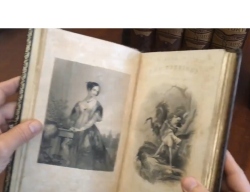
Reviewed by Brian Di Mambro.
14 May 1839
Letter - Countess of Blessington to Charles Heath
My dear Mr.Heath,
I return the receipt signed and in two or three days Messr Longmans shall receive the article on cards, desired. The article on it, in the letter you sent me from Mr.William Longman is so clever that no improvement can be made on it, and if not a law ought to be made one, as it is based on the true foundation on which all laws should be passed - good sense.
I have not had a proof of the 'Belle of a Season' for three weeks. How is this? Do pray let me have the plates however finished, for the Book of Beauty and Gems.
Believe me, my dear Mr.Heath
Very sincerely yours.
M.Blessington.
With regard to the title of the book, I think 'Desultory Thoughts' from the note book of . . . .' seems the best - Maxims they are not, and the word looks pretentious [the book was published in the same year entitled 'Desultory Thoughts and Reflections']. The enclosed note from a Mr.Mitchell will amuse you - Having an opportunity of sending a copy of the Idler in Italy to my Brother this day I sent to every library in the West End having previously tried Mr.Colburn in vain - I then employed Mr.Mitchell and the enclosed is his answer proof of Mr.Colburn's delight.'
5 June 1839
Charles Heath, 6 Seymour Place, London to Dawson Turner
My dear Sir,
I believe all the bills you were so kind as to cash for me on Mr.McCormick are now run off but one which will be paid in a few days. I hope therefore you will not object to do me 3 others. I have got them endorsed by Mrs.Petch and I pledge my word they shall be as regularly paid as they come due.
I likewise send one of Mr.Nutt, the foreign Bookseller in Fleet [St] who is likewise Mr.Asher's agent, but I prefer his own Bill as hie is on the spot. If you will do these for me I shall feel particularly obliged - and I shall have the pleasure of placing 30 Pounds against the old Debt.
I send you by the coach today a Proof of a Plate [?Europa] I have just finished which has been a long time in hand. I hope you will like it. On the first opportunity you have I should be glad to receive the Picture of your two Daughters by Phillips
Believe me Dear Sir,
Yours most sincerely,
Charles Heath.
Sunday 28 July 1839
Bell's New Weekly Messenger
Life in the Summonsing Courts
A Hole in my Bellows - Manifold are the miseries and botherations among a number of families congregated in the same tenement, and under one roof - mighty are the heart-burnings and bickerings. Mrs.Brown in the kitchen, won't lend the lodger in the back parlour her "bellis," 'cos he always pokes the nose in the fire, and never brings 'em back till sich times as she fetches 'em herself. Mrs.Jobbs in the first floor front, never don't speak no more to Missis Hopkins in the garret since she went and burnt a hole in her fryingpan! and Ephraim Smooth, who goes out a preaching on Sundays, and who starves in the back second floor, is obliged to "bile his taters in the kettle, 'cos he one day briled a bit o' meat in Mrs.Muggins's sarsepin-lid and never cleaned it arter him. - -
- In the Middlesex County Court,on Thursday, the following colloquy took place among four women, all "tally-rigged." Mrs.Darby had summoned Mrs.Jones for three shillings, money lent. Mrs.Jones had come to fight the matter out with Serjeant Heath, and each lady had brought a friend to see fair play.
It is proper to statethat all these ladies harmonized in one house, in Gray's Inn Lane - the reader must allow a plunge "in media res" .. . . You won't get yer three shillings now you have come, said Mrs.Jones . . . . Woan't I me darlin', says Mrs.Darby, in broad Munster brogue, and more thin the like o'that, I mane to leave the house and all such people . . . It's high time you did; you ain't cleaned the stairs never since you bin there, and you ought to . . . . Och, monstrous! rejoined Mrs.Darby, and did'nt mee-hone self borrey the pail jist the day after I took the scrubbin brush? - answer me that now . . . Oh said Mrs.Jones, your children was always a gallopin up and down stairs - and there was never no peace . . . We could always year your husband a comin in . . . So could we your'n honey, ejaculated Mrs.Darby - and the same night as your head was broke with the broom - Your husband tumbled down stairs and could'nt get himself up again - here the wordy war was broke short by the case being called on - Jones and Darby - - - continues - - -before Dubois
15 August 1839 - London
Perkins Bacon - Letter Books - Royal Philatelic Society.
To Charles Heath
It is very unfortunate for me that I did not know of your going to Paris until after you had left town and when I did hear I understood you were expected back about the 10th June.
Today, however, Gregory has been here and says he don't know when you are to be home and this is the cause of my writing.
There is one bill given you following but due by me for £482.10.0 due 17th instant and another for £5,000 due the 18th instant which it will be necessary for me to get renewed for a considerable portion of the amount and I begin to be fearful you will not be home in time. If you intend being home by the 16th (Wedgwood) I can see you personally, if not pray send me some assistance by a check upon Longman or any other way when you return whence can be repaid by discounting or new date.
I have been much inconvenienced today by Gregory bringing your checque for £100, which he is wanting the cash for, can tie? that given . . . I have only . . . to do it (until the 16th August) by drawing £500 from a personal . . . Interest as he would not pay a part of the money (illegible)
I hope you have seen M.Appleton whose Accounts from America are only pretty good. The Bounty had not arrived on the 6th ? Dec. Sep. not in? very soon afterwards [illegible] do very badly.
You have probably heard of the loss of the "Pennsylvania" Jos, Andrew and Oxford Packet (New York) off Devonport in a gale last Monday Morning owing to the Light being removed - over . . . perished.
I am dear Sir,
Truly yours.
Joshua B. Bacon
London Evening Standard
Monday 19 August 1839
Mates - Leopold George Heath to the Excellent, Algernon S. Austen to the Benbow.
The following midshipmen passed for lieutenants at the Royal Naval College on Wednesday:- Messres L.G. Heath, F.G. Simpkinson and C.J. Perkins, late Harier; Alexander Anderson, Nimrod; and F.W. Sidney
Evening Mail.
Monday 19 August 1839
Portsmouth, Saturday
Naval Promotions and Appointments
Mates - Leopold George Heath, to the Excellent. ...
Thursday 22 August 1839
Globe
Arrivals at Buxton
- - - - Mr.Sergeant Heath, - - -
Friday 20 September 1839
Surrey and Middlesex Standard
The Weald of Surrey and Sussex Agricultural Association.
The first annual meeting of this association was held at Bear Green, Capel, on Wednesday last, the 18th instant, in a manner that gives assurance of its permanent and extensive usefulness. Although the weather for some days previous had been anything but inviting, at an early hour persons of all descriptions were to be seen flocking there from all parts of the Weald, and not less than 1,000 persons were present to view the proceedings of the day. Soon after half-past nine o'clock, the time appointed for the ploughing match to commence, the competitors started; and it was an interesting sight to see upwards of forty teams, of the best of the country, starting at the same moment.- - - -
The following is a list of prizes awarded. - -
Ploughing
Class D. Leys Fallow Ground - Owner, Mr.Sergeant Heath; ploughman, Penfold, 3/.; Mr Chart, J.Hayter, 2/. Mr.D.Tidy, 1/., John Attwater. - - -
15 October 1839
Charles Heath to Dawson Turner
My dear Sir,
I had the pleasure of sending you by yesterday's Coach a packet containing the Proofs of my new works which I hope you approved of. I shall forward you the Books very soon.
The Bill for £200 which you were so kind as to cash for me becomes due on the 20th of next month, as money is rather scarce in London if you would carry it on for me till a more convenient period I shall esteem it another obligation added to those already received.
Believe me my dear Sir,
Yours most truly,
Charles heath
Friday 25 October 1839
Morning Herald (London)
Middlesex Court of Requests
Great geniuses are celebrated for relaxing their great minds in the prosecution of pursuits which are commonly looked upon as the peculiar avocations of mere mortals. But it would, perhaps, be as well if all who are disposed to consider themselves on the muster-roll of "astonishing geniuses" bore in mind that caution of the great American philosopher, who, in a Transatlantic apologue, has clearly demonstrated the possibility of such personages "paying too dear for their whistle."
Had Mr.Whitbread Hargreaves, who, like the Brentford tailor, has a "soul above buttons," fairly taken the philosopher's admonitory maxim into account, there is no question but that sundry shillings would have been saved to himself and to his heirs, and he would also have been spared the unpleasant necessity of appearing before Mr.Sergeant Heath to oppose the claim made against him by Mr.Armfield, a machine maker, for one pound and upwards.
The plaintiff informed the court that Mr.Hargreaves had, as an amateur, a penchant for turnery work. To keep the lathe in motion plaintiff had furnished brass chocks, whalebone and box blocks, and, in short, all the requisites for the defendant to become a distinguished turner; and the value of those, together with four shillings for a new mandrill (we are not sure of the spelling of this word) and a new band for the wheel, made in the aggregate the sum which he sought to recover.
Mr.Sergeant Heath desired the defendant to state to the jury the objections he wished to raise to the plaintiff's demand.
The defendant with great unction plunged into the very middle of an abstruse dissertation upon mandrills, showing how that his mandrill, which was a "male," by the want of skill or caution of the plaintiff, had been broken - how that a new mandrill which had been supplied had shared the same fate by reason of the "thread" of the screw, or the "screw" itself not being sufficiently long for the "collar" - and how that he had paid 12s. to another machine-maker for a mandrill more perfect in its character.
All this was listened to with great edification by the court and jury, but with great impatience by fidgetty old gentleman, buttoned up to the chin in a buckish Taglioni, and otherwise all white wig and spectacles.
The old gentleman rose and with a very consequential air announced himself as "counsel for the defendant."
Mr.Sergeant Heath (politely but peremptorily) - The court cannot hear you. We never allow legal gentlemen to interfere or to make speeches either on one side or the other.
Counsel - Let me advise with my client. The first question I shall direct my client to put will have a remarkable effect on the case.
Mr.Serjeant Heath - Certainly, you are at liberty to suggest to your client anything that will be for his benefit.The old gentleman whispered something which he desired the defendant to ask the plaintiff.
Defendant - I am told to ask you if you have ever committed perjury.
Plaintiff (in a passion) - How dare you ask me such a question? You must be a great rascal to throw out such an insinuation; and as for the old fellow who told you to put it, I'll prove that he robbed me of 30s. which he had for defending my brother.
The "counsel" looked as if he wished to "cut it."
Mr.Sergeant Heath - There, gentlemen, you are now very warm, and call one another names. We were getting on civilly enough till the lawyer interfered.
Plaintiff - I did not begin.
Mr.Sergeant Heath - The question put to you was highly improper. The counsel had no business to cause it to be put. However, if this recrimination again occurs, I will adjourn the case until both parties are in a better temper, and disposed to show more respect to the court.Now, Mr.Armfield, what do you say to the defendant's statement of having paid 12s on account of a broken mandrill?
Plaintiff - Why the defendant knows as much about turning as a pig does of politics. His lathe is only fit for watch-making, and yet he sticks a brass chock onthe mandrill big enough for the 500lb-weight machine; then he takes his big hammer and gives the chock such a rap that the miracle would be to find that the screw remained unbroken.
The learned Sergeant summed up carefully, calling the brass chocks "brass cocks," but as often corrected by the plaintiff, and would up with the observation that it was only an afffair of shillings and pence for the jury to determine.
The jury found for the full amount.
Mr.Hargreaves, with great good humour, pulled out his purse and left the court a wiser if not a richer man.
Friday 25 October 1839
Morning Herald (London)
Middlesex Court of Requests
Great geniuses are celebrated for relaxing their great minds in the prosecution of pursuits which are commonly looked upon as the peculiar avocations of mere mortals. But it would, perhaps, be as well if all who are disposed to consider themselves on the muster-roll of "astonishing geniuses" bore in mind that caution of the great Americal philosopher, who, in a Transatlantic apologue, has clearly demonstrated the possibility of such personages "paying too dear for their whistle."
Had Mr.Whitbread Hargreaves, who, like the Brentford tailor, has a "soul above buttons," fairly taken the philosopher's admonitory maxim into account, there is no question but that sundry shillings would have been saved to himself and to his heirs, and he would also have been spared the unpleasant necessity of appearing before Mr.Sergeant Heath to oppose the claim made against him by Mr.Armfield, a machine maker, for one pound and upwards.
The plaintiff informed the court that Mr.Hargreaves had, as an amateur, a penchant for turnery work. To keep the lathe in motion plaintiff had furnished brass chocks, whalebone and box blocks, and, in short, all the requisites for the defendant to become a distinguished turner; and the value of those, together with four shillings for a new mandrill (we are not sure of the spelling of this word) and a new band for the wheel, made in the aggregate the sum which he sought to recover.
Mr.Sergeant Heath desired the defendant to state to the jury the objections he wished to raise to the plaintiff's demand.
The defendant with great unction plunged into the very middle of an abstruse dissertation upon mandrills, showing how that his mandrill, which was a "male," by the want of skill or caution of the plaintiff, had been broken - how that a new mandrill which had been supplied had shared the same fate by reason of the "thread" of the screw, or the "screw" itself not being sufficiently long for the "collar" - and how that he had paid 12s. to another machine-maker for a mandrill more perfect in its character.
All this was listened to with great edification by the court and jury, but with great impatience by fidgetty old gentleman, buttoned up to the chin in a buckish Taglioni, and otherwise all white wig and spectacles.
The old gentleman rose and with a very consequential air announced himself as "counsel for the defendant."
Mr.Sergeant Heath (politely but peremptorily) - The court cannot hear you. We never allow legal gentlemen to interfere or to make speeches either on one side or the other.
Counsel - Let me advise with my client. The first question I shall direct my client to put will have a remarkable effect on the case.
Mr.Serjeant Heath - Certainly, you are at liberty to suggest to your client anything that will be for his benefit.The old gentleman whispered something which he desired the defendant to ask the plaintiff.
Defendant - I am told to ask you if you have ever committed perjury.
Plaintiff (in a passion) - How dare you ask me such a question? You must be a great rascal to throw out such an insinuation; and as for the old fellow who told you to put it, I'll prove that he robbed me of 30s.which he had for defending my brother.
The "counsel" looked as if he wished to "cut it."
Mr.Sergeant Heath - There, gentlemen, you are now very warm, and call one another names. We were getting on civilly enough till the lawyer interfered.
Plaintiff - I did not begin.
Mr.Sergeant Heath - The question put to you was highly improper. The counsel had no business to cause it to be put. However, if this recrimination again occurs, I will adjourn the case until both parties are in a better temper, and disposed to show more respect to the court.Now, Mr.Armfield, what do you say to the defendant's statement of having paid 12s on account of a broken mandrill?
Plaintiff - Why the defendant knows as much about turning as a pig does of politics. His lathe is only fit for watch-making, and yet he sticks a brass chock on the mandrill big enough for the 500lb-weight machine; then he takes his big hammer and gives the chock such a rap that the miracle would be to find that the screw remained unbroken.
The learned Sergeant summed up carefully, calling the brass chocks "brass cocks," but as often corrected by the plaintiff, and would up with the observation that it was only an afffair of shillings and pence for the jury to determine.
The jury found for the full amount.
Mr.Hargreaves, with great good humour, pulled out his purse and left the court a wiser if not a richer man.
Saturday 26 October 1839
English Chronicle and Whitehall Evening Post
Middlesex Court of Requests.
"For what have you summoned Henry North?" asked Mr. Sergeant Heath of an errand boy, who claimed 11s from the defendant.
Boy - for breaking the handle of master's truck.
Mr.Sergeant Heath - How did that occur?
Boy - I was standing close to the curb in Fetter Lane with the truck, when a cart, with the name of Henry North on it, drove over the handle and smashed it.
Mr.Sergeant Heath - Well, what do you say to this Mr.North.
"Don't know no more on it," said North, inserting both hands beneath his coat tails, "Don't know no more on it than a babby wot's just born."
Mr.Sergeant Heath - Was it not your cart that did the damage?
North - Von't say, cause I can't. There's plenty more Norths than me, and vy not run of their carts. There's Tim North, of New North Road, There's Tom North, of North Street, and there's Bill North, of North Court, Northumberland Street.
Mr.Sergeant Heath - But your name is Henry North, and that name it appears as on the cart.
North - Eleven shillings is a deal of money for the handle of a truck. If the haccident had happened to a valuable wehicle sitch as a brick cart, and von of the sharps had been broken, it vouldn't a come to much more.
Mr.Sergeant Heath - Here is the bill of the person who repaired it.
North - I keeps a veeler and a blacksmith, and vy not ven the haccident happened let one know about it? Now spose tother vay vas the case, and a gentleman in his cab or breeches (query, britska) runs agin von of my rubbish vans and bustes in the side - vot would be my course? Vy I should naterally act as von gentleman ought to do to another, and ax him to send my wan to his coachmaker or let me get it done, and he pay the damage. In this here case nobody never lets me know nothing, and so I think the owner of the truck didn't oughtn't to go for to expect as how I'm to pay vot his vorkman chooses to charge.
Mr.Sergeant Heath - Why I think it but fair that you should have had notice of the matter. Does any one here understand the value of such repairs?
A person in court said he was acquainted with such work, and he was certain 7s. was a fair price.
The jury reduced the claim to that sum, very much to the satisfaction of the defendant.
Saturday 26 October 1839 - continued
The Actor "off" the Stage - Exactly at 12 o'clock a good-looking young fellow, "straight in the back," and frothing over with haste and passion, presented himself before the court, and besought its patient hearing while he delivered himself of some half dozen lengths.
Shakespeare says that if you are about to solicit a favour from a man you should attack him after dinner. Now exactly at 12 o'clock the judge and the three jurymen of this court retire for 10 minutes to despatch a sandwich and a glass of port, and the three jurymen had already retired, and the judge was descending from the bench when the applicant, who had evidently "just escaped from rehearsal," advanced, and with a set phrase of speech attacked the learned functionary.
With some judges justice would have been done first to the matters which the jurymen, doubtlessly were already despatching off hand; not so with Sergeant Heath, who is ready at all times to pay the most attentive consideration to the veriest trifling points ih this his little Court of Chancery.
The learned sergeant retreated to the bench, and declared his readiness to listen to the applicant. A glance was sufficient to inform all present in what path of life it was that the applicant walked. The settled scowl, the heap of wrinkles gathered, by hard practice of the passions, immediately above the bridge of his nose, the firm tread, well-shaved whiskers, and the heavenward (shilling gallery) gaze, told us plain as any play bill that the gentleman did the heroic and the murderous (twin brothers) in the tragedy line of business. Three steps (soliloquising ones), and he was fairly before the judge.
"Here, sir,," said the minor, speaking in the true hump-back style, "here's a 'nice eye' rule (rule nisi) that was served upon the acting manager of ------ Threatre last night with the wrong name."
"But was it intended for the acting manager?" inquired the judge.
"I grant ye," replied the applicant, bringing a brass-headed Japanese deal cane slantingdicularly down upon the floor with a dangerous proximity to his own toes; "but the first summons, the prologue, sir, of the action, was not delivered to the acting stage manager." And here the tragedy hero folded his arms, set his wrinkles at the top of his nose in order, and walked from one side of the stage to the other.
"Is the acting stage-manager here?" asked the judge.
"He! the acting stage-manager here!" exclaimed the fierce unknown, looking contemptuously round the little court - " He here! I question much whether he would think it worth his while to tread these boards." And the tragedian walked back again to his old place, taking just three steps,which brought him nose almost as close as possible against the door-post.
"Then," said the Judge,"the acting stage manager will let judgment go by default, and have to pay the money."
"The acting manager, sir" said the hero, speaking in one of Mrs.Radclilff's "deep sepulchral tones," "does not ow the money. I, sir, I, (assuming the heroic) - I, Horatio Skrimps, I owe the money, if any money is howed. The vagabond who has summoned the acting manager is a scamp, who wished me to entertain him for one of my followers gratusely (gratuitously). Listen, sir, and I will tell the matter of it."
The Judge said it was quite unnecessary; the tale must be told by the stage manager himself.
"The stage manager," said Horation, "has not been summoned; the vagabond spelt his name with a he instead of a ha.
The Judge observed that this was a mere quibble.
"A quibble!" vociferated Mr.Horatio Skrimps, his eyes glowing like two stage lights, "a quibble! I scorn such a legal vexation. I'm above a quibble;" and Mr.Skrimps took three strides, looked very close and fierce at the opposite wall, and again brought his Japanese deal stick heavily upon the floor. "I maintain," he repeated, "that our stage manager has never been summoned. His name is John, and the summons calls him James, besides there's the ha and the he."
The Learned Judge very patiently explained to the stage lawyer that the misnomer would not avail in that court.
"Then it hought," said Horatio, emphatically folding his arms and shaking his head.
Mr.Horatio Skrimps now tried the "pathetic line of business, " and put himself into a variety of attitudes to induce the judge to let him tell the whole case of "the vagabond who offered his services gratusely to him."
The Judge, however, was not "given to weeping," and consented only to let the matter stand over in order that the stage-manager might have an opportunity of attending and "speaking for himself" upon the matter.
Mr.Horatio Skrimps then "fretted" himself out of court, to run back to rehearsal and the learned judge walked upstairs to play backgammon with his ham-sandwiches and port.
Monday 28 October 1839
London Courier and Evening Gazette
The returns relating to the County Courts show that such Courts might without impropriety be abolished. Their jurisdiction extends to sums not exceeding forty shillings, unless in special cases.
The only County court that appears to have been regulated is that of Middlesex. Of this Court Mr.Sergeant Heath is the presiding officer. In 1837, no fewer than 22,968 suits were instituted in it, for debts amounting to £22,051; of which suits 6,238 were settled out of Court, and judgments were given for £14,264 in respect of 16,780 cases that were heard.
None of these causes were for sums above forty shilllings. Mr.Sergeant Heath has made several attempts to extend the jurisdiction of the Middlesex Court; but has always been defeated by an outcry that he was seeking to increase his own emoluments - which, if true, would be a matter of very little importance, if 20,000 more suitors consented to have their cases heard by him.
In 1837 the fees amounted to £3,452; and his own Court, and that of his deputy, whose salary he pays, sat 113 days, or both Courts 226 days.
In the same year, 907 debtors were committed to Whitecross Street Prison, but none of them for the maximum term that it is in the power of the Court to commit.
Mr.Sergeant Heath deserves infinite credit for his exertions to extend the useful efficiency of his office.
The other County Courts in the Kingdom present the greatest defects. They do not all appear to be without some use, since in that of Lancashire, in 1837, 8,825 causes were instituted, and judgments obtained in 5,300; but the small fees payable in the Middlesex Court, and the number and amount of those demanded in Lancashire, afford a most remarkable contrast.
Sunday 3 November 1839
Satirsit; or, The Censor of the Times.
Thespis is a jester - The "good looking young fellow, 'straight in the back and frothing over with haste and passion,' described in the Herald the other day as having presented himself before the judge of the Middlesex Court of Requests on some question of demand made upon the stage manager of a certain theatre, was not Macready, or any person connected with him.
Macready, it is true, is "straight enough in the back," and sometimes "froths over with haste and passion," but then his is not "a good looking young fellow," but a sleek-bodied, open-mouthed, pugnosed, currant-eyed, middle-aged man.
We think it necessary to be thus particular in our description of the person, lest our correspondent might still, if he be serious, retain a belief that it was the "eminent tragedian" who figured away before Mr.Sergeant Heath, the other day.
6 November 1839
Charles Heath to Dawson Turner
My dear Sir,
I beg to acknowledge the receipt of your kind letter. The time you mention for the renewal of the Bill would make it come at quite as inconvenient a period as this months as I never get my accounts till the end of February - or March - if it was divided into four payments in the four months after Xmas it would be a very great accommodate to me and I should pay them without feeling it. - Will you oblige me with a line in reply as I am going to Paris on Sunday or Monday next and wish to arrange everything before I go.
The Bills that Messrs.Overend have accidentally done for me are for books sent to America and Germany - and the price I receive for them is not so much by a good deal as Longmans pay - so that I could not out of them pay you the sum I always wish to do - besides which getting another name on them places me in an awkward situation.
I beg to assure you that I will endeavour to get out of your debt on the old account as soon as I can - but these times have touched me as well as others - I am owed by two American Houses upwards of £1200, and though I hope to get it, I do not know when, and the Panic in Paris caused me a loss of upwards of £400 - but £200 I shall get back by degrees - had it not been for this I should not have required or wished for the renewal of the Bill.
I have ordered Messrs.Longmans to forward you the Books as usual and you will doubtless receive them directly. You kindly promised me the loan of the Picture by "Phillips" of your two daughters - could you forward it anytime before Xmas in a deal packing case. - I will return it as soon as possible.
Believe me, Dear Sir, Yours very truly,
Charles Heath
8 November 1839
Charles Heath to Dawson Turner
My dear Sir,
When I return from Paris will be time enough for the picture of your two daughters. I am greatly obliged to you for your compliance with my wishes. Messrs.Longmans will forward the Books by Miss Emery's coach, at least they promised to do so.
I enclose the 4 Bills which if I could receive an order for on Monday it would enable me to arrange everything before my departure.
Tuesday 12 November 1839
Morning Herald (London)
County Court of Requests
Mr.Paley, the barrister, presented himself before Mr.Sergeant Heath, in the novel predicament of counsel in his own case, to defend an action for 10s. being the balance of a bill of £2 claimed by a labouring man named Saunders.
The plaintiff had been employed by Mr.Paley to convert a half a wine cask into a water tub, and so to adapt the tub to a moveable machine, that it would serve to convey water required for the due refreshment of the flowers and shrubs round his grounds and green-houses at Prince's Cross. The job was executed, the charge of £2 was made; he received 30s. on account, and the balance of 10s. was withheld on the ground of exorbitancy. Thus situated, he was obliged to resort to this court.
The objection to the amount, Mr.Paley said, arose from inquiries he had made on the subject of of the charge for such a wheelwright in his neighbourhood, a perfect judge of such matters, who would prove that 25s. as the fair charge for the job.
"Well, plaintiff," said Mr.Sergeant Heath,"show the jury how you justify the charge of £2 you have made."
The plaintiff instantly proceeded to specify the various materials he has used, and their cost. - - - -