Michael D.Heath-Caldwell M.Arch.


Michael Heath-Caldwell M.Arch
Brisbane, Queensland
ph: 0412-78-70-74
alt: m_heath_caldwell@hotmail.com
- Home
- Architectural Projects 0
- Architectural projects 1
- Architectural Projects 2
- Architectural Projects 3
- Architectural Projects 4

- The Crystal Palace
- Timeline
- 1693
- 1745
- 1770
- 1783
- 1784
- 1785
- 1786
- 1788
- 1789
- 1791
- 1792
- 1793
- 1794
- 1795
- 1796
- 1797
- 1798
- 1799
- 1800
- 1801
- 1802
- 1803
- 1804
- 1805
- 1806
- 1807
- 1808
- 1809
- 1810
- 1811
- 1812
- 1813
- 1814
- 1815
- 1816
- 1817
- 1818
- 1819
- 1820
- 1821
- 1822
- 1823
- 1824
- 1825
- 1826
- 1827
- 1828
- 1829
- 1830
- 1831
- 1832
- 1833
- 1834
- 1835
- 1836
- 1837
- 1838
- 1839
- 1840
- 1841
- 1842
- 1843
- 1844
- 1845
- 1845-46 Oxford
- 1846
- 1847
- 1848
- 1849
- 1850
- 1851
- 1852
- 1853
- 1854
- 1854/55 Appendix
- 1855
- 1856
- 1857
- 1858
- 1859
- 1860
- 1861
- 1862
- 1863
- 1864
- 1865
- 1866
- 1867
- 1868
- 1869
- 1870
- 1871
- 1872
- 1873
- 1874
- 1875
- 1876
- 1877
- 1878
- 1879
- 1880
- 1881-1
- 1881
- 1882
- 1883
- 1884
- 1885
- 1886
- 1887
- 1888
- 1889
- 1890
- 1891
- 1892
- 1893
- 1894
- 1895
- 1896
- 1897
- 1899
- 1900
- 1901
- 1902
- 1903
- 1904
- 1905
- 1906
- 1907
- 1908
- 1909
- 1910
- 1911
- 1912
- 1913
- 1914
- 1915
- 1916
- 1917
- 1918
- 1919
- 1920
- 1921
- 1922
- 1923
- 1924
- 1925
- 1926
- 1927
- 1928
- 1929
- 1930
- 1931
- 1932
- 1933
- 1934
- 1935
- 1936
- 1937
- 1938
- 1939
- 1940
- 1941
- 1942
- 1943
- 1944
- 1945
- 1946
- 1947
- 1948
- 1949
- 1950
- 1951
- 1952
- 1953
- 1954
- 1955
- 1956
- 1957
- 1958
- 1959
- 1960
- 1961
- 1962
- 1963
- 1964
- 1965
- 1966
- 1967
- 1969
- 1971
- 1974
- 1975
- 1976
- 1979
- 1983
- 1990
- 1991
- 1998
- 2001
- 2002
- 2004
- 2005
- 2006
- 2007
- 2008
- 2009
- 2010
- 2011
- 2012
- 2013
- 2014
- 2015
- 2016
- 2017
- 2018
- 2019
- 2020
- F.C. Heath-Caldwell
- C.H.Heath-Caldwell Memoirs
- Palmer Family
- Palmer Timeline
- 1912 - Palmer
- 1914 - Palmer
- 1916 - Palmer
- 1918 - Palmer
- 1919 - Palmer
- 1924 - Palmer
- 1925 - Palmer
- 1926 - Palmer
- 1929 - Palmer
- 1932 - Palmer
- 1934 - Palmer
- 1936 - Palmer
- 1938 - Palmer
- 1939 - Palmer
- 1944 - Palmer
- 1946 - Palmer
- 1961 - Palmer
- 1967 - Palmer
- 1970 - Diary - Joe Palmer
- 1971 - Diary - Joe Palmer
- 1972 - Diary - Joe Palmer
- 1991 - Diary - Joe Palmer
- 1992 - Diary - Joe Palmer
- 2010 - Diary - Joe Palmer
- Venice Earthquake 1873
- Old Letters 1
- Old Letters 2
- Old Letters 3
- Old Letters 4
- Old letters - Mid 1800
- More Old Letters
- Eaton Hall, 1943
- Marsh Family Timeline
- James Caldwell papers 1
- James Caldwell papers 2
- James caldwell papers 3
- Old letters 1800s
- Old Letters 1800s 2
- HH Sultan Taimur bin Turki 1913
- Frank Featherstone Wright 1921-2014
- Frank F. Wright 1
- Frank Featherstone Wright early
- Frank F. Wright 2
- Frank F. Wright Videos
- Old Featherstone album 1
- Old Featherstone album 2
- Old Featherstone album 3
- Old Featherstone album 4
- Old Featherstone album 5
- Arthur Eversfield Featherstone Album 1
- Arthur Eversfield Featherstone Album 2
- Arthur Eversfield Feartherstone Album 3
- Grasmere
- Frank E Wright Album 1a
- Frank E Wright Album 1b
- Frank E Wright Album 1c
- Frank E Wright Album 1d
- Frank E Wright Album 1e
- Frank E Wright Album 1f
- Frank E Wright Album 1g
- Frank E Wright Album 2a
- Frank E Wright Album 2b
- Frank E Wright Album 2c
- Frank E Wright Album 2d
- Frank E Wright Album 2e
- Frank E Wright album 2f
- Frank E Wright Album 2g
- Frank E Wright Album 2h
- Frank E Wright Album 2i
- Frank Edward Wright drawings
- Cathy Featherstone 1910a
- Cathie Featherstone 1910b
- Norma Featherstone 1913
- Norma Featherstone Part2
- Norma Featherstone Part3
- Norma Featherstone Part4
- Norma Featherstone Part5
- Kitlands House
- Moorhurst Manor
- Redlands House
- Milland House
- Anstie Grange
- Ebernoe House
- West Ham House
- Vigo House
- Linley Wood
- Crimean War
- James Caldwell letters 4
- James Caldwell letters 5
- James Caldwell letters 6
- James Caldwell letters 7
- James Caldwell letters 8
- James Caldwell letters 9
- Eton & Oxford 1830/40s A
- Eton & Oxford 1830/40s B
- Eton & Oxford 1830/40 C
- Eton & Oxford 1830/40 D
- Eton & Oxford 1830/40 E
- Eton & Oxford 1830/40 F
- Back in England. Early 1800s
- Arthur Heath 1872-4
- Sicily 1800
- Naples - 1830
- Trentham Hall
- Paris 1810
- Cromptons on the Lusitania
- HMS Illustrious 1948
- The Minoans
- Henry Crompton 1836-1904
- Orongorongo 1957
- Another Page
- Gertie Wheeler 1909
- The Ahsan Manzil
- More old letters 1800s
1800 - - 1809 - 1810 - 1811 - - 1820
James Heath RA 52/53 1757-1834 - Engraver
Mary Heath (ne Phillipson) 52/53 1757-1819
George Heath - aged 30/31 - Attorney
Caroline Heath (engraver) - aged 25/26 1784-
Charles Theodosius Heath - aged 24/25 1785-1848 m.Elizabeth Petch d.1861
Amelia C. Heath
George Heath 30/31 1779-1852 - Attorney
Anne Raymond Heath (ne Dunbar) 22/23 1787-1842
Julia Anna Harrison (ne Heath) aged 2/3 1807-1879
Rev John Moore Heath aged 1/2 1808-1882
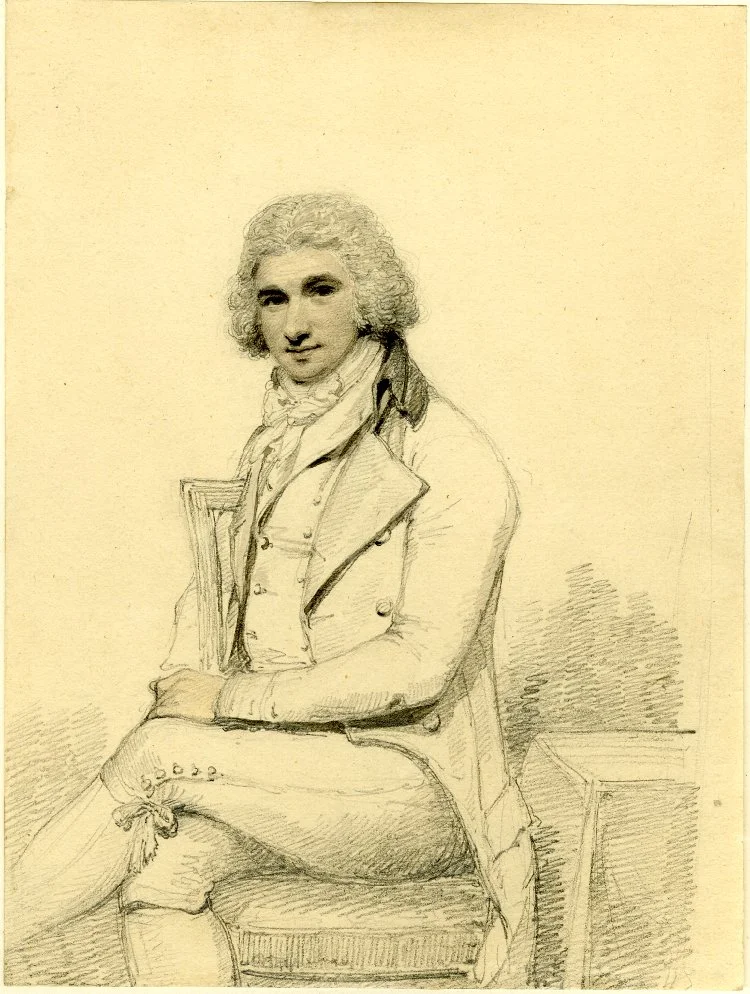
James Heath by Edridge
The Heath Family Engravers 1779-1878, Volume 1. James Heath A.R.A. by John Heath
Historic Anecdotes (Sir Jonah Barrington) - Seven plates engraved by James Heath after Petrie Comerford Hamilton R.A. Published by G.Robinson.
1. - Robert Emmet - plate 12 x 12cm. Plates dated '1 June 1810.'
2. - Rev'd Dr.Marlay
3. - Earl of Charlemont.
4. - Earl of Ross.
5. - Hussey Burgh.
6. - W.Cunningham Plunket.
7. - Rev'd Dr.Dickson.
-----------------------------------------------------------
Milton's Poetical Works (Johnson's Lives of the Poets) - Seven plates engraved by James Heath after J.Thurston, published by G.Kearsley. Three volumes constituting XII-XIV of Kearsley and Heath's edition of Johnson's works of the Poets;see 1802 for a full description.
1. - Vol.XII. Frontispiece: Portrait of Milton - plate size 11 x 7cm.
Etc.
-----------------------------------------------------------
Cowper's Poems - Two plates engraved by James Heath after Richard Westall R.A., published by John Sharpe. Two volumes in an edition with different plates from 1798, it included two lates by Charles Heath (James's son)
London, published 1 June 1810 by John Sharpe, Piccadilly
1. - Vol.I. 'Retirement. Or with ill-fashioned hook...' - plate size 10 x 8cm.
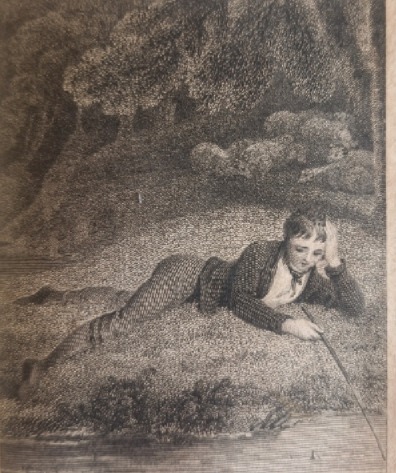
'Retirement' or 'with ill fashioned hook to draw the in-cautious minnow from the brook, are life's prime pleasures in the simple view (Vol.1 - Drawn by Richard Westall R.A., engraved by James Heath A.R.A.
2. - Vol.II. 'And neatly tied...'
-----------------------------------------------------------
The Lady of the Lake (Sir Walter Scott) - engraved by James Heath after J.Saxon - published by William Miller, Longmans, Hurst Robinson and others including Ballantyne of Edinburgh. First edition.See also Sharpe's edition of 1810/11 with engravings by Charles Heath. According to NPG, the painting was made in 1805, and the print is said to be the first portrait of Sir Walter Scott to be engraved. Republished in 1813.
1. - Frontispiece: Sir Walter Scott. - plate size 21 x 17cm.
-----------------------------------------------------------
The Lady's Magazine (Vol.XXXIX) - Four plates engraved by James Heath after Henry Corbould and Lips(?), published by G.Robinson.
1. - Byron's Mazeppa - plates size 9 x 7cm.
2. - Louis Bonaparte, King of Holland - 'Engraved for the Lady Magazine Aug.1, 1810. Publ. Nov.1. 1810.'
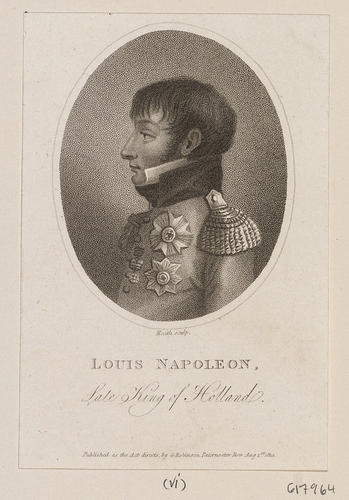
3. - Frederick William William III of Prussia - plate size 10 x 8cm. Oval. Dated 'May 1. 1809.'
4. - Frederick, Prince Royal of Denmark - Dated '9 November 1808.' Engraved for the Lady's Magazine 1810.' See 1806 for the first record of this engraving.
------------------------------------------------------------
Separate Print - Engraved by James Heath. Possibly intended for the Lady's Magazine also.
1. - Charles, Archduke of Austria.
------------------------------------------------------------
Butler's Works (Samuel Butler) - Also entitled 'Hudibras - Three plates engraved by James Heath after Thomas Stothard R.A.,and Robert Smirke R.A. Vols. X-XI. of Kearsley and Heath's edition of Johnson's 'Works of the English Poets.' See 1802 for a full description. Plates are dated 'June 1, 1810.' An earlier edition, without plates, was published in 1803.
Monday 5 February 1810
Hampshire Chronicle
Old Drury - The most numerous meeting ever collected, of the Renters of this Theatre, took place at the Crown and Anchor Tavern, on Wednesday. Our may recollect, perhaps, that at the last meeting, certain particulars were referred, to be settled in concert with the Proprietors', the Trustee' and the Renters' Commission. The subject before the meeting of Wednesday was, therefore, to consider the Report of their own Committee, which was distinctly stated by Mr.Hosier, the Chairman of the
e Committee, and the Chairman presiding at the meeting. Nothing could exceed the cordial unanimity with which all the resolutions adopted by the Committee, in concert with the Proprietors, were received. - - - He felt the liberality of Mr.Sheridan, in so readily giving his assent to the proposition; but liberality on the part of the Renters. It was manifest that every thing was done for the Renters, compatible with the rebuilding of the Theatre, if any such surplus should arise, as Mr.Sheridan supposed in God's name! let Mr.Sheridan, who had acted so fairly towards all constituting the present meeting, and who has announced his intention of retiring himself wholly from the concern, when he has seen its fair creditors duly satisfied, have the power of making over any such surplus to his son and his infant family; and do not let us, satisfied as I think we ought to be, grasp it from hin, even with his own consent. (loud and general applause.)
Mr.Heath, the barrister, agreed with every word and sentiment that had fallen from the Chairman. He would, however, second the motion; in order that a direct negative might be put on the proposition. The question was accordingly put, and unanimously negatived.
Tuesday 27 March 1810
Kentish Gazette
Portrait of Josephine, Late Empress Queen of France and Italy, engraved by Heath.
This day is published, price 1s.
The Lady's Magazine; or Entertaining Companion for the Fair Sex, appropriated soley to their use and amusement, for February 1810. Embellished with 1. A Portrait of Josephine, late Empress Queen of France and Italy, engraved by Mr.Heath - 2. Ladies Fashionable Dresses, beautifully colored - 3. Four elegant Patterns for working Borders and Trimmings.
In the Number for March will be given a Portrait of Ferdinand 7th King of Spain, engraved by Mr.Heath.
Printed for G.Robinson Paternoster Row, London; and sold by (ink blot)-use, Kirkby, and Lawrence, Canterbury; of whom may be had, the Volume for the year 1809, completed price 15s. half bound; also former Volumes to complete set, price 15s each, half bound, and Numbers, price 1s. each.
Spring Grove.
July 23rd. 1810.
My Dear Sir,
I enclose a letter from M.Denon to Mr.Heath acquainting him that he has permission to proceed to Paris, and telling him what steps are necessary for him to take. M.Denon was in the country when my letter reached him, he makes an apology for having delayed the answer, but why the letter itself, dated May 14th did not arrive till July 23rd does not appear.
I am, my dear Sir,
Your Faithful Servant.
J.Banks.
Records of the Heath Family - Vol.1
George Heath's Journey to France in 1810 Selections from Journal. (for the full version click here)
Friday 10 August 1810
Plymouth, and the next entry is Morlaix, and so through Rennes, Vitre, Laval, etc., to Paris.
Friday 24 August 1810
Called on Mons. Denon; it is impossible to do justice to his politeness, he have me a ticket for the Museum, appointed an hour to introduce me to the Minister of the Police. In my walk I had passed the Thuileries, the new Triumphal Arch and the Louvre, and although I knew them well by plan, pictures, etc., yet my surprise was great at the first sight; so much dose the magnificence of this part of Paris surpass everything I had conceived, but what can equal the Musee Napoleon, which at present contains everything of value almost that is known in the world. The Picture Gallery is wonderful, one part is at present occupied by the Exposition of the year, for which prizes are to be given by the Emperor. One by David, of enormous size, represents the coronation by the Emperor of the Empress. The composition is very fine; but the light seems to me much too diffused, and there is a want of breadth, but I had no time to look at the pictures of the Gallery with any attention. Mr.D. then introduced me to the Duc de Rovigo, and to avoid my being at all troubled with the Regulations of the Police, most kindly invited me to take an apartment in his hotel, an offer I could not resist when so hospitably pressed.
Saturday 25 August 1810
Breakfasted with Leeper on the Boulevard Ital; went to the Luxembourg. The gardens, like those of the Thuileries, are partly a grove of horse chestnuts with abundance of seats, chairs, etc., and partly in parterres, with a circle of superb orange trees and marble statues, chiefly copied from the antique, dispersed among them. The palace itself I cannot like, the masonry is too like brickwork, and there is a want of bold projecting parts to give it architectural vigour; it is, however, very extensive, and like the other palaces of the Government, has undergone a complete repair, even the outside renewed. In my walk through St.Germain I was surprised to see the extent of garden that many of the hotels possessed, not like our little strip in London, but many of half-an-acre or more.
The extent of Mr.Denon's talents are not known to us; we look on him only as the editor of a splendid work, and the present Director of French taste, but that he is most eminently qualified, not only by his manner, but my his education, is not within our knowledge. He etches most boldly in the Painter's style, and if I may judge of his talent for modelling from a whole length of the Emperor now before me, he rivals Flaxman in dignified simplicity.
In the evening went to Theatre Francais, and was much delighted with a new piece called Les deux gendres; the versification is evidently fluent and spirited, and at present is very popular. I was not a little pleased to find how well I could comprehend it.
Sunday 26 August 1810
I have seen the Emperor and Empress. He is not the least like any of the portraits we have of him in England, that keen piercing look, that deepsunk eye, that greatness of character that made it impossible not to admire it as a countenance, indicative of everything that he has done, is now obliterated in fat; his face is round and plump. I had an excellent view of them, they rode alone in an open landau through the park of St.Cloud, and I kept close to the carriage for more than a mile; he was in blue regimentals with broad white facings with a small cross of the Legion of Honour suspended from a button hole on the left side: he had no hat on: countenance placid, and when he spoke to the Empress, it was with a smile; he bowed to the people, but very slightly, and I think not gracefully. I never was more surprised, that on seeing him, so different is he from what I had figured him; the Empress is young and seemingly a good figure; her chief beauty is in complexion, which is fair; she was dressed in purple silk with nothing on her head but a tiara of pearl. Drawn by four greys,, preceded only by an outrider. An officer of the Imperial Guard on each side, but so as not to impede the view, and then eight Guards; next came four more open carriages, filled with scarlet and embroidery. I went in a cabriolet to St.Cloud; it is the "Empress day," so called because she gives the fete in honour of St.Louis
The Seine becomes meandering and rural in its character after leaving Paris, the hills covered with woods and vineyards rising almost directly from the water on the other shore, while the pretty village of Passy is on the high ground on this side, renders the view extremely pretty. My cabriolet was not allowed by the Horse Guards to pass the Bridge of St.Cloud, being a hack. The Seine is here, I think, twice as broad as at Paris (about the breadth at Barnes). The grounds are fine, rising on the side of the hill with the river at the bottom; there are two gates at this end, and the Guards would not permit anyone to enter
The avenue, perhaps a mile long, was illuminated by lamps placed on wooden frames on each side at small distances in the shape of pyramids, but the great feature of the fete was the waters being lighted. I must acknowledge that when I found that the main avenue was lined on one side for a considerable way with booths, and that on the other, roundabouts and other child's play were permitted, I did not expect much, even from the water, but I was agreeably surprized, for it formed altogether the most splendid artificial scene that could be imagined. The Cascade is, I imagine, near 100-ft high, and the water comes down in three separate streams, the centre proceeds from the urn of a river god, and the other two from vases; the water falls over in steps, perhaps about twelve, into a great bason, from which in entire sheets it falls by three steps into a canal of no great length. On each side of the three upper cascades, on each step, there is a small fountain between the streams, others running on a lower surface. Lion's heads, frogs, river monster, etc., are besides, throwing out prodigious volumes of water in all directions, and in the canal itself there are about sixteen fountains, two of which at the further end are of some height,. Imagine this to be illuminated by many thousands lamps, each lamp a small pan of tallow with a wick as big as a torch, which give as much light not only on the parts where there is no water, but everywhere under the water, so that every part of the cascade pours over rows of lamps, and give the whole a most curious and splendid effect.
*****
There was a Court in the evening, carriages and four, Court dresses covered with embroidery, footmen, as much so, were arriving at the time I left.
It was about 6 p.m., (before the waters were lighted.) that the Emperor rode through the Park as before mentioned. The people cried "Vive l'Empereur! Vive Marie Louise!" but after I got through the crowd at the cascade, not many followed, so that I kept close and had an excellent view.
Tuesday 28 August 1810
Notre Dame very plain inside.
La Morgue. Two dead bodies - suicide.
Boulevards form altogether the finest street perhaps in the world.
Jardin des Thuileries. Tivoli L3 5sols. A very pretty garden. Three bands, dancing, cotillon, conjuror; in another part a paltry puppet show, in another a beast in an old embroidered coat and wig, talking nonsense, and imitating cats, pigs, laughing, etc., on a violin. Yet crowd surrounded all these, not children, but old and young, from red ribbands downwards, roundabouts, swings, etc., then rope-dancing, a Montgolfier let off , and in conclusion, a very fine display of fireworks, best I ever saw, splendid, an irregular one, imitative of the destruction of a town; confusion, both of noises, explosions and lights, very fine; all going out, the Avenue lighted with Bengal lights. A man walked down a rope in the middle of fireworks with two flags, U. thought near 100 new fountains, all with sculpture.
Wednesday 29 August 1810
Called on Madame D'Arblay.
Thursday 30 August 1810
For the first time I found out the roulette tables, and lost 12 francs.
Saturdasy 1 September 1810
Breakfast with Mons.D. Walked with Underwood to the Hotel de Ville, dined with him at his hotel.
Sunday 2 September 1810
Breakfast with Mrs.Harvey.
Trente et quarante in the evening. Won 5 louis.
Monday 3 September 1810
The same course. Won 13 louis. These tables must be very profitable as the Bank occupies a splendid suite of apartments, part of which are only open in the evening after eleven, when a ball is given gratis to the players. An Italian scoundrel thrust himself in to play for me, and after he had won with my money, he wanted to share the profit. I insisted on the contrary, and the Chef, as they call him, of the police of this table, soon settled the affair in my favour. The perfect order of the tables here is very surprising, there is very high play, but not a word is spoken; sometimes an internal "Sacré" from a loser, but nothing further; the whole is under the strict view of the police, and the people concerned are prohibited from replying even to insults from the players.
Tuesday 4 September 1810
Went with Mr.D. to Sèvres, of which he is Director; the manufacture, both in form and ornament, seems to me to be beyond rivalry; the greater part is given away by the Emperor, and the collection is said to be very thin at present, he having given away almost all on his late marriage. Vases of all sizes, of the most correct taste, are round about; and one, not yet fired, measures 5-ft, in diameter, and is moulded from the celebrated one which Pius VI gave to the Emperor, which is in the vestibule of the Museum.. Busts of the Emperor as large as life in biscuit, and a portrait on an oval plate, of Christ, without a metal plate, 3-ft by 2-ft., the had size of life. They are now preparing a china column imitating the Vendome column, about 10-ft high. I was much pleased with the affability of Mr.D. to all the persons concerned in this splendid establishment. The column is not in the proportion of the Trajan, being of somewhat larger diameter, and the base smaller. Mr.D. first suggested this to the Emperor as a column by the moderns to the ancients, i.e. the Emperor to Charlmagne, and to be cast in iron. His Majesty altered the plan, and suggested their using the cannon taken in the campaign. Mr.D. says he has now three great works on hand, the Obelisk on the Pont Neuf, more than 200-ft high, and an elephant 50-ft high, at the Eastern extremity of the city. The Pont de Jéna is also under his direction.
I found my way into another gaming house in Palais Royal this evening, much more select and more splendidly fitted up. As a stranger, I was admitted, but otherwise a ticket is necessary.
Thursday 6 September 1810
Breakfast with Babey. Dined with Warden. A damned bad diner.
Friday 7 September 1810
Went to see the Bayadères at the Opera. The beauty of the scenery, the perfection of the costumes the uniform splendour with the corps de ballet and chorus, make this altogether the most enchanting opera. I counted near 100 dancers and chorus on the stage at once, many of whom are good dancers and singers. Mme. Branchi sang delightfully.
Saturday 8 September 1810
Bibliothèque Nationale, a most splendid collection, many MSS. Most curious and valuable. Many bibles bound in ivory very curiously carved, and in metal set with precious stones.
Before dinner went to Vigier's baths, very pretty externally, but very paltry within, a very small closet with large copper kettle, for a bath no thermometer, and no person to rub you dry; it is, however, cheap enough, about 1s. Some people eat while in the bath; the man asked me if I wished it; there are in this one 140 baths, always tolerably full, half men, half women. 1400 baths have been taken in one day, and there are three others on the river, equal in size; besides this, they abound all over the town.
Sunday 9 September 1810
Guyet and myself took a cabriolet to the Barrière du Trône, distinguished by two large columns. The avenue from hence to Vincennes is now of small trees, the Revolution having destroyed almost all the old ones. We dined very badly at Charenton, a village on the Marne, just before it joins the Seine. It is a sort of Chelsea, to which the Parisians, not of high life, go to eat fried gudgeons, etc. the walk from Charenton to Paris by the side of the Seine in a most heavenly evening, was delightful. We then went round the Boulevards, which, as usual, were crowded, to the Café Turque. We could hardly gain admission.
Wednesday 12 September 1810
Went to l'Étoile, where the great triumphal arch is going on, though at present not more than 10-ft out of the ground.
Saturday 15 September 1810
Went to Penjaud and drew for 100 louis at 19:75 francs.
Sunday 16 September 1810
Received Ann's letter, dated 5th September.
At the end of the Boulevard, near Pont d'Austerlitz, there are many taverns with gardens, which are much frequented by the lower orders; in the garden is a place for dancing, and a sort of orchestra for a brace of fiddles; the crowds here on Sunday evenings are prodigious; they pass through the house, buy a piece of meat and a bottle of wine, and then get a table in sight of the dancers.
Monday 17 September 1810
Races in the Champ de Mars, they were as bad as I expected, the horses hardly fit for common hunters in England. The race was for 1000 fcs. With Guyet along the Barriers from l'Ecole Militaire to Mont Rouge, where I dined with his family.
Thursday 20 September 1810
With Guyet to Malmaison, it is merely a house, and externally a very shabby one, the inside is most beautifully fitted up with great taste and splendour. Except a gallery for pictures, which forms a wing, there is no large room in it; the library, which is the largest, being only about 40-ft long. This library is the prettiest room I ever saw, the roof slightly arched and painted in fresco, and the room is divided in three by projecting mahogany pillars on marble slabs. This was the study of Buonaparte, and who knows what plans were laid here? The room next to it was the Council Chamber, very small, but well furnished.
Sunday 23 September 1810
Went to the Museum to see the parade, the Imperial Guard, including the Dutch and Portuguese regiment, in all more than 6000 men, formed in six lines within the Place des Thuilleries, and three regiments of horse in the Carrousel. At 12 the Emperor, on his white horse, followed at a short distance by the Marshals, Aides-de-camp, etc., went through the lines. He stopped and talked with the commanding officer of each battalion, and received papers from several, which he delivered to a Marshal, he rode past the Dutch without stopping, he then dismounted and maneuvered the Portuguese a considerable time; he then drew them up three sides of a square, and delivered them their Eagles, I suppose he made a speech, for they cheered several times; after this, he drew up the Dutch and spoke to them, and they cheered him, the rest then filed past him.
He looks well on horseback, but I did not observe any particular grace in his riding, on foot he is absolutely fat, he was dressed in dark green with white facings, quite plain. He seemed very familiar with those around him, among whom were Bessières and Devoust. The Empress sat at a window, a piece of crimson velvet was put out of it, to say that she was there. In the evening I went to the Opera, and at the end of the 1st Act the Emperor and Empress came. He came to the front and made an awkward stiff bow to the house, she followed and made a half courtesy; the difference between the elegance of the entrée of the family (i.e., English Royal) when they went in London, and this, forcibly struck me. The audience cheered him on entering, but not on quitting, when he repeated his bow.
Wednesday 26 September 1810
Went to see the model of the Arch at l'Étoile; it will be about 130-ft high, the proportions very grand, built of stone which come from Burgandy, which is very hard and takes a polish like marble. Afterwards went to the Bois de Boulogne, which has been very much destroyed by the Revolution, returned by the Barrier de Passy.
Wednesday 3 October 1810 (Sept. 3rd. (?)
Denon returned to Paris.
Friday 5 October 1810 (Sept 5th ?)
Went with Denon to David's, and saw his new picture of the Emperor delivering the colours to the army; like all his pictures it is too theatrical. Berthier has the attitude of a tragedian taking an oath, and another officer is balanced on one toe. The whole is confused, very splendidly coloured, but the principal light, instead of falling on the Emperor, is a mass of standards in the centre. Dined with Sir H.T.Tichbourne,, his son and another gentleman.
Saturday 13 October 1810 (Sept.13th?)
Dined with Mr.D.Houchen, Le Mercier, etc.
Monday 15 October 1810 (Sept. 15th?)
Mrs. Robertson and Col.Burr.
Tuesday 16 October 1810 (Sept. 16th?)
M.Serrurier and Babey.
Saturday 20 October 1810 (Sept. 20th? )
o Abbaye de Clugny. To top of Pantheon, and saw the lodging of Marat, and small room where he was stabbed.
Sunday 21 October 1810 (Sept. 21st?)
Went with M.Denon to the Museum to see such of the pictures as were hung. Revoil's still charm me, and some small cabinet pictures by Laurent are beautiful. Thence we went over the Thuilleries, which is furnished magnificently. Most of the rooms are hung with Lyons silk of blue and gold, or purple and gold, but the bedroom of the Empress is the most superb. The room and bed are of crimson velvet richly embroidered, but the toilet table, glass, and dressing glass are of silver gilt, and of the most finished work, they cost about 25000 l, and were a present form the good city of Paris on the marriage.
Monday 22 October 1810 (Sept. 22nd.
To the observatory with Guyet. Jardin des Plantes and Morgue, where there was a body.
Sunday 28 October 1810 (Sept. 28th.?)
Near the Barrier de Combats I paid a livre to see dog-fighting, bear baited, wolf ditto, and a bull ditto. The bear was much the best; but a most wanton piece of barbarity was the turning of three poor asses on a dozen mastiffs, who almost killed them.
Tuesday 30 October 1819 (Sept. 30th.?)
Went to Versailles. The front of the City is very irregular and bad, but that to the Garden the most magnificent that can be imagined. A centre and two wings, but the wings are placed far back, which prevents their being too principal. The repairs are proceeding with greatest rapidity. The public apartments are entirely lined with red and white marble, and the ceilings are painted by le Brun. The great Gallery is superbly fitted up with looking-glasses. The petits appartements are white and gold, but the whole is, of course, quite out of repair. The Emperor intends to re-instate everything exactly as it was, Fromentin excepted. The garden is very large and very regular, and the waters the most splendid in the world; they are at present out of repair. The Grand Canal, which during the Revolution had almost become a field, has been cleaned and filled, about two years back. In the Bosquets is an artificial rock in which is placed a group of Apollo and the Graces, and two groups of horses. This was the whim of the last Queen, the Apollo is of an older date by Girardon.
This is the Bain d'Apollon. Another group by Girardon of l'Enlèvement de Proserpine is in another bosquet, called the Colonnade, from a circular double row of marble columns which surround it.
The Great Trianon is very fine, the columns Languèdoc marble; it has been recently fitted and furnished, the Gallery contains some very fine pictures. A set of chairs of Beauvais tapestry, of birds and landscapes, delighted me.
The little Trianon, the seat of the pleasures of Marie Antoinette, which since was a Restauration, is not the property of the Empress, and is prettily but plainly furnished. The garden is beautiful, and quite English.
No.51. PASSE-PORT IMPERIAL
Coat of Arms
Napoléon, Empereur des Français, Roi d'Italie, Protecteur de la Confédération du Rhin. Médiateur de la Confédération Suisse.
Nous avons autorisé et autorisons Le Sr.Heath (George) profession d'Avocat, natif de Londres, départment d------- démeurant à Londres à se rendre en Angleterre ----- et lui permetions, à cet effet, de s'embaraquer sur un Batiment pourvu de licence, dans le port de Dunkerque.
Au Palais de Fontainebleau le 31st Octobre, 1810.
Le Ministre de la Police générals, Le duc de Rovigo
Par l'Empereur Le Ministre Secrétaire d'Etat, Le Duc de Bassano
Signalement.
Agé de 31 ans.
Taille d'un métre 70 centimétres.
Cheveux chataine.
Sourcille chataine.
Yeux bleus.
Nez ordinaire.
Bouche moyenne.
Menton rond.
Visage ovale.
Teinte pâle.
Signes particulieres,
Signature de Porteur
G.Heath
AVIS ESSENTIAL
Dans les Villes où il existe un Commissaire général de Police, le porteur est tenu de se présenter devant lui, pour faire viser son Passe-port.
Enregistrement. No.4.
Vu par le commissaire de police de la ville de Dunkerque, le 14 Obre., 1810, poujr aller à Ostende.
Vu bon pour embarquer abord du navire le Jeune Pierre de licence.
Dunkerque, le 19 9bre, 1810
Vu de nouveau pour aller à Boulogne, le 19 9bre, 1810
- - - - - -
H.E.MALDEN ON THE PASSPORT.
After the rupture of the peace of Ameins, 1803, when war was renewed between England and Napoleon, the English travelling in France were, when possible, arrested by Napoleon's orders and treated as prisoners of war. No Englishman could go into the Emperor's dominions, which in 1810 included Holland, (and of course Belgium), without risk of being so treated.
Your grandfather got over somehow. Plenty of small vessels and even rowing boats in the Straits of Dover, plied across in spite of war, because smuggling was so enormously profitable.
To get out of France, it would have been no use to have an English Passport. To have shown such a thing would have been a certain prelude to imprisonment; all intercourse was forbidden by Napoleon.
I have forgotten the wording of the passport, but it was, I suppose, a permission to travel in France, or rather in the Emperor's dominions, and among his allies and dependants in Germany. Everybody had to have his "papers" in order to satisfy the police and military people that he was not a spy nor a trader in English goods.
By means of this passport he would get to the sea coast from Paris, and there, (it was at Dunkirk I believe), find a smuggler to take him over. What I want to know is how he crossed over when he went to Paris? We were at war in 1810 with everyone from Brest to St.Petersburg, all the coast was an enemy's country. The actual crossing would be easy enough, a mere matter of money and discomfort in a smuggling smack, but when he landed, no English passport would be of any use, -- as I said - dangerous in itself. How did he get to Paris? Had he arranged for a French friend to meet him I wonder.
H.E.M.
Thursday 6 December 1810
Sun (London)
Portrait of the Late Princess Amelia, Engraved by Heath
On Saturday, December 1, was published, price 1s.
The Lady's Magazine; or, Entertaining Companion for the Fair Sex, appropriated soley to their use and amusement, for November 1810. Embellished with -
1. - A Portrait of the late Princess Amelia, Engraved by Mr.Heath
2. - Fashionable Mourning Dresses.
3. - Two elegant Patterns for Handkerchiefs for the Head.
And on Tuesday, January 1, 1811, will be published, with the usual embellishments, The Number for December, with the Supplement, which will complete this year.
- - - continues - - -
-
Michael Heath-Caldwell M.Arch
Brisbane, Queensland
ph: 0412-78-70-74
alt: m_heath_caldwell@hotmail.com